
Algeria deploys 4 Su-30 to Niger — the strategic break that reshapes the Sahel in 2026
 Marie Dubois
Algeria Deploys 4 Su-30 to Niger — the Strategic Break that Reshapes the Sahel in 2026
In Niamey, on August 30, four Algerian Su-30 fighters and a refueling aircraft landed at Air Base 101, following a mutiny by Nigerien soldiers. Algerian helicopters had arrived a few days earlier. This is not a symbolic rotation. It is Algeria's first military projection beyond its borders since 1973, and a sign that Algiers is finally willing to treat the Sahel as a strategic depth, not as a diplomatic buffer zone.
A Deployment Triggered by the Niamey Crisis
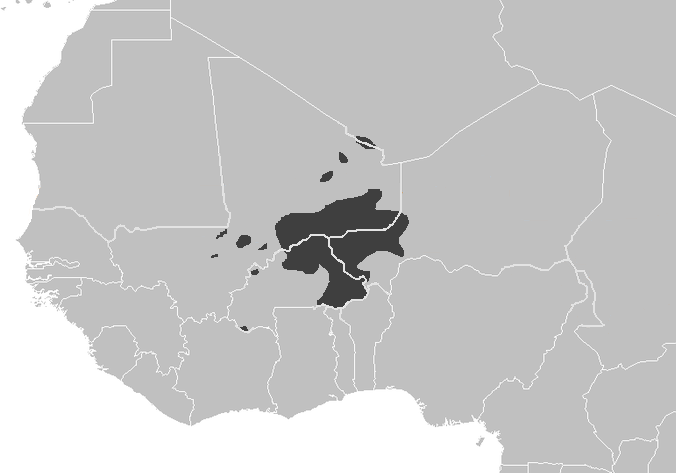
The facts remain partially incomplete. Nigerien authorities presented the August episode as an attempt to overthrow the junta. Reuters reported that Nigerien forces, with the support of Russian military personnel, regained control of the base after twenty-four hours of mutiny. Algerian President Abdelmadjid Tebboune then stated that the aircraft were sent to prevent a coup. The exact operational version — internal threat, action by infiltrated groups, or mere show of force — is not publicly established.
However, the sequence is clear. Algiers responded within hours to a crisis located 951 kilometers from its southern border. The aircraft were accompanied by pilots and support personnel, indicating a limited but real capability for permanence. Such a force can ensure air deterrence, reconnaissance, and, if the rules of engagement allow, support for Nigerien units. It cannot, on its own, retake the routes of Tillabéri or secure the northern airstrips.
The End of an Algerian Military Taboo
Since the civil war of the 1990s, Algeria has jealously guarded the principle of non-intervention. Its doctrine prioritized monitoring its borders, intelligence, and mediation. The passage of combat aircraft to Niamey changes the nature of this posture. It is not yet an Algerian base in Niger, but a precedent that reduces the political cost of a future intervention.
The legal and political distinction matters. A permanent presence of a foreign power would be difficult to accept for the junta and for Nigerien public opinion. A temporary deployment, carried out at the request of the neighboring government, can instead be presented as cooperation between African states. This is precisely what makes the initiative more sustainable than a French operation imposed from the outside. Algiers is not returning to the Sahel with an expeditionary discourse. It is entering through the border.
The Algerian calculation is also defensive. Niger shares a porous border with Algeria, while Mali stretches 1,359 kilometers to the southwest. In this desert strip, the lines of control are theoretical. Groups affiliated with Jama’at Nusrat al-Islam wal-Muslimin (JNIM) and the Islamic State Sahel Province (ISSP) exploit corridors, markets, and local rivalries far more effectively than military maps suggest.
Niamey, Pipeline, and Saharan Depth
Security, however, is not the only driver. The future Trans-Saharan gas pipeline is set to connect the fields of the Niger Delta to the Algerian Mediterranean coast over more than 4,100 kilometers. About 2,400 kilometers are already built in Algeria and Nigeria; nearly 1,600 kilometers still need to cross Niger. Each attack on a road, a logistics site, or a construction team increases the strategic cost of the project.
For Algiers, the stability of Niamey is therefore linked to its energy interests, its trans-Saharan exchanges, and the security of its Grand South. The Nigerien crisis is no longer just a matter of Maghreb diplomacy. It directly affects Algeria's ability to control its southern environment. The deployment of Su-30s is a military assurance around an economic corridor that is still vulnerable.
A New Actor Facing JNIM, ISSP, and Moscow
The choice of Base 101 is revealing. It adjoins Niamey International Airport and also hosts Russian elements of the Africa Corps. Algiers is not replacing Moscow; it is establishing itself in the same decision-making space. This creates a three-way relationship: the junta seeks immediate guarantees, Russia provides advisors and fighters, while Algeria brings regional legitimacy and state air power.
This coexistence can produce friction. The Russians have an interest in preserving their political access to Niger and their image as a security partner. The Algerians, on the other hand, have no interest in being drawn into a conquest war against insurgents or in a public rivalry with Bamako. Their advantage lies in intelligence, border surveillance, and rapid response. Their weakness is the same as that of all Sahelian air forces: without reliable ground units, bombing does not create control.
On the ground, the decisive question will be: who holds the road after the passage of the aircraft? If the Nigerien army cannot occupy the villages, protect the convoys, and reopen the markets, jihadist groups will retreat for a few days before returning. Algeria can close a window of opportunity. It cannot administer the theater of operations in place of Niamey.
The Risk of Escalation
This first outing may remain limited, but it changes expectations. A new attack near the Algerian border, a threat to the gas pipeline, or an internal crisis in Niamey could provoke a request for reinforcements. Four fighters then become a squadron, followed by a drone and intelligence deployment. Each step would be presented as temporary until the day when withdrawal becomes politically more costly than maintaining presence.
Algeria has just crossed a line it has observed for more than half a century. The next test will not be diplomatic. It will be logistical: holding Air Base 101, sharing intelligence without absorbing the war of the juntas, and preventing JNIM or ISSP from turning the Niger-Algeria axes into sanctuaries. If Algiers wants to avoid a new Barkhane, it will need to define early on the mission, duration, and exit. On the ground, ambiguity never lasts long.
Sources
- Africa Defense Forum, “Algeria Deploys Military to Bolster Sahel Security”, October 20, 2026
- Reuters, “Niger, with Russia’s help, regains control of key airbase after soldiers mutiny”, August 31, 2026
- Al Jazeera, “Algeria sent fighter jets to Niger to thwart coup attempt, president says”, October 3, 2026
- Le Monde, “After attempted coup in Niger, Algiers unveils new doctrine for military deployment abroad”, September 3, 2026
Algeria deployed 4 Su-30 fighters and 1 refueling aircraft to Niamey, Niger, on August 30, 2026, marking its first military projection outside its borders since 1973. This deployment was a response to a mutiny among Nigerien soldiers and aimed at preventing a coup. The move indicates a significant shift in Algeria's military doctrine, treating the Sahel as a strategic depth rather than a diplomatic buffer zone.
- Algeria deployed 4 Su-30 fighters and 1 refueling aircraft to Niger on August 30, 2026.
- This is Algeria's first military projection outside its borders since 1973.
- The deployment was in response to a mutiny in Niger and aimed at preventing a coup.
- The operation signifies a shift in Algeria's military doctrine regarding intervention in the Sahel region.