
Finland strengthens Ukraine with ICEYE SAR satellites — 300 million euros test Europe's defense integration 2026
 Dr. Klaus Weber
Finland strengthens Ukraine with ICEYE SAR satellites — 300 million euros test Europe's defense integration 2026
More than 336 million US dollars in new Finnish support and a contract bundle of nearly 300 million euros for satellite capabilities mark the latest step by Helsinki in its Ukraine policy. The visit of Prime Minister Petteri Orpo to Kyiv on October 22, 2026, was therefore more than a bilateral signal of solidarity. It demonstrates how European states are trying to generate immediate military effects from national industrial competencies. However, the crucial question is not whether Finland provides money, but whether a robust European reconnaissance architecture emerges from it.
ICEYE delivers reconnaissance instead of symbolism
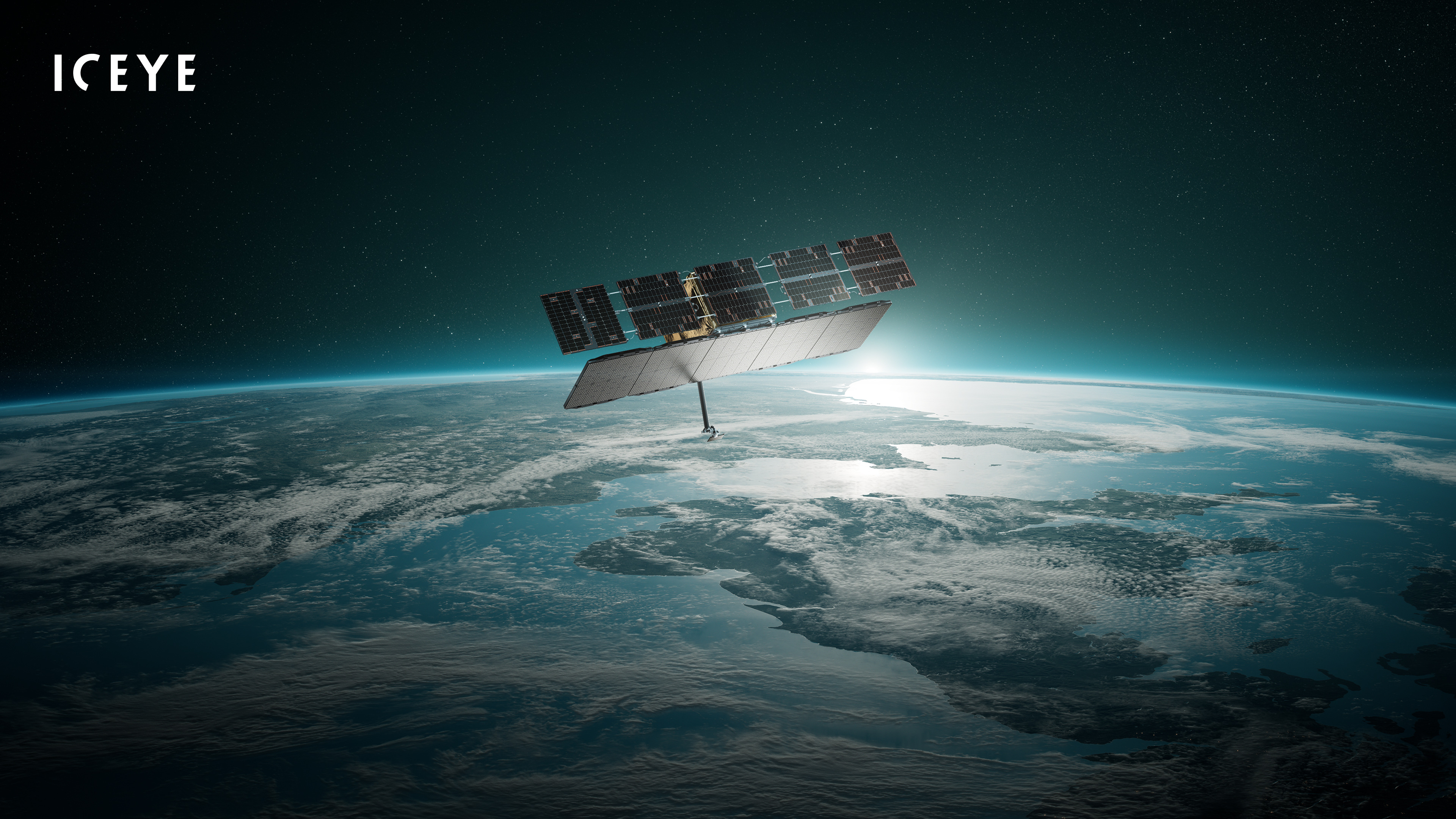
At the center are agreements with Nokia and ICEYE. Reports from the Kyiv Independent and United24 Media cite satellite development and space-based capabilities as the core of the package. ICEYE stands for Synthetic-Aperture-Radar satellites. Their military value lies not in a spectacular single image, but in the ability to capture changes on the ground, in ports, transportation routes, and military infrastructure, regardless of daylight and largely independent of cloud cover. This persistence is more important for Ukraine than the mere number of platforms delivered.
The publicly available reports do not specify the exact number of satellites, resolution, lifespan, or distribution of costs. This is analytically significant. Finland is apparently not purchasing a finished weapon system with a clear quantity, but a bundle of sensors, data processing, communication, and ground components. It is thus a capability whose value only emerges through integration. A satellite without a secure data link, evaluation, and military decision-making processes remains an expensive research project.
The Finnish approach connects industrial policy and war experience
Finland has a security policy culture in which civilian technology companies, national resilience, and military planning are more closely interconnected than in many larger EU states. Nokia brings communication expertise, while ICEYE provides commercial Earth observation. For Ukraine, this potentially creates faster access to situational awareness than traditional state procurement processes would allow. At the same time, the Finnish industry is gaining real experience from a war where drones, electronic warfare, and monitoring of logistical nodes are crucial.
This is the real strategic gain. Europe needs not only more ammunition, air defense, and armored vehicles but also the information chain that makes these systems effective. An IRIS-T or Patriot unit can only be deployed efficiently if it knows early where threats are moving. Satellite reconnaissance does not replace an interceptor missile but reduces the uncertainty under which every defense decision is made.
Why 300 million euros do not yet create a European capability
The political temptation is to equate the financial scope with strategic effect. This is precisely where the well-known European miscalculation lies. The sum is significant, but it initially describes a contract and not guaranteed availability. Crucial are delivery timelines, data rights, reliability, ground stations, and the question of whether Ukrainian and European command structures can process the information in minutes rather than days.
Additionally, there is institutional fragmentation. Finland is acting bilaterally with Ukraine, while Nokia and ICEYE provide industrial components, and the EU and NATO pursue their own programs for space situational awareness, secure communication, and common standards. These levels can complement each other, but they do not do so automatically. Without common interfaces, there is a risk of a collection of national data islands. Europe's defense industry would then have more sensors but not necessarily a better situational picture.
The comparison with the FCAS debacle is close at hand. There, it became clear that money and technical expertise do not create a common capability when governance and division of labor remain unclear. In the case of satellites, the risk is less visible but structurally similar. Who controls the data? Who prioritizes the orders? Who decides in a crisis about sharing with NATO commands? These questions are not administrative techniques but questions of strategic sovereignty.
The European dimension of Orpo's visit
The Kyiv Independent also placed the package in the context of Ukrainian energy supply and EU integration. This is no coincidence. Finland is trying to shape support so that it simultaneously fulfills three goals: increasing Ukrainian resilience, positioning its own technology industry internationally, and binding Kyiv more closely to European structures. The Centre for Economic Policy Research argued on October 22 that a stronger linkage of Ukrainian and European defense production could lower costs and accelerate learning processes.
This logic is more convincing than the old practice of transferring individual weapon systems from national stocks. However, it remains vulnerable if Europe views Ukraine only as a recipient. Ukrainian armed forces possess operational experience that European companies and procurement authorities lack. A sustainable model would therefore need to enable joint development, production, and evaluation, not just the sale of European technology to Kyiv.
Conclusion
Finland's ICEYE initiative is a serious test for Europe's defense integration. It connects a concrete sensor, national industrial competence, and Ukrainian war experience. However, 300 million euros do not yet buy strategic autonomy. Only when data, communication, decision-making pathways, and common standards align will a Finnish contract become a European capability. The paradox is this: Ukraine can help Europe build a modern situational picture while Europe continues to struggle to make its own institutions communicate with each other.
Sources: The Kyiv Independent, October 22, 2026; United24 Media, October 22, 2026; Centre for Economic Policy Research, October 22, 2026; information on ICEYE and satellite-based synthetic aperture radar reconnaissance.
Finland is enhancing Ukraine's military capabilities by providing over $336 million in support, including nearly €300 million for satellite technology. This initiative, highlighted by Prime Minister Petteri Orpo's visit to Kyiv on October 22, 2026, aims to strengthen European defense integration and improve Ukraine's reconnaissance capabilities through ICEYE's SAR satellites. The effort reflects a strategic move to link Finnish industrial expertise with Ukrainian military needs.
- Finland is providing over $336 million in support to Ukraine.
- A contract bundle of nearly €300 million is focused on satellite capabilities.
- The Finnish Prime Minister visited Kyiv on October 22, 2026, to signal solidarity.
- ICEYE's satellites will enhance Ukraine's reconnaissance capabilities.
- The initiative aims to integrate European defense production with Ukrainian military needs.