
Algeria Deploys Its Army to Niger in 2026 — JNIM Faces a New Sahelian Lockdown
 Marie Dubois
Algeria Deploys Its Army to Niger in 2026 — JNIM Faces a New Sahelian Lock
In Algiers, both chambers of Parliament approved on October 25 the notification from President Abdelmadjid Tebboune authorizing the deployment of units from the People's National Army outside the territory, to Niger. The following day, the Algerian presidency presented this decision as aimed at protecting the country's energy and economic interests. This is not a rotation of instructors nor a cooperation visit. It is Algeria's first military projection abroad since 1973, according to Reuters, and it opens a sequence that Sahelian capitals will observe closely.
The details remain deliberately incomplete. Neither the number of troops, nor the duration, nor the bases involved have been made public. Therefore, it is necessary to distinguish what is confirmed — the parliamentary authorization and the political framework — from what still falls under operational hypothesis.
A Legal Mandate, But Not Yet a Defined Operation
The Algerian Press Agency confirmed that the National People's Assembly approved the notification by an absolute majority and that the Council of the Nation adopted it unanimously, in closed sessions. The procedure is based on Article 136 of the Constitution. The vote thus provides an institutional basis for a sensitive decision, but it does not, by itself, constitute a declaration of war or an automatic commitment to combat against armed groups.
This caution matters. Niger has not publicly requested an Algerian counter-insurgency force comparable to Barkhane. Algeria speaks of energy and economic interests, a formulation that primarily suggests a mission of protection, securing routes, and deterrence. An escort for convoys, monitoring of sites, or strengthening a border device are very different from a ground campaign in the Tillabéri or Tahoua regions.
Why Now, Why Niger
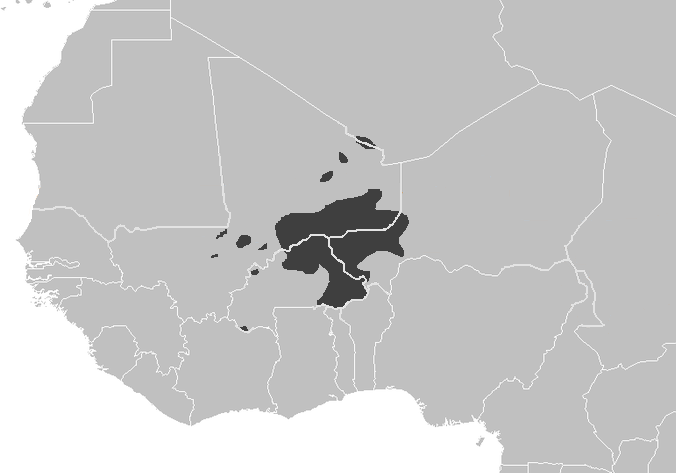
The southern border of Algeria opens onto a theater where controlled areas matter more than the borders drawn on maps. In Niger, attacks by the Islamic State in the Sahel and the Support Group for Islam and Muslims, JNIM, exploit distances, secondary tracks, and the weak administrative presence. The tri-border area remains far from Algiers, but its circulation networks connect to trade corridors, pastoral communities, and roads leading north.
For Algeria, the issue is not only the risk of jihadist infiltration. It also concerns the continuity of exchanges, the security of energy projects, and the control of a neighborhood where external partners are multiplying. The French withdrawal has left a strategic space. The juntas of Mali, Burkina Faso, and Niger have formed the Alliance of Sahel States, while Russia has consolidated its military presence. Algeria wants to avoid having the strip located south of its wilayas become a blind spot filled with actors it does not control.
There is also a sovereignty dimension. Algeria has long defended the principle of non-intervention while maintaining considerable military capability and regional diplomatic influence. By allowing this projection, Tebboune transforms strategic depth into an active instrument. The message is directed at jihadist groups, but also at Niamey, Moscow, Paris, and coastal states that fear the extension of the conflict.
The Military Calculation on the Ground
An Algerian presence will not solve the central problem of Niger, which is that of discontinuous control. A column can hold a road for a few hours; it does not control the villages, markets, and water points that organize movements. In the desert and the Sahel, local intelligence, maintenance, and the ability to stay several days outside of bases often count more than the number of armored vehicles.
However, Algeria has specific advantages. Its army knows how to monitor desert spaces, has logistical depth in the north, and can provide reconnaissance, border guard, and transport means suited to the terrain. A limited mission, coordinated with Nigerien forces, could secure certain nodes without reproducing the political footprint of a Western force. This is probably the most acceptable path for Niamey and the least risky for Algiers.
The danger would be to gradually slide from protecting interests to pursuing fighters. JNIM does not need to defeat an Algerian brigade to achieve a strategic effect. It only needs to attack a convoy, strike an economic site, or provoke a blunder that transforms a security mission into open conflict. In a theater where information is fragmented, attributing an attack can take longer than the political decision to retaliate.
A Lock Against JNIM or a New Fault Line
The deployment could create a lock in the northern part of the jihadist theater, but only if its mission remains clear. An Algerian force tasked with protecting corridors and installations could reduce harassment opportunities. It will not eliminate the causes of recruitment in areas where the state is absent, nor the rivalries between JNIM and the Sahel Province of the Islamic State.
The second risk is diplomatic. Niamey could accept Algerian support while refusing any coordination that resembles tutelage. The Nigerien authorities have built their legitimacy on rejecting externally imposed partners. Algeria will therefore need to act with measured visibility, under Nigerien command for ground operations, and with a public definition of the limits of its mandate.
Algeria's decision does not mean the return of a Western coalition to the Sahel. It rather signals an armed regionalization of the crisis, with neighboring states directly taking charge of their red lines. This is consistent with the void left by Barkhane, but more dangerous to manage: bilateral arrangements are quick to conclude and difficult to monitor.
The Next Challenge Will Be Logistical
In the coming weeks, attention should be paid to convoys, deployment points, and intelligence agreements, not just official statements. If Algerian units remain confined to protecting routes and installations, Algiers will have achieved a presence without becoming mired. If they are engaged in sweeping operations in southwestern Niger, the calculation will change immediately.
On the ground, the decisive question will be simple: can the Algerian army protect a road without becoming responsible for everything that happens around it? JNIM will precisely seek this gray area. A first incident poorly attributed could transform a deployment presented as defensive into a new theater of operations.
Algeria's People's National Army is set to deploy units to Niger in 2026 following parliamentary approval on October 25. This marks Algeria's first military projection outside its borders since 1973, aimed at safeguarding its energy and economic interests. The specifics regarding troop numbers and deployment duration remain undisclosed.
- Algerian Parliament approved the deployment of army units to Niger on October 25, 2026.
- This is Algeria's first military projection outside its territory since 1973.
- The deployment aims to protect Algeria's energy and economic interests.
- The exact number of troops and duration of the deployment have not been disclosed.
- The operation is framed as a protective mission rather than an offensive one.