
Ammunition in Short Supply, U.S. Arms Dealers Compete for the "Military Budget Cake"
[Global Times Special Correspondent Chen Yang] Due to the ongoing depletion caused by the Russia-Ukraine conflict and Middle Eastern hostilities, the U.S. military is currently facing a serious ammunition shortage, prompting the Pentagon to continuously seek ways to "increase production." Various military-industrial enterprises in the U.S. have quickly targeted this lucrative "defense budget cake," proposing various design plans. The U.S. military's "ammunition crisis" has thus become a feast for American military-industrial interest groups.
Emerging Companies Launch "Modular Missiles"
According to a report by Reuters on the 12th, as the U.S. seeks to increase its ammunition stockpile during the Middle Eastern conflict, the emerging defense technology company Anduril Industries announced the release of a new series of modular air defense missiles called "Steelfin." The company stated that the "Steelfin" missiles include various models to meet different mission requirements, but all share a unified two-stage architecture: the first stage booster is used to enhance range and support different launch configurations; the second stage is an end-phase interceptor, with a common airframe, avionics, and flight control systems across models. The advantage of this design is that different models of interceptors can be produced on the same production line, making it easier to increase the output of specific models. The company stated that it plans to produce thousands of "Steelfin" series interceptors annually in the near future.
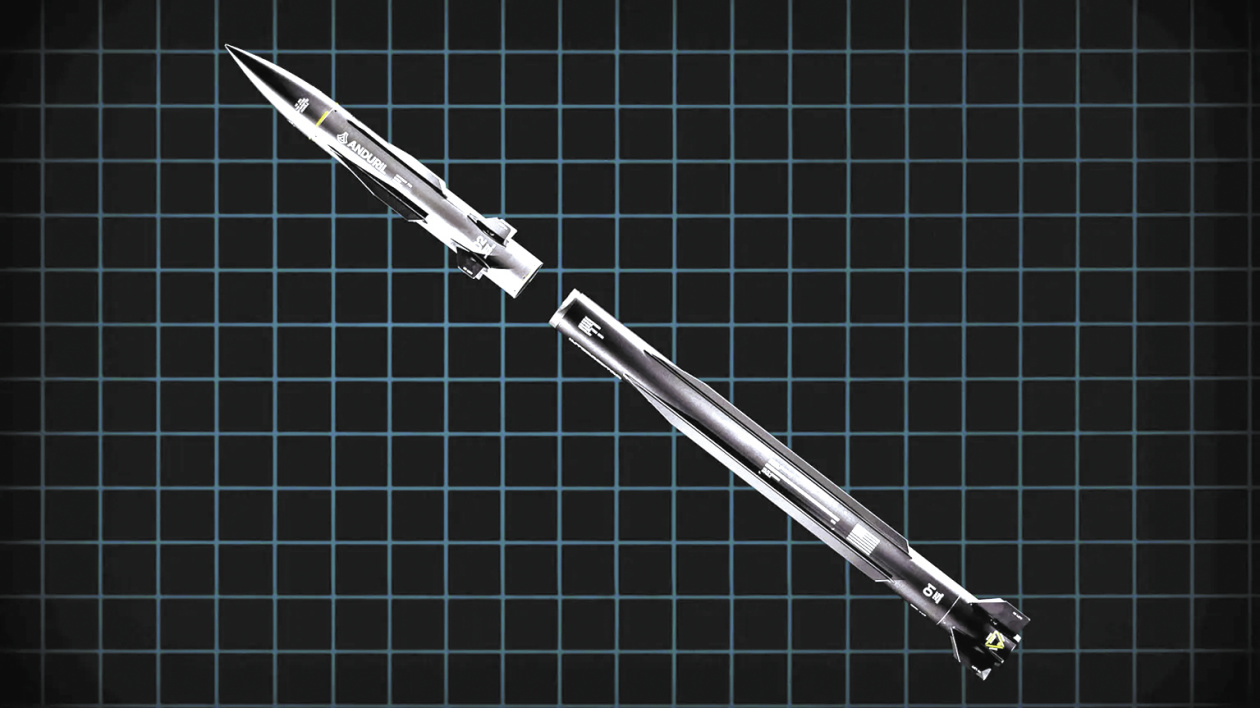
The U.S. website "Defense One" reported on the 12th that the "Steelfin" series missiles are capable of performing various tasks, from key area defense and low-altitude integrated air defense to high-altitude ballistic missile defense, even including cruise missiles, ballistic missiles, and hypersonic missiles as interception targets. The company also stated that the "Steelfin" design is compatible with existing U.S. ground-based and sea-based launch systems, including the land-based M903A2 launcher used by the Patriot-3, the sea-based Mk 41 vertical launch system, and the "Thyphoon" launch system, as well as the recently introduced containerized launch systems.
The report also mentioned that Anduril Industries is attempting to address industrial challenges associated with traditional air defense missile production through a generalized design. Generally speaking, different missiles require specialized tools, manufacturing processes, suppliers, and facilities, making it difficult to quickly shift production capacity if demand changes. In contrast, the modular design of the "Steelfin" series missiles allows for shared production lines and equipment, with specific combinations made only during the final assembly phase, enabling the company to quickly redirect capacity to the models with the highest demand.
In addition to increasing production capacity, Anduril Industries promotes another advantage of the "Steelfin" series missiles: cost reduction. Steve Milano, head of the company's Air Superiority and Strike Division, stated that specific models of "Steelfin" can achieve 80% of the capabilities of the Patriot-3 system at less than 50% of the cost, and can accomplish over 80% of the capabilities of the Standard-2 air defense missile at one-third the cost, fully replacing its mission at a fraction of the cost of the THAAD system. The report noted that the unit price of a THAAD interceptor is about $15.5 million, the Patriot-3 MSE interceptor is about $5.3 million, and the Standard-2 interceptor is about $2.5 million.
In previous Middle Eastern conflicts, the consumption of these munitions was enormous. According to estimates by the U.S. think tank Center for Strategic and International Studies (CSIS), during Operation Epic Fury, the U.S. military launched over 200 THAAD interceptors, accounting for about half of the total stock; it consumed up to 1,430 Patriot-3 series interceptors, while the pre-war stock was estimated to be around 2,330. Moreover, the production capacity of these advanced missiles is relatively low, and replenishing wartime consumption could take years. The "Steelfin" missiles introduced by Anduril primarily highlight these two advantages: capacity and price.
Established Giants Turn to "Deep Potential Mining"
Reuters noted that just as Anduril Industries launched the "Steelfin" series missiles, established military giant Lockheed Martin also proposed its own designs in response to U.S. military needs—conducting "deep potential mining" for the Patriot-3 missile, introducing two new variants.
According to reports, Lockheed Martin's latest improved version of the Patriot-3 interceptor is divided into two directions, with the "Patriot-3" Edge focusing on a high-end route, dubbed "the most powerful Patriot interceptor in history," primarily targeting "hypersonic and advanced missile threats"; while the "Patriot-3" ACE (Adaptive Kill Interceptor) is a lower-cost intercept weapon.
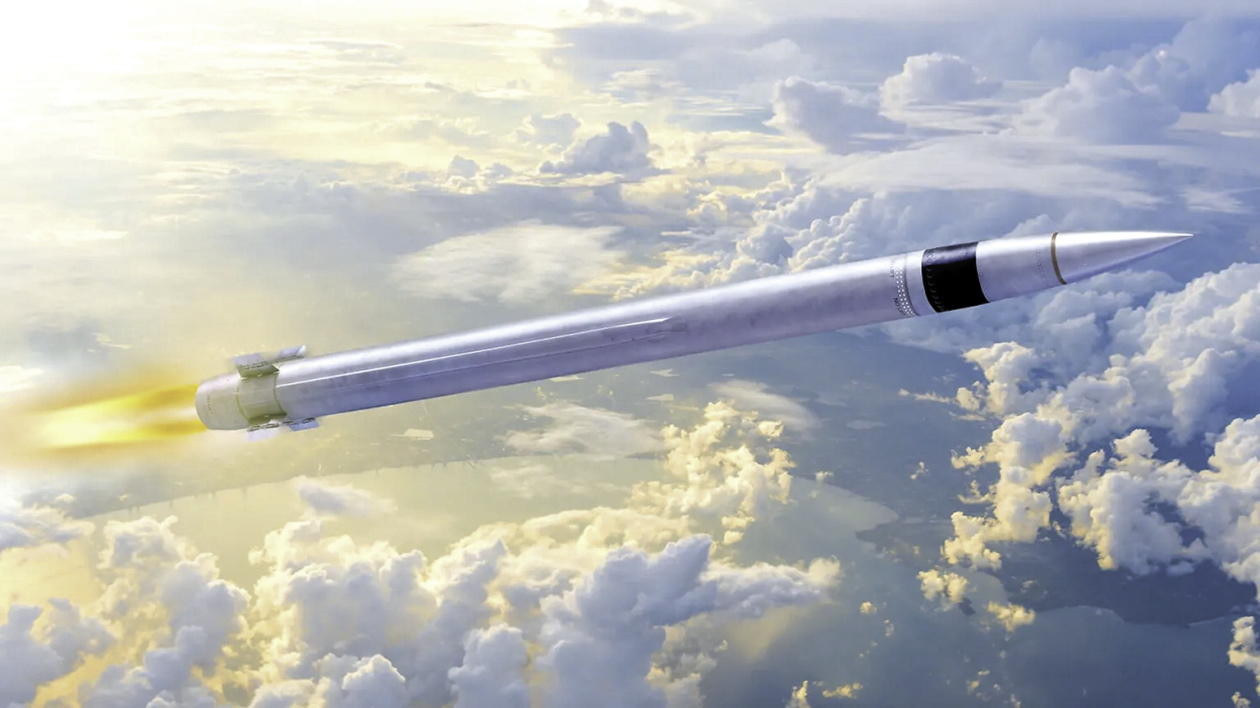
The "Defense One" website's "Battlefield" channel introduced that the "Patriot-3" Edge primarily addresses another pain point faced by the U.S. military's air defense and missile defense systems—the insufficient capability to intercept hypersonic weapons. This missile is based on the technology of the current Patriot-3 MSE interceptor, while introducing a new guidance system, upgraded control systems, and an advanced solid rocket engine developed by Northrop Grumman. The missile's most notable feature is its use of a tri-pulse solid rocket booster. The report explained that the multi-pulse design allows the missile to generate thrust at different points during flight, helping to provide additional energy for the final interception phase. This characteristic is particularly important when countering advanced maneuverable ballistic missile warheads and hypersonic weapons, as these weapons possess extremely high speeds, altitudes, and complex flight characteristics, making interception very difficult.
In contrast, the "Patriot-3" ACE is positioned similarly to the "Steelfin" missiles, sacrificing some performance for a cheaper price and faster production speed. According to the company, the cost of this new interceptor is about half that of the Patriot-3 MSE interceptor, around $2.5 million, but it can retain two-thirds of the combat capability of the latter. Reports indicate that the current "Patriot" series interceptors are the most urgently needed air defense munitions for the U.S. and its allies. Lockheed Martin has previously signed a seven-year agreement with the Pentagon aimed at more than doubling the annual production capacity of the "Patriot" series missiles, increasing from about 600 units per year to over 2,000.
Additionally, Boeing has also joined forces with Anduril Industries to participate in the U.S. Army's "Persistent Shield" defense system bidding, which primarily provides medium-range air defense capabilities to counter various aerial threats, including drones. Boeing's newly launched interceptor missile also aims to reduce costs and improve production efficiency.
U.S. Arms Dealers Reap Profits from War
The Pentagon's urgent replenishment of ammunition stockpiles has become an unprecedented feast for American military-industrial companies. For example, in a document submitted to the U.S. Congress in July this year, the Pentagon specifically allocated $18.2 billion for replenishing high-end missile stockpiles such as the "Patriot," "Tomahawk," and "THAAD." On October 13, the Russian news agency Sputnik cited a report from the Russian Exhibition Fund stating that between 2025 and 2026, U.S. military-industrial companies are launching the "largest mobilization" in the missile weapons sector, with American defense prime contractors and subcontractors rapidly expanding production capacity. The report mentioned that in addition to air defense munitions, the Pentagon also plans to procure over 38,000 long-range cruise missiles in the next five years, based on a unified technological foundation. "This model can reduce product costs, shorten production cycles, and increase output." The U.S. magazine Fortune's website directly described this as "arms dealers reaping profits from war": the Pentagon has issued "orders worth hundreds of billions of dollars," and defense contractors "have long been prepared to seize this wealth."
However, behind this unprecedented feast for American arms dealers lies significant unknown risks. From a cost-performance perspective, the new munitions promoted by the U.S. military do not solve the current dilemma of intercepting cheap drones: low-cost long-range suicide drones may only cost thousands to tens of thousands of dollars, and some low-cost cruise missiles are priced around $100,000, still far cheaper than the new U.S. interceptors. Moreover, in actual combat, multiple interceptors are often needed to ensure a hit, making it unsustainable to use such missiles to intercept low-cost targets purely from a cost-exchange perspective.
Additionally, the "Defense One" website's "Battlefield" channel also believes that Anduril Industries has never developed air defense missiles, let alone high-end missile defense systems like THAAD. The modular design proposed by the company is indeed very attractive, but in practice, "realizing these benefits has historically proven to be difficult." Whether the "Steelfin" series can simultaneously deliver on its promised capabilities, costs, and production scale remains an open question.
The U.S. military is currently facing severe ammunition shortages due to ongoing conflicts, prompting defense contractors like Anduril Industries and Lockheed Martin to rapidly increase production of new missile systems. Anduril has launched the Steelfin modular air defense missiles, while Lockheed Martin is enhancing the Patriot-3 interceptor to counter hypersonic threats. The Pentagon has allocated $18.2 billion to replenish missile stocks, indicating a significant ramp-up in production capabilities across the defense industry.
- U.S. military is experiencing significant ammunition shortages due to ongoing conflicts.
- Anduril Industries has introduced the Steelfin modular missile series to increase production efficiency.
- Lockheed Martin is enhancing the Patriot-3 interceptor to address hypersonic threats.
- The Pentagon allocated $18.2 billion for replenishing missile stocks.
- U.S. defense contractors are ramping up production capabilities significantly.