
Ammunition in Short Supply, U.S. Suspends Airstrikes Against Iran
[Global Times Special Correspondent Xie Zhao] After 13 consecutive days of airstrikes against Iran, U.S. President Trump announced on July 24 that he would "pause the new round of strikes against Iran," and Iran immediately announced a "pause in reciprocal strikes," temporarily bringing the conflict in the Middle East to a halt. There is much speculation about why Trump suddenly called off the airstrikes against Iran, but the widely circulated explanation is that the extreme depletion of U.S. military munitions has made it difficult for the Pentagon to continue operating the war machine.
Excessive Consumption of Offensive Munitions
The most direct reason for the U.S. military's sudden halt of airstrikes is believed to be the excessive consumption of munitions used for the airstrikes, particularly as the ammunition stockpiles in the Middle East have become noticeably insufficient. The Israeli news site "New News" reported on the 26th that due to ammunition shortages, the U.S. approach to striking targets within Iran has changed significantly. In the early stages of the airstrikes against Iran in early July, the U.S. military relied more on long-range Tomahawk cruise missiles and JASSM stealth cruise missiles. However, in the later stages of the airstrikes, the U.S. military significantly reduced the use of these long-range missiles and instead relied more on satellite-guided Joint Direct Attack Munitions (JDAM) and Small Diameter Bombs (SDB).
Even before Trump called off the airstrikes against Iran, U.S. media and think tanks had publicly warned that the U.S. military was facing a shortage of offensive weapon stockpiles. CBS News reported on the 23rd, citing U.S. military and intelligence officials, that the rate of consumption of precision-guided munitions during the early stages of the airstrikes against Iran has become unsustainable. According to a report from the Center for Strategic and International Studies (CSIS), as of July 17, the U.S. military had launched over 1,000 Tomahawk cruise missiles at Iran, setting a record for the use of this weapon in a single conflict; at the same time, the U.S. military also launched approximately 1,100 JASSM cruise missiles.
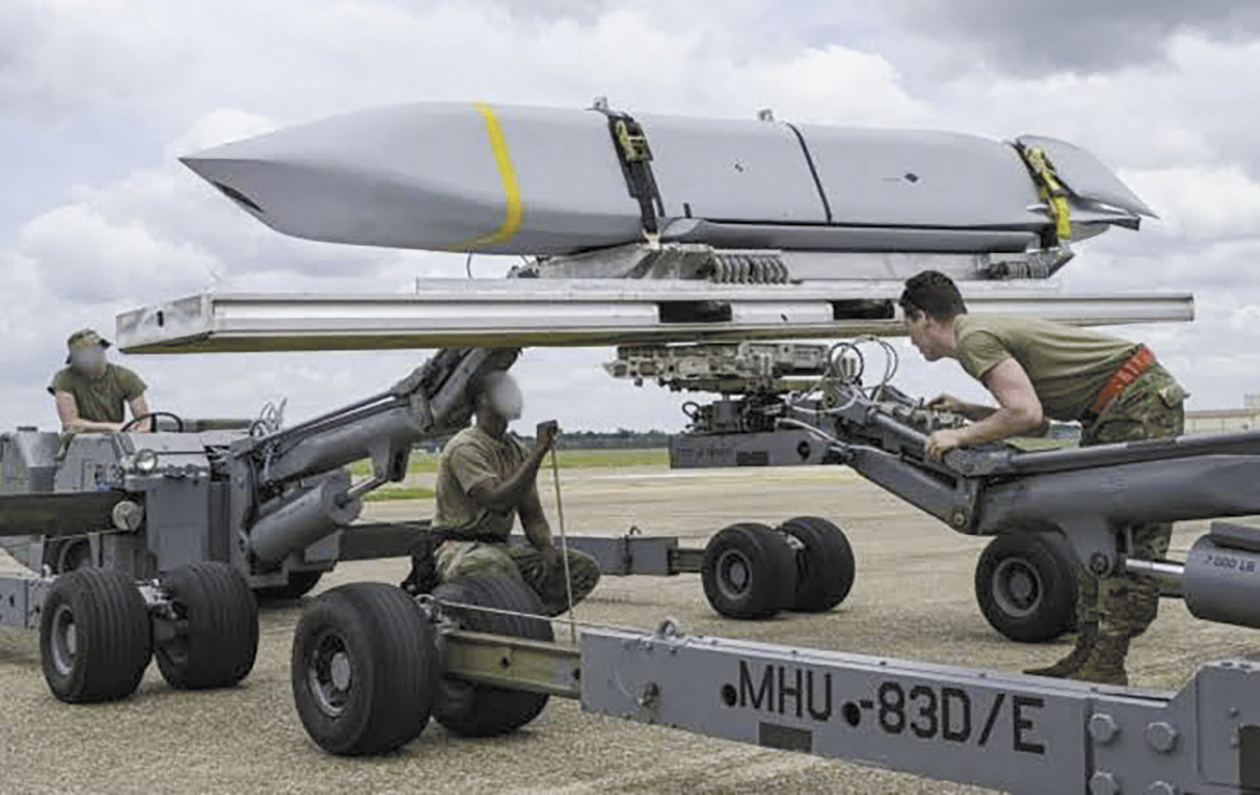
The report mentioned that due to the U.S. military's reduced use of insufficient long-range missiles and the switch to shorter-range guided bombs, the focus of airstrikes has also been forced to shift to targets near the Iranian coastline, in order to reduce the operational need for aircraft to penetrate deep into Iranian airspace and lower the threat posed to U.S. military aircraft by Iran's air defense network and missiles. This tactical limitation caused by ammunition shortages has significantly affected the effectiveness of U.S. airstrikes.
The U.S. website "Business Insider" stated that prior to the U.S. airstrikes against Iran, the U.S. military had approximately 3,100 Tomahawk cruise missiles and 4,100 JASSM missiles in its arsenal. The report noted that because these long-range weapons are dispersed across different theaters, Pentagon officials told the Washington Post that the ongoing consumption has caused the stockpile of Tomahawk cruise missiles in the Middle East to drop to "dangerously low levels," with one official warning that they are "close to running out of ammunition."
In order to fill the "historic" consumption of these long-range precision-guided weapons, the U.S. military is also facing difficulties. Pentagon documents show that in recent years, the actual production of Tomahawk cruise missiles has typically been in the double digits: 68 missiles in 2023, 34 in 2024, and 22 and 57 in 2025 and 2026, respectively, with an average annual procurement of less than 90 missiles over the past decade. Although the Pentagon has urgently increased procurement this year, considering that the manufacturing cycle for these missiles takes up to two years, any increase in production capacity will also take time. CSIS's assessment report indicates that the current orders of the U.S. military cannot fully restore the stockpile of Tomahawk missiles to pre-conflict levels. The report also shows that the U.S. military will need about four years to replenish the stock of these long-range precision-guided munitions, with "no quick solution."
Air Defense Capabilities Face Serious Challenges
The New York Times mentioned on the 25th that in addition to the severe shortage of offensive munitions, the number of intercept missiles available to the U.S. military for defending against Iranian retaliation is also nearing depletion.
The report stated that several U.S. Department of Defense officials and military theater commanders had previously revealed that Trump was inclined to approve a phased bombing plan against Iran, targeting Iranian coastal radar, anti-ship missile launchers, small attack boat formations, and other facilities identified by the Pentagon as "harassing shipping in the Strait of Hormuz." The U.S. side was also considering expanding the target range to include Iranian nuclear facilities, including the Fordow facility. Trump publicly stated on July 21 that the U.S. "may soon" strike Iran's Fordow underground nuclear facility.
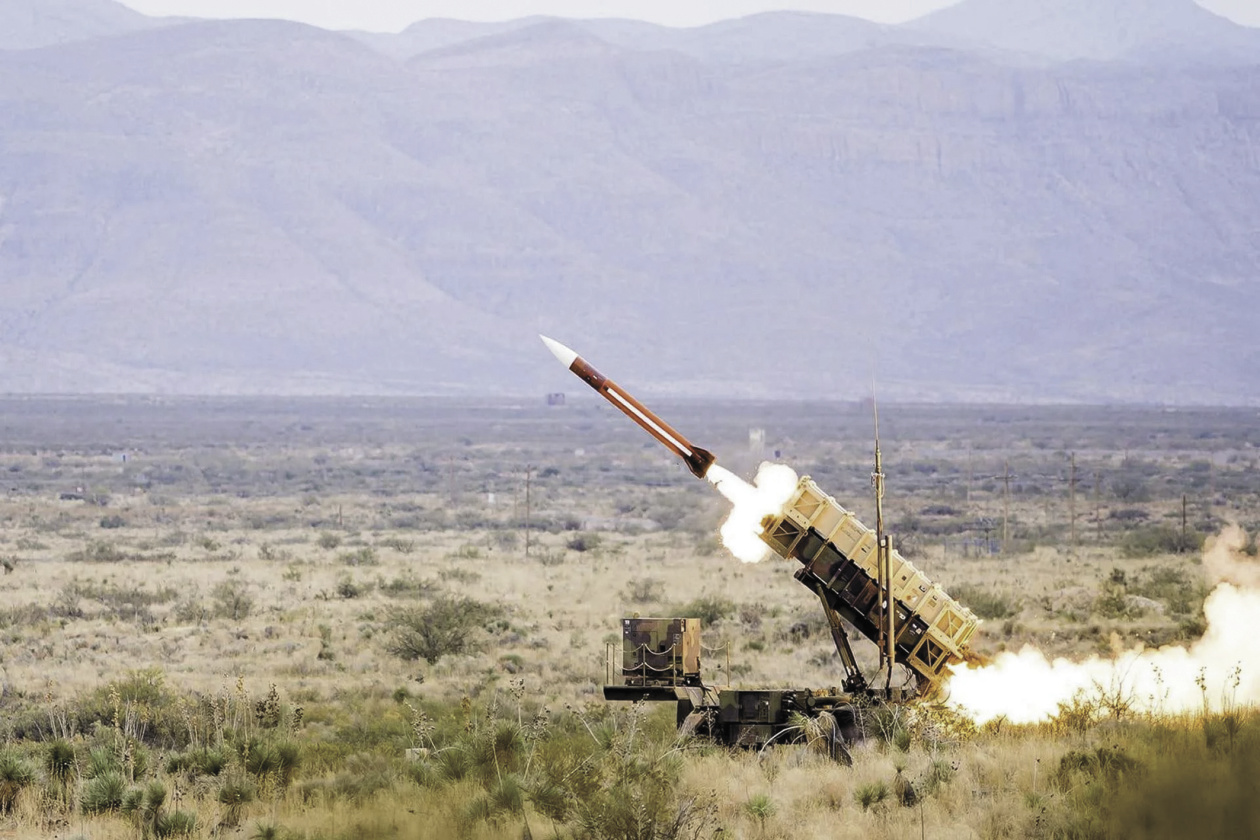
However, by the evening of July 24, Trump temporarily shelved the large-scale bombing plan. The New York Times reported that after a meeting with senior aides and cabinet officials that day, Trump decided not to resume large-scale military strikes against Iran. The core content of this meeting was to discuss the ongoing depletion of the stockpile of intercept missiles and other air defense weapons in the U.S. "Patriot" air defense system.
The U.S. website Axios reported that U.S. Central Command Commander General Brad Cooper had already suggested to the Pentagon, the Joint Chiefs of Staff, and the White House before the meeting that the U.S. military's military actions in the Strait of Hormuz region over the past two weeks had "significantly weakened" Iran's ability to attack vessels, but continuing to maintain the previous scale of bombing "made no sense." The Chairman of the Joint Chiefs of Staff, Dan Kane, also issued a stern warning to Trump, stating that restarting large-scale airstrikes would severely deplete the stockpile of intercept missiles available to U.S. Central Command, putting the U.S. military at great risk when defending against Iranian retaliation.
The New York Times stated that the military advisors' assessment regarding the depletion of the Pentagon's ammunition stockpile largely persuaded Trump: U.S. military bases in Jordan, Kuwait, Bahrain, and the UAE had frequently come under Iranian fire over the past two weeks. Especially as the stockpile of U.S. intercept missiles neared depletion, the U.S. military had to abandon intercepting some "less threatening" Iranian drones and missiles, greatly increasing the chances of successful Iranian airstrikes. According to a statement from the Iranian Islamic Revolutionary Guard Corps on July 25, during 15 days of fighting, Iranian armed forces destroyed 11 U.S. fighter jets and helicopters stationed at bases in the region, as well as 17 reconnaissance and combat drones. Official statistics from the Pentagon indicate that since July 7, a total of 4 U.S. personnel have died and 207 have been injured, including 3 U.S. personnel who died in Jordan and 1 who died in northern Iraq.
U.S. government officials are particularly concerned that further escalation of the conflict will excessively deplete the "Patriot" air defense intercept missiles and other air defense munitions deployed by the U.S. military in the Middle East, which are already in short supply, putting the U.S. military at greater risk when facing Iranian retaliation.
Since the outbreak of the U.S.-Israel-Iran conflict at the end of February, the U.S. military has consumed a large amount of munitions from air defense systems such as "Patriot" and "THAAD" to respond to attacks from Iran, with the consumption rate exceeding the resupply rate, making the stockpile of air defense intercept missiles the "most urgent" issue. As a result, the U.S. military has been forced to reallocate intercept missiles from other regions to support military operations in the Middle East, which has further strained the stockpile of intercept missiles. The Yemeni news agency provided more detailed data: "Patriot" air defense missiles consumed between 1,060 and 1,430 missiles, accounting for about 61% of the total stockpile of 2,330 missiles; "THAAD" intercept system munitions consumed between 190 and 290 missiles, accounting for about 80% of the total stockpile of 360 missiles; "Standard-3" intercept missiles consumed between 130 and 250 missiles, accounting for more than half of the total stockpile of 410 missiles. The Wall Street Journal reported on the 27th that the U.S. military has used at least 1,500 "Patriot" intercept missiles in this round of U.S.-Iran conflict, with remaining stockpiles of less than 1,000 missiles.
Similar to the replenishment difficulties faced by precision-guided weapons, these advanced intercept missiles not only have high procurement costs but also require a long production time. To quickly replenish the ammunition consumed in intercepting Iran's inexpensive drones, the U.S. military has announced a renewed procurement of the air defense-focused "Patriot-2" GEM-T (Guided Enhanced Missile-Tactical), marking the first time in over 30 years that the U.S. military has reordered this missile for itself. At the same time, Lockheed Martin has also announced the launch of the "Patriot-3" ACE (Adaptive Capability Kill Vehicle) new intercept missile, which has the significant advantage of costing only one-third of the current model, but achieving combat capability will still take 36 months.
Future May Rely More on Allies?
Although the U.S. military is facing an "ammunition crisis," this does not mean that the U.S. will not continue to launch new airstrikes against Iran in the future. "New News" reported that Trump's halt of airstrikes against Iran is "to buy time to replenish munitions, assess the situation, and promote diplomacy," with the White House clearly stating that the U.S. President "retains all options." Trump has also publicly declared that the U.S. is "locked and loaded," ready to escalate military action "to a higher level" at any time.
Some analysts believe that the next U.S. airstrikes against Iran will likely rely more on regional allies. The Wall Street Journal revealed on July 24 that Kuwait and Bahrain had secretly dispatched fighter jets to carry out airstrikes on military targets within Iran. This report was denied by Kuwait, but Bahrain remained silent. Currently, Israel has not participated in the U.S. airstrikes against Iran since early July, but Israeli Prime Minister Netanyahu stated in an interview with Israeli media that the current conflict with Iran can only end after a regime change in Iran or when Iran "realizes it must end its nuclear program."
On July 24, 2023, U.S. President Trump announced a pause in airstrikes against Iran due to significant ammunition shortages, particularly in precision-guided munitions. The U.S. military has shifted its tactics, relying more on shorter-range guided bombs. The depletion of both offensive and defensive missile stocks poses a serious challenge to U.S. military operations in the region.
- U.S. President Trump announced a pause in airstrikes against Iran on July 24, 2023.
- The U.S. military has significantly depleted its stock of precision-guided munitions, including over 1000 Tomahawk missiles and 1100 JASSM missiles.
- The U.S. has shifted its airstrike tactics due to ammunition shortages, relying more on JDAMs and SDBs.
- The U.S. military's Patriot missile inventory is also critically low, affecting its defensive capabilities against Iranian retaliation.
- The Pentagon has indicated that it will take approximately four years to replenish the depleted missile stocks.