
Approval of 103 AIM-9X Missiles for South Korea Reflects the Seam of Japan-U.S.-South Korea Deterrence After UFS26
 Tanaka Takashi
Approval of 103 AIM-9X for South Korea Reflects the Seam of U.S.-Japan-South Korea Deterrence Post-UFS26
On August 27, a spokesperson for North Korea's Foreign Ministry condemned the U.S. approval of the sale of 103 AIM-9X Sidewinder Block II missiles and 10 guidance units to South Korea, totaling $125 million, as a "new threat." At first glance, the numbers do not represent a case that would drastically change the regional military balance. However, it is significant that this occurred immediately after the reduction of UFS26 from 11 to 5 days, exposing the discord in U.S.-South Korea political alignment.
The numbers are small. But the implications are not.
What Was Approved
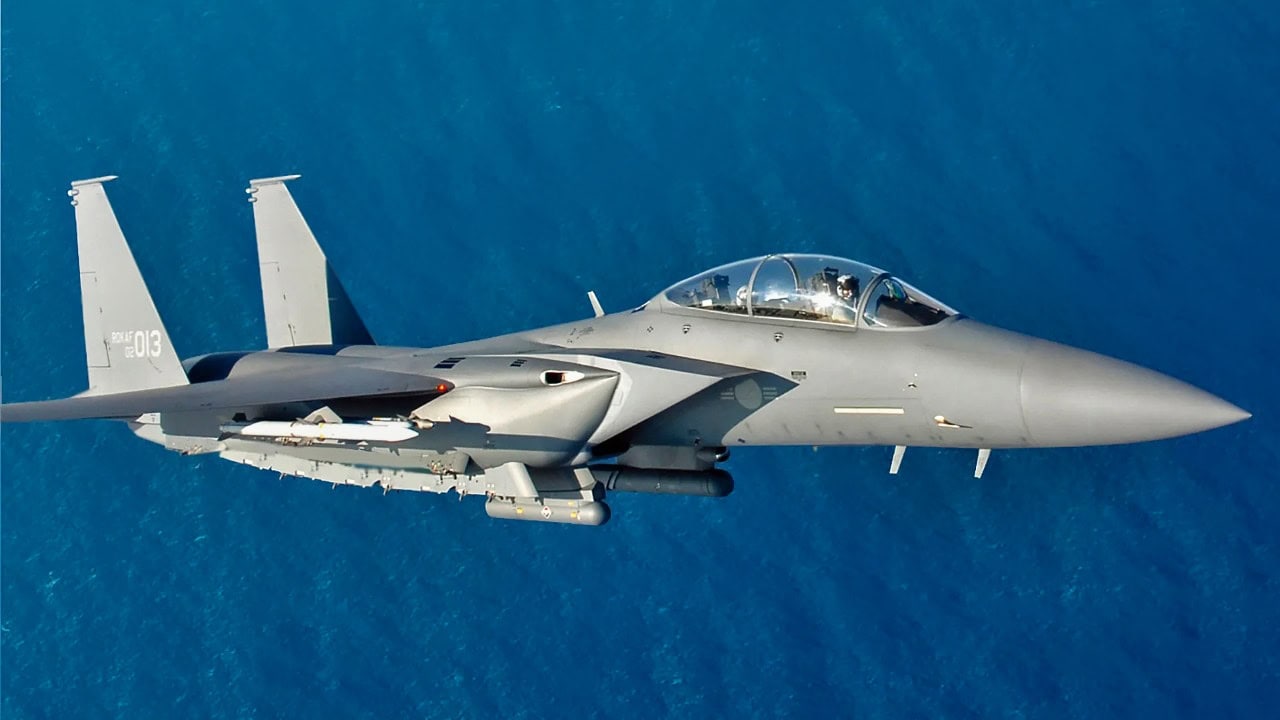
- 103 AIM-9X Sidewinder Block II tactical air-to-air missiles
- 10 Tactical Guidance Units
- Totaling $125 million
- Primary contractor: RTX
The U.S. State Department explained that this sale would enhance South Korea's air defense capabilities, improve responses to future threats, and increase interoperability with U.S. forces stationed in South Korea. Yonhap also reported that the South Korean Air Force's F-15K conducted training in May this year, firing AIM-9X missiles at a shooting range in the Yellow Sea, indicating that this approval is not just an abstract political signal but a replenishment supporting the sustainability of frontline air power.
Reasons for North Korea's Sensitivity
North Korea's heightened sensitivity is not due to the range or quantity of the AIM-9X itself. It stems from the fact that immediately after signs of discord in the U.S.-South Korea alliance's unity due to the reduction of UFS26, Washington advanced the supply of munitions in another form. In other words, while the U.S. may have made concessions in the scale of exercises, it has not relaxed its commitment to the practical maintenance of air power. From North Korea's perspective, this does not signal room for dialogue but rather a military integration that proceeds in a less conspicuous manner.
It is said that North Korea has claimed it cannot overlook this arms sale to South Korea amid the accelerating military integration of the U.S. and its allies in the Asia-Pacific, and that it will take "serious, immediate, and strong countermeasures."
This reaction contains exaggeration, but it cannot be dismissed as mere bluster. On August 20, North Korea launched about 10 short-range ballistic missiles and has not reduced the tempo of provocations even after the reduction of exercises. Pyongyang is observing not just the training schedule of the U.S. and South Korea, but how quickly they can actually rearm their air forces and continue joint responses.
Implications for Japan
What is important for Japan is that this case is not limited to the Korean Peninsula. If the South Korean Air Force's readiness is maintained, it will be easier to distribute the burden of surveillance and interception in the Sea of Japan among the U.S., Japan, and South Korea. However, if political judgments waver, that advantage could quickly diminish. The approach of shortening exercises while maintaining balance through munitions replenishment may be tactically rational, but it is fragile in terms of deterrence consistency.
From the perspective of the Japan Maritime Self-Defense Force, the issue is not the addition of 103 missiles itself, but the design of SLOC and rear support in times of crisis. If air superiority cannot be maintained in the early stages of a contingency on the Korean Peninsula, the burden of protecting Japan's supply lines, anti-submarine patrols, and evacuation transport will rapidly increase. What the reduction of UFS26 has indicated is not a lack of operational planning, but rather a lack of political endurance to carry it through to the end.
Overlooked Risks
The real challenge is not the strength of North Korea's threats or the quantity of AIM-9X missiles. The dual message from the U.S.—cutting exercises while selling weapons, speaking of dialogue while advancing integrated operations—is quietly eroding the deterrence of the alliance. Japan must prepare for more than just the speed of information sharing. The most precarious moment is when the political decision-making of the alliance fails to keep pace with the tempo of tactics.
On August 27, 2023, the U.S. approved the sale of 103 AIM-9X Sidewinder missiles and 10 Tactical Guidance Units to South Korea, valued at $125 million. North Korea condemned this decision, viewing it as a new threat amid concerns over U.S.-South Korea military cooperation. The sale aims to bolster South Korea's air defense capabilities and maintain operational readiness with U.S. forces.
- The U.S. approved the sale of 103 AIM-9X missiles and 10 Tactical Guidance Units to South Korea for $125 million.
- North Korea condemned the sale as a new threat, highlighting tensions in the region.
- The sale is seen as a means to enhance South Korea's air defense capabilities and interoperability with U.S. forces.
- The approval follows a reduction in U.S.-South Korea military exercises, raising concerns about alliance cohesion.
- North Korea has launched short-range ballistic missiles in response to perceived threats.