
Approval of Mass Production for Terra B1 Interception Drones in 2026 Takes Japan's Low-Cost Air Defense to the Next Level
 Tanaka Takashi
Approval for Mass Production of the Terra B1 Interceptor Drone in 2026 Marks a New Phase for Japan's Low-Cost Air Defense
The only interceptor drone that remained until the end of ATLA's rapid evaluation was the Terra Drone's interceptor drone, the "Terra B1." At first glance, it may seem like a small procurement project in terms of numbers. However, in my view, what is noteworthy here is that Japan has finally begun to institutionalize the idea of "countering low-cost unmanned aerial vehicles with low-cost interception means." While the number of targets that need to be protected by destroyers and surface-to-air missiles is increasing, the adversary is sending swarms of unmanned aerial vehicles that cost several million yen each. Under the traditional air defense system, the cost-exchange ratio has become unbalanced.
The Reality Demonstrated by the Terra B1
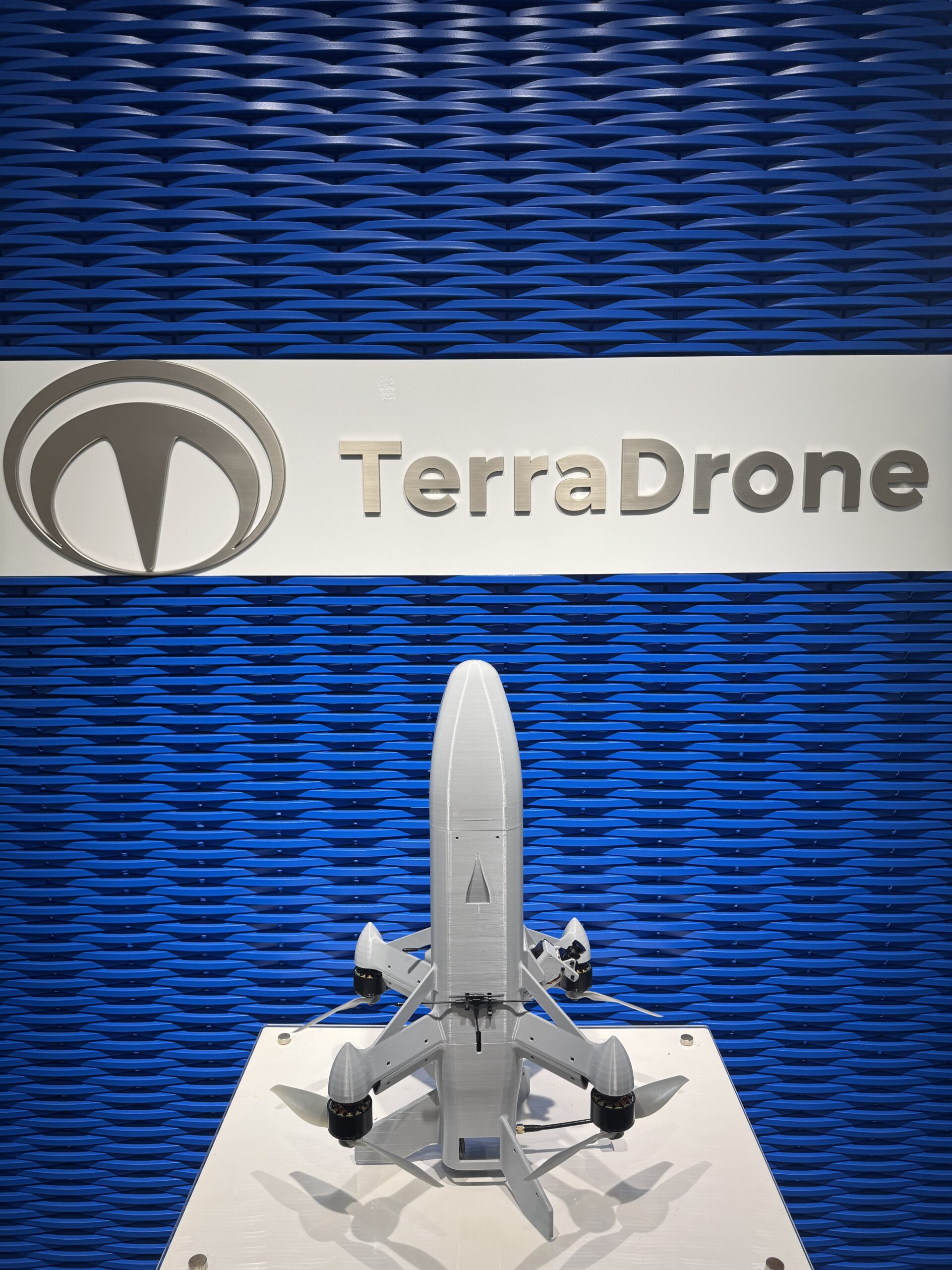
According to various reports, the Terra B1 was the only interceptor to pass ATLA's rapid evaluation and subsequently moved on to a mass production contract. The incorporation of 3D printing technology in its design does not merely mean that the manufacturing process is new. It facilitates easier procurement of materials domestically, shortens the refurbishment cycle, and brings it closer to a quantitative operation based on wear and tear. The lessons from the battlefield in Ukraine indicated that having ten refurbishable units is often more beneficial for air defense than having one high-performance unit.
- Model: Terra Drone's Terra B1 interceptor drone
- Key Point Confirmed: Only one model passed the ATLA evaluation
- Technical Features: Short refurbishment and production cycles utilizing 3D printing
- Expected Mission: Close-range, repeated interception of low-cost unmanned aerial vehicles
Significance for Southwest Defense
The most challenging aspect of Japan's air defense is the need to simultaneously protect not only the main island of Okinawa but also numerous bases in the southwestern islands. Runways, fuel facilities, ammunition depots, and surveillance radars can all be incapacitated by unmanned aerial vehicles that are not as expensive as cruise missiles. If interceptor drones like the Terra B1 approach operational deployment, it opens up the possibility of placing an additional layer of low-cost protection outside the traditional PAC-3 and Type 03 medium-range surface-to-air guided missiles. Similar to the Japan Maritime Self-Defense Force's ship air defense, what ultimately matters is the number of rounds and the reloading speed.
Furthermore, it is important to note that this is not solely a matter for Japan. The U.S. military is also facing the same issue with base air defense. At bases like Kadena, Yokota, Sasebo, and Iwakuni, relying solely on expensive interceptor missiles will not be sustainable for long. At the practical level of the Japan-U.S. alliance, incorporating interceptor drones into a common base air defense menu, sharing only surveillance data, and distributing launch decisions across each base seems to be the most realistic approach.
Mass Production Approval Alone Is Not Enough
However, a mass production contract does not automatically equate to capability. Japan's weakness lies more in the speed of solidifying operational procedures after deployment than in the speed of producing prototypes. If it is unclear at what altitude, based on what sensor information, and who is authorized to launch, the interceptor drone will not function effectively. The Self-Defense Forces have long treated unmanned aerial vehicles as "reconnaissance assets," and the doctrine for missions requiring instantaneous decisions, such as interception, is still underdeveloped. If this is not addressed, there remains a concern that the drones will simply end up stacked in warehouses.
Another often overlooked aspect is the continuity of production capacity. The value of low-cost air defense is proven not in peacetime demonstrations but in wartime attrition. Without answers to how much the monthly production can be increased and how much of the motors, batteries, and communication components can be domestically sourced, mass production approval will remain a symbolic achievement. The true challenge is not the performance competition of interceptor drones but whether Japan can accept production and decision-making speeds based on wear and tear.
Japan's Ministry of Defense approved the mass production of the Terra B1 intercept drone in 2026, marking a significant advancement in its low-cost air defense strategy. This drone, the only model to pass ATLA's evaluation, incorporates 3D printing technology to streamline production and maintenance. The move aims to bolster Japan's defense against low-cost unmanned aerial threats, particularly in the southwestern islands.
- The Terra B1 intercept drone is the only model approved for mass production by ATLA.
- The drone utilizes 3D printing technology for efficient production and maintenance.
- Japan aims to enhance its air defense capabilities against low-cost drones.
- The production approval reflects a shift in Japan's defense strategy towards cost-effective solutions.
- The operational deployment of the drone is crucial for Japan's defense against simultaneous threats across multiple locations.