
At pivotal summit, Canadian-European security cooperation is a central focus
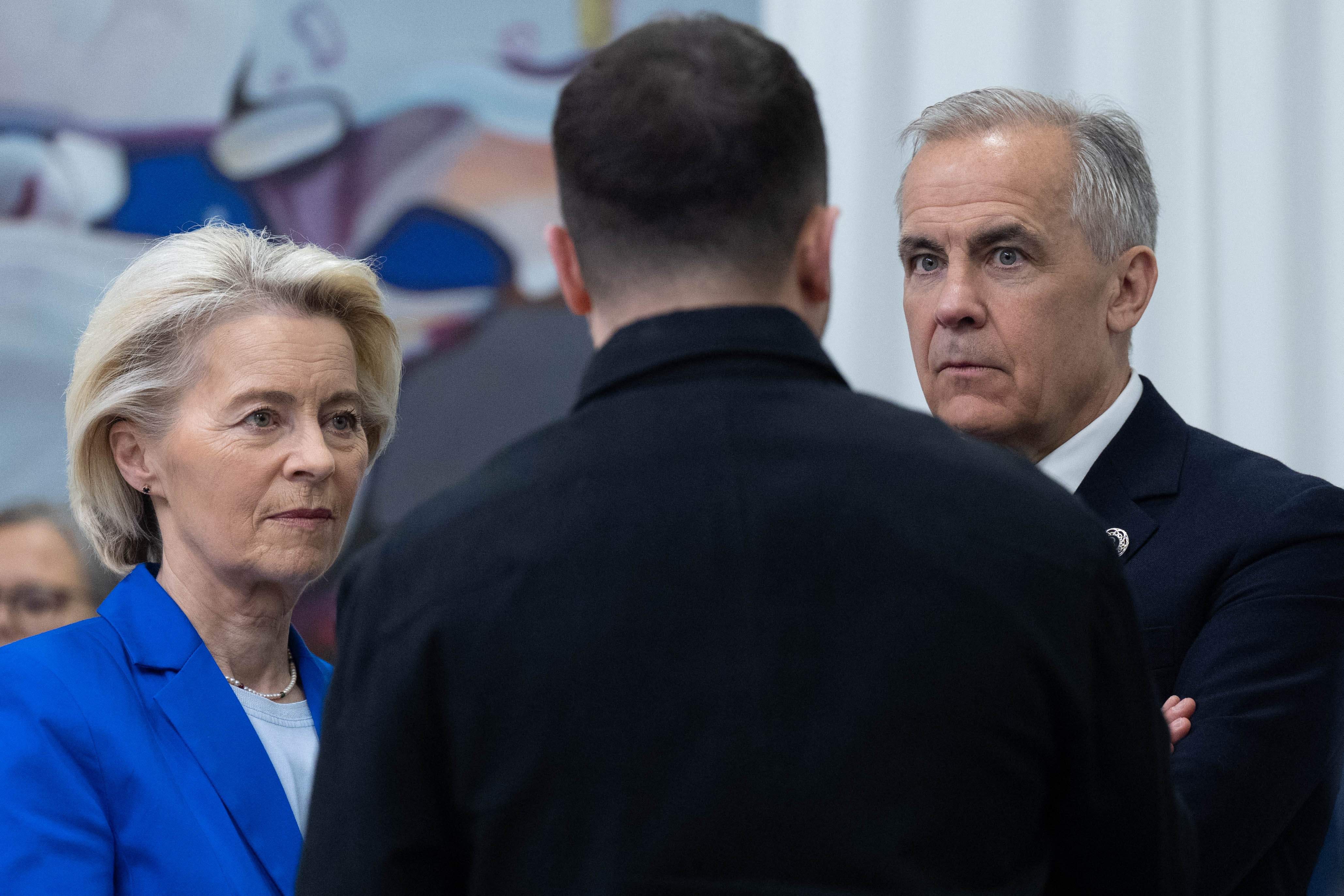
VIENNA — Canada and the European Union plan to deepen cooperation on satellite services, Arctic maritime capabilities and critical materials for defense industries at a two-day summit in Montreal that began on Thursday, according to a draft joint statement.
The proposed measures would advance a broader strategic partnership that calls for Canada and Europe to assume greater responsibility for shared security while reinforcing NATO. The draft, first reported by Politico, does not announce new troop deployments or weapons purchases.
Under the current wording, Canada is promised negotiations for access to services from Europe’s Galileo satellite constellation, as well as exploring Canadian participation in the European IRIS² satellite communications project.
Canada’s vast natural resources appear to be of particular interest to Brussels, with an entire section dedicated to energy and critical raw materials. The draft proposes exploring stockpiling of critical resources needed by civilian and defense industries to cushion supply chains against market fluctuations and geopolitical disruption.
There’s already some dissonance about some specific wording. In mid-September, European Commission President Ursula von der Leyen announced her plan to make Canada the EU’s first “associate member” – to the surprise of some European capitals. Now, the draft joint document for the ongoing summit has removed this language, speaking instead of an “ever-closer association of Canada to the EU, short of full membership itself.”
Canada is choosing not to get caught up in the war of terminology, with Politico quoting Carney as saying that “the good news is it doesn’t matter about specific names or nomenclature.”
Two key unifiers have driven Europe and Canada closer together: Russia’s war against Ukraine, and U.S. President Donald Trump. Canada launched Operation Reassurance in 2014 following Russia’s invasion of Ukraine and has led NATO’s multinational battle group in Latvia since 2017. Cooperation and coordination deepened further after Russia’s full-scale invasion of Ukraine in 2022.
Trump’s threats against NATO, Europe and Canadian sovereignty alike have accelerated the integration process. Particularly the Arctic has emerged as an area of interest. In February, Canada and Denmark signed a memorandum on defense cooperation amid Trump’s insistence that Greenland become a part of the United States, having threatened military force. Pointedly, the agreement with Ottawa was signed with Danish, Greenlandic and Faroese delegates present. It covered innovation, industrial cooperation, mutual logistics support, personnel, training and exercises.
And in March, Canada, Denmark, Finland, Iceland, Norway and Sweden held a summit in Oslo that laid the cornerstone for an Arctic-centric, security-focused format and concrete actions to secure an area that these countries increasingly perceive as a zone of joint security interests, especially vis-à-vis Russia and, to a lesser extent, China.
Finland and Norway also separately signed Arctic security-themed agreements with Canada in April and March, respectively, covering intelligence sharing, interoperability, logistics and maritime topics like the building of icebreakers, among other topics.
In July, Canada announced its intention to buy up to twelve new German-Norwegian submarines, preferring the European boats over a South Korean offer, just a few weeks after Ottawa singled out Sweden’s Saab as the preferred candidate to supply it with six new airborne early warning and control aircraft.
Around the same time, Canada secured preferential access to procurement under the EU’s Security Action for Europe (SAFE) defense-financing program, allowing Canadian-origin components to account for up to 80% of the procurement value of equipment purchased with its loans.
Canada and the European Union are enhancing cooperation on satellite services and Arctic maritime capabilities during a summit in Montreal. The discussions focus on critical materials for defense industries, with Canada negotiating access to the Galileo satellite constellation. This partnership aims to reinforce NATO and address shared security responsibilities, particularly in light of geopolitical tensions.
- Canada and the EU are enhancing cooperation on satellite services and Arctic capabilities.
- The summit in Montreal focuses on critical materials for defense industries.
- Canada is negotiating access to the Galileo satellite constellation.
- The draft joint statement reflects a strategic partnership without new troop deployments.
- Canada's natural resources are of particular interest to the EU.