

Russia wants its own rivals to Starlink. Gravity, however, has other plans. Two satellites from Russia’s Rassvet broadband constellation, the Kremlin’s answer to SpaceX, are expected to burn up in the atmosphere after failing to raise their orbits, the Defence Blog reported this week.
Harvard-Smithsonian astrophysicist and satellite tracker Jonathan McDowell said most of the remaining Rassvet-3 satellites have settled at about 500 km.
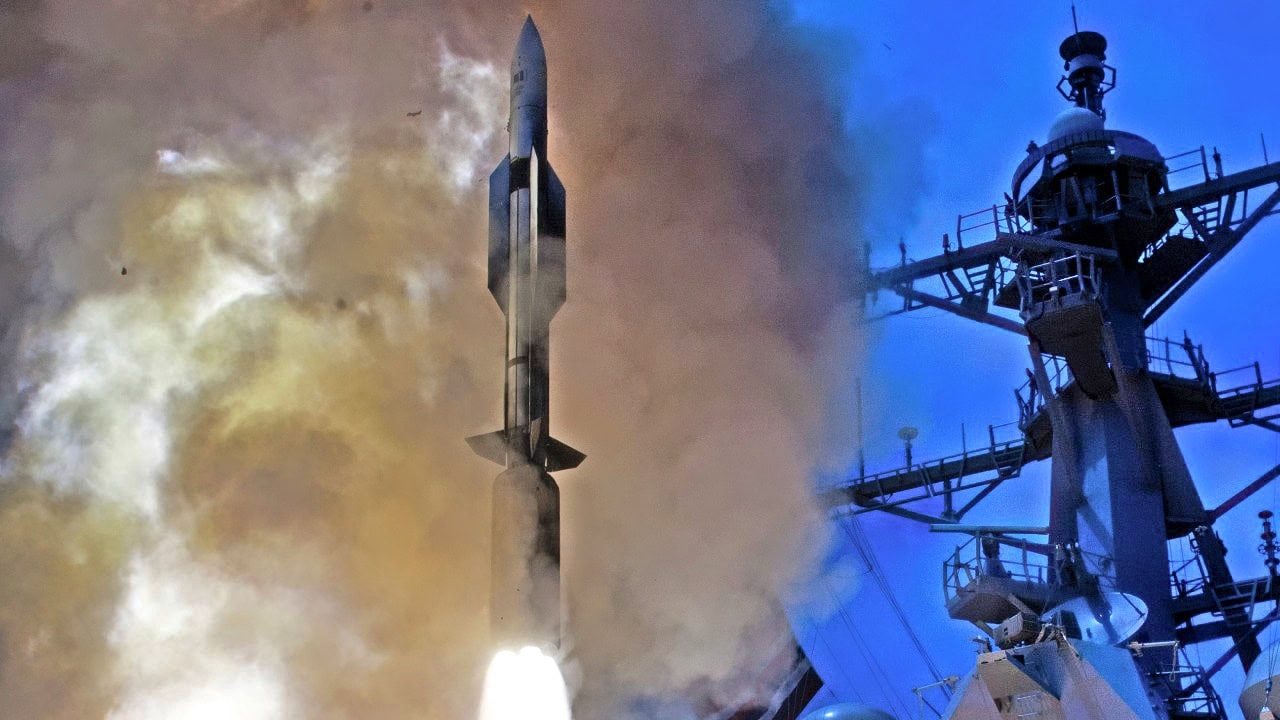
A Falcon Heavy rocket launches into the sky, surrounded by smoke and fire during takeoff.

SpaceX Launch SpaceX Image Handout
These two never got there.
They’ve sunk below 230 km and are dropping fast.
Two dead satellites out of 32 doesn’t sound like much.
However, this is the second and third loss for a program that is already far behind schedule, and it says a lot about where Russia’s space industry stands in 2026.
Two Satellites That Never Left The Parking Lot
Both failing spacecraft came from the second batch of 16 Rassvet-3 satellites that Bureau 1440 launched on a Soyuz-2.1b from the Plesetsk Cosmodrome on July 19.
The plan was simple enough.
The rocket drops the satellites into a low deployment orbit of roughly 300 km, and each one uses its own plasma thrusters to climb to its working altitude of over 500 km.
These two never fired.
By late August, the Defence Blog, citing Anatoly Zak of RussianSpaceWeb, reported that the pair had slipped below 300 km without a single orbit-raising maneuver.
The whole July batch was sluggish. At a similar stage, none of the 16 had climbed above 360 km, about 200 km lower than the first group managed.
The two satellites are tracked as RASSVET-3 17 and RASSVET-3 23. Ukrainian outlet UNN reported reentry forecasts of October 29 and November 1.
Analysts quoted by UNITED24 Media have pointed to a likely propulsion failure.
Bureau 1440, Roscosmos, and the Russian military have said nothing official about either doomed satellite.
This isn’t the program’s first casualty.

SpaceX Launch. Image Credit: SpaceX.
The Defence Blog reported back in June that a satellite from the March batch, cataloged as Object 4, reentered on June 6 without ever performing a maneuver.
Three satellites lost, none of them to anything more exotic than engines that never fired.
The Math Doesn’t Work
Russia’s real problem is the gap between what Moscow promised and what’s in orbit.
Bureau 1440, owned by IKS Holding since it was transferred from MegaFon a month after the full-scale invasion of Ukraine, laid out an ambitious plan in July.
The company wants 156 Rassvet satellites in orbit by the end of 2026, 292 by 2027 when partial service is supposed to start, 610 by 2028 and 900 by 2035.
According to Orbital Radar’s Rassvet tracker, as of October 13, 31 production satellites were in orbit, and only 22 had reached their working altitude of about 510 km.
For those keeping score at home, that’s 31 against 156 with two months left in the year. And it’s about to be 29.
The altitude is a story by itself.
Rassvet was originally designed to operate at around 800 km.
TechRadar reported that Bureau 1440 paused raising some satellites toward that goal and never said why.
The constellation is now settling closer to 500 km.
Lower orbits mean more atmospheric drag, which requires more fuel to stay aloft and shortens service lives.
The Institute for the Study of War assessed that the July satellites will likely wear out faster than planned.
By contrast, SpaceX launches dozens of Starlink satellites at a time, several times a month.
Russia is launching 16 at a shot and losing some of them on arrival.
This Was Always About The Battlefield
Bureau 1440 sells Rassvet as a commercial 5G-from-orbit broadband service. Nobody in Kyiv buys that, and most analysts don’t either.
Starlink has been a game changer in Ukraine.
It keeps drone teams, artillery spotters, and command posts talking when everything else is jammed or blown up.
Russian units spent a long time using smuggled Starlink terminals of their own.
When ISW cut off that unauthorized access in February, it reported that Moscow accelerated Rassvet’s deployment.
A finished network could support battlefield communications and remotely controlled strikes against Ukraine.
The Rassvet deployments have begun to do that.
The Kyiv Post, citing a Ukrainian satellite communications expert, reported that by the end of July Rassvet was providing at least two communication windows a day over Ukraine, each lasting more than an hour.
While it’s nowhere near the always-on coverage Ukrainian troops get from thousands of Starlink satellites overhead, it does count.
However, that gap matters in a drone war.
A two-hour window works for scheduled data dumps.
It doesn’t work for a pilot steering an FPV drone or a long-range strike drone into a target at night, when the window is closed.
So why push so hard on a system that clearly isn’t ready?
Because Moscow has no other option. It can’t buy what SpaceX sells, and it can’t steal it anymore.
Russia Is Stuck With A System That Isn’t Ideal
Building a low Earth orbit constellation isn’t easy.
SpaceX lost satellites early too. Most of the Rassvet satellites are working, and 22 have reached their operating altitude.
Russia will keep launching, and Ukraine’s planners would be foolish to write the program off.
However, Russia is doing this under sanctions, with a launch rate that can’t come close to its own targets and a satellite builder that apparently can’t guarantee its thrusters will even fire.
Like so many Russian military programs, it is long on promises but short on actual delivery.
Every lost satellite is one more the factory has to replace before it can add a new one.
The 2027 service date is fantasy now, and the 2026 target died a while ago.
Russia wanted its own Starlink.
Right now, it has 29 satellites and two shooting stars.
About the Author: Steve Balestrieri
Steve Balestrieri is a National Security Columnist. He served as a US Army Special Forces NCO and Warrant Officer. In addition to writing on defense, he covers the NFL for PatsFans.com and is a member of the Pro Football Writers of America (PFWA). His work was regularly featured in many military publications.