
AUKUS 2027 Undersea Drones Cannot Fix Australia's Virginia Submarine Gap
 Marcus Chen
AUKUS 2027 Undersea Drones Cannot Fix Australia's Virginia Submarine Gap
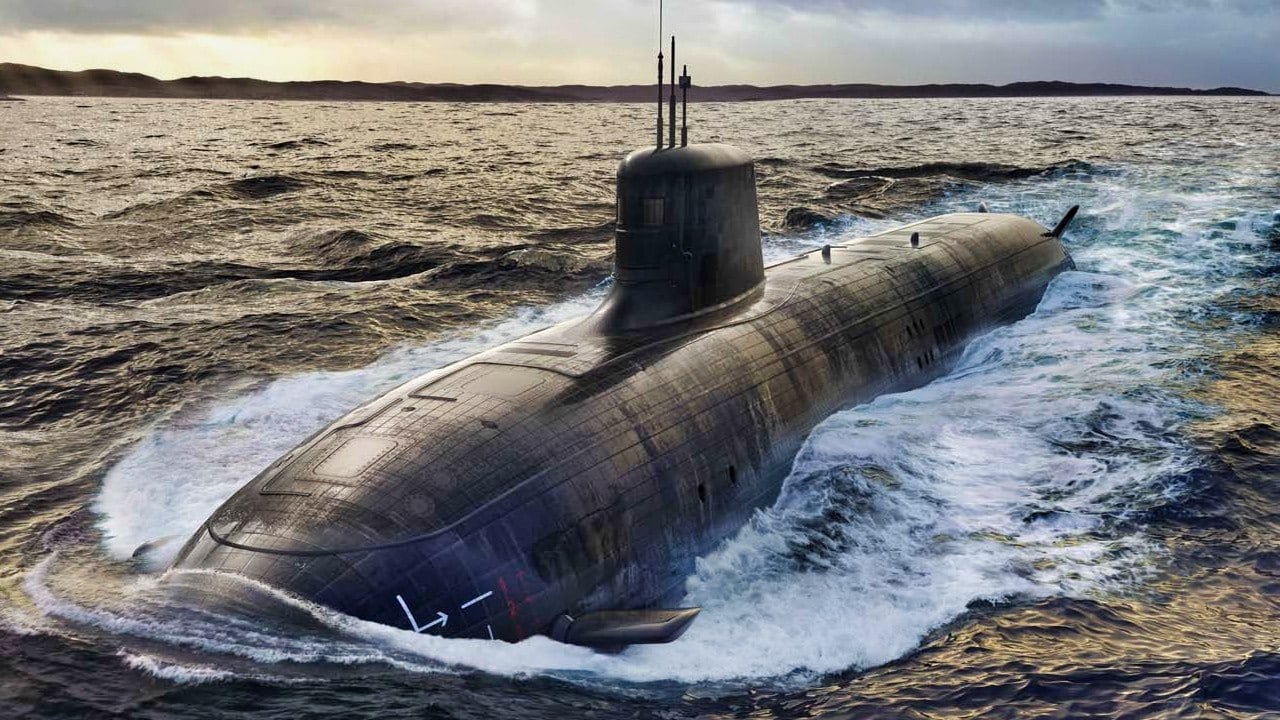
AUKUS now has two clocks running. One says the first uncrewed undersea vehicle payloads should begin arriving in 2027. The other says Australia still waits until the early 2030s for its first Virginia-class nuclear-powered attack submarine, and now all three planned U.S. boats will come from the in-service fleet.
That is progress, but it is not the same kind of progress. The May 30 AUKUS defence ministers' statement announced the first Pillar II signature project, focused on payloads and enabling systems for uncrewed undersea vehicles. The same statement also confirmed a streamlined Pillar I approach in which Australia would acquire three in-service Virginia-class submarines instead of a mix of new and in-service boats. The two decisions are connected politically. Operationally, they solve different problems.
The 2027 Payload Is Not a Submarine
The Department of Defense fact sheet is precise about what the new project is meant to deliver: payloads and enabling systems, not a common AUKUS underwater drone fleet. Payloads mean the mission packages a vehicle carries, including sensors, navigation systems and offensive capabilities. Enabling systems mean the controls and data links that let those vehicles share information and work with other crewed and uncrewed platforms.
That matters because underwater autonomy is often discussed as if the vehicle itself is the answer. It is not. In the undersea fight, a cheap hull without a useful sensor, secure navigation, acoustic discipline, reliable recovery plan and a commander who trusts its data is just another object in the water. A UUV can extend a submarine's reach. It cannot automatically replace the submarine's judgment, endurance or weapons load.
The official claim is that the project will support seabed infrastructure protection, surveillance, reconnaissance, strike, logistics, anti-submarine warfare, anti-surface warfare, mine countermeasures, electronic warfare and contested littoral manoeuvre. That is a long menu. The first tranche beginning in 2027 should be read as experimentation moving toward deployable capability, not as a sudden new undersea order of battle.
The Virginia Math Still Drives the Deal
The harder problem remains the Virginia-class pipeline. USNI News reported that Navy officials have said the U.S. industrial base needs to build 2.33 attack submarines per year, while also building one Columbia-class ballistic missile submarine annually, to support the Australian sale without eating into U.S. requirements. The current production rate is far below that. Admiral Daryl Caudle told Congress in May that two Virginia deliveries a year are expected in 2032.
Anyone who has served on a destroyer knows the difference between a concept and a watch bill. You can brief distributed maritime operations all day, but when the ship has one sonar team, one engineering department and one weapons magazine, the arithmetic eventually wins. Submarines are worse. Nuclear-qualified crews, reactor maintenance, dry dock capacity, weapons handling and classified combat-system support do not scale because ministers issue a joint statement.
Australia's revised plan simplifies one part of the problem. Three in-service Virginias should be easier to train, maintain and sustain than a mixed fleet of Collins-class submarines, two older Virginias, one new Virginia variant and then SSN-AUKUS. Canberra is right to want fewer variants. The penalty is that Australia is buying into the U.S. Navy's existing boat inventory, with the age, reactor-life and availability questions that come with it.
ABC's reporting on the shift noted that the original AUKUS pathway had Australia receiving two used boats and one new model, with the first used boats refurbished before delivery and expected to retain roughly two decades of service life. That may still be militarily useful. A 10-year-old Virginia is not an exhausted submarine. But it changes the promise. Australia is no longer waiting for a clean new-build bridge into SSN-AUKUS. It is preparing to operate American submarines already moving through the U.S. maintenance and deployment cycle.
What UUVs Can Actually Add
The best case for the Pillar II project is not replacement. It is multiplication. If an Australian, British or American SSN can launch or control a vehicle that maps a chokepoint, listens near a cable route, carries a decoy, scouts a minefield or pushes a sensor forward into a high-risk littoral zone, the crewed submarine can stay farther from the worst part of the threat envelope. That has real value in the South China Sea, the Philippine Sea and the approaches to Taiwan.
The AUKUS fact sheet's emphasis on interchangeable payloads and common control systems is the right technical target. If a Royal Australian Navy operator cannot use a U.S. payload, or a British platform cannot pass usable data into an American command network, the alliance gets three national science projects instead of a combat system. Shared standards are boring until the first crisis, then they are the whole game.
But there is a second-order risk. Politicians may use faster UUV progress to paper over slower SSN progress. That would be a mistake. UUVs are excellent for persistence, deception and dangerous reconnaissance. They are less convincing as substitutes for a nuclear attack submarine that can sprint thousands of nautical miles, remain on station, trail an adversary submarine, launch heavyweight weapons and make judgment calls under emission control.
The Real Test Comes Before 2032
The near-term test is SRF-West at HMAS Stirling. The ministers said arrangements for the rotational submarine force are being finalized for 2027, with U.S. Navy personnel rotating to Australia this year and British participation following. That is where the undersea partnership becomes visible: maintenance periods, pier services, nuclear stewardship, weapons security, crew training and the daily routines that make a deployed SSN force possible.
If AUKUS can use 2027 to build an actual undersea operating ecosystem around Stirling, UUV payloads become useful connective tissue. They can give rotating submarines more reach and give Australian operators a faster path into modern undersea warfare. If 2027 produces only demos, press releases and a few industry challenge winners, then the program will have confused speed with combat power.
The judgment is simple. AUKUS Pillar II is finally moving toward something deliverable, and that is better than another communiqué about future innovation. But the decisive asset in a Western Pacific fight is still the nuclear-powered attack submarine, not the payload riding behind it. Undersea drones can make a scarce SSN more productive. They cannot make a missing SSN appear.
That is the gap AUKUS has not closed.
Australia is set to acquire three in-service Virginia-class submarines from the U.S. by 2027 while developing uncrewed undersea vehicle capabilities. The U.S. Navy aims to build 2.33 attack submarines annually to support this sale. The operational focus is on enhancing undersea capabilities, but UUVs cannot replace the strategic value of nuclear submarines. Arrangements for a rotational submarine force at HMAS Stirling are also being finalized for 2027.
- Australia will acquire three in-service Virginia-class submarines from the U.S.
- The first uncrewed undersea vehicle payloads are expected to arrive in 2027.
- The U.S. Navy needs to build 2.33 attack submarines per year to support the Australian sale.
- The operational capabilities of UUVs are highlighted, but they cannot replace nuclear submarines.
- The rotational submarine force arrangements are being finalized for 2027.