
AUKUS Could Cost the US Navy Three Virginia-Class Submarines
 Marcus Chen
AUKUS Could Cost the US Navy Three Virginia-Class Submarines
The warning is unusually blunt: transferring nuclear-powered attack submarines to Australia could reduce the US fleet for many years. That is the central finding now driving debate around AUKUS Pillar I, according to reporting by The Guardian on November 20, 2026. The issue is not whether Australia deserves a submarine. It is whether Washington can give away three of its most valuable undersea combatants while China is expanding its own fleet and the US Navy is still struggling to replace boats on schedule.
The arithmetic is already tight
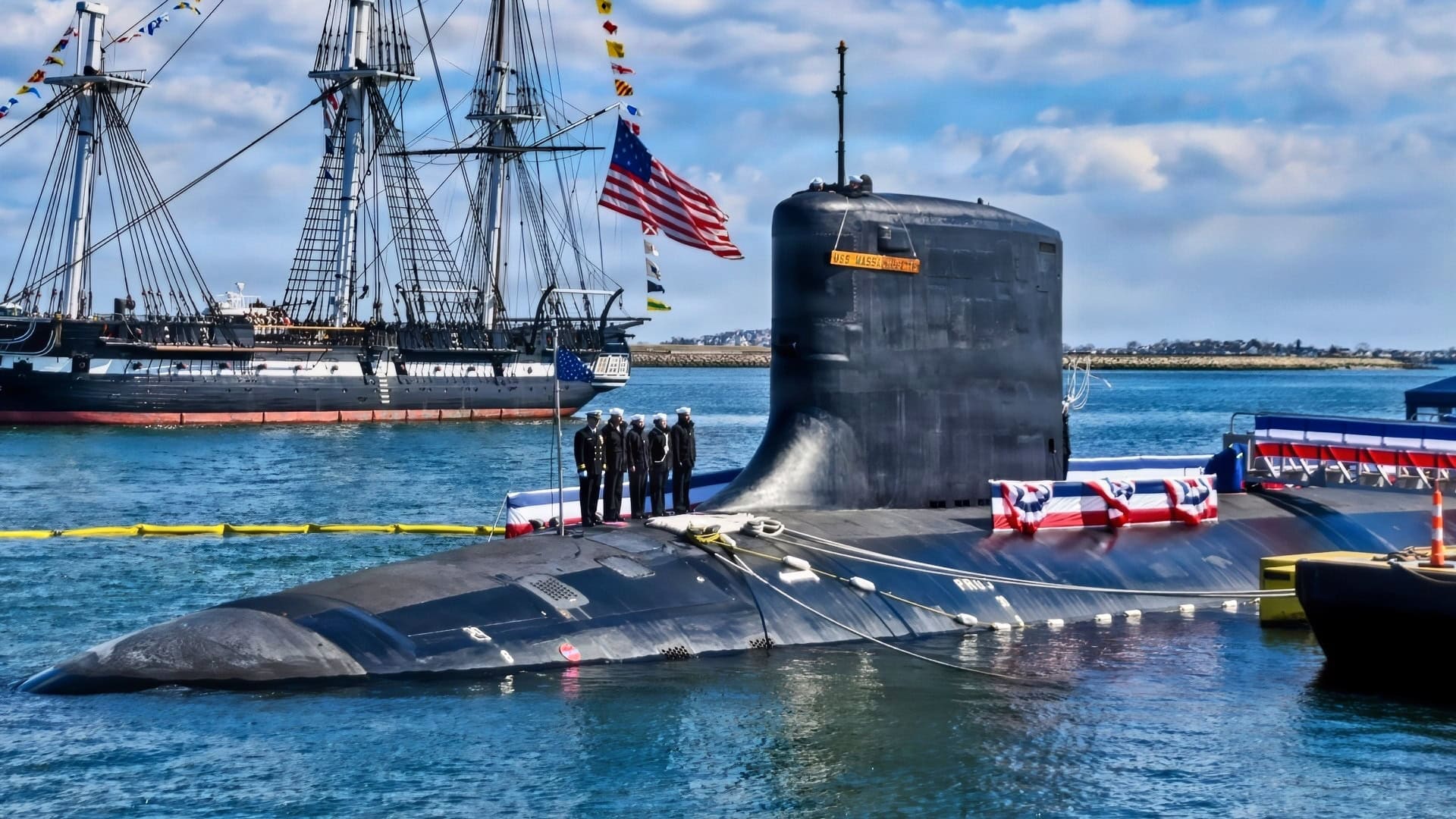
A Virginia-class submarine is not a symbolic platform. It is roughly 7,800 tons submerged, about 377 feet long, nuclear-powered, and capable of sustained operations without the fuel limitations that constrain conventional submarines. The class carries Tomahawk land-attack missiles, heavyweight torpedoes, advanced sonar, and special-operations equipment. Later Block V boats add the Virginia Payload Module, increasing missile capacity from 12 launch tubes to as many as 40 Tomahawks.
Those numbers matter because the US Navy does not have a deep reserve of attack submarines. The fleet must cover the Western Pacific, the Atlantic, the Arctic, intelligence missions, undersea surveillance, and routine maintenance at the same time. Every boat transferred to Australia is therefore not simply an export item. It is one fewer hull available for a deployment cycle, a training pipeline, or a maintenance recovery plan.
The Congressional Research Service assessment summarized by USNI News has focused on the same vulnerability: the Virginia program is expected to deliver two submarines per year, but the industrial base has repeatedly struggled to sustain that rate. Shipyards are dealing with workforce shortages, supplier delays, and a backlog of maintenance on existing boats. In that environment, a three-boat transfer represents more than three hulls. It represents several years of production that cannot be wished back into the fleet.
Why Australia still needs the capability
Canberra's case is operationally sound. Australia sits on the edge of the maritime approaches to Southeast Asia and the South Pacific, far from the US mainland and close to the sea lanes that would carry fuel, ammunition, and reinforcements in a Taiwan contingency. Nuclear-powered submarines would give the Royal Australian Navy the endurance to patrol those approaches without the short transit and battery constraints of a conventional boat.
A US or UK submarine rotation at HMAS Stirling also provides an immediate benefit. The November reporting on an American submarine presence in Australia, alongside US Navy descriptions of forward sustainment, shows how AUKUS is trying to create a force before Australia receives its own SSN-AUKUS boats. But a rotational presence is not the same as a larger American fleet. If the rotation is supported by selling away US hulls, the alliance may gain Australian capability while weakening the force that must fight in the first months of a Pacific war.
The industrial base is the real battlefield
The Pentagon's preferred answer is that the United States will build its way out of the problem. That answer depends on two assumptions: that Virginia production reaches two boats annually, and that the Columbia-class ballistic-missile submarine program does not crowd out attack-submarine work. Neither assumption is yet secure.
The Congressional Budget Office has repeatedly identified shipbuilding capacity, skilled labor, and supplier fragility as constraints across the naval industrial base. The AUKUS arrangement adds another demand signal. US yards must maintain the existing fleet, build Columbia submarines, deliver Virginia boats to the Navy, prepare for SSN-AUKUS technology transfer, and support Australian personnel. A workforce package or a new training initiative helps, but it does not turn a bottleneck into a production line overnight.
There is also a force-generation cost. A submarine that changes ownership still requires crews, depot maintenance, spare parts, weapons, and training infrastructure. Australian sailors need years of qualification before they can operate an SSN independently. Until then, US personnel and boats carry much of the burden. A transfer can therefore create a short-term US readiness dip before it produces a long-term Australian gain.
What this means for Indo-Pacific deterrence
Beijing will not measure AUKUS by the elegance of its announcement. Chinese planners will count available hulls, patrol days, missile tubes, and replenishment intervals. If the US submarine force is temporarily smaller while China continues to expand its undersea and surface fleets, the alliance must explain how the gap is covered.
That does not make AUKUS a mistake. It means the agreement needs a harder sequence of conditions. Washington should tie each transfer to verified Virginia delivery rates, maintenance recovery, Australian crew readiness, and the availability of replacement hulls. Canberra should fund the industrial base as a warfighting requirement, not treat workforce spending as an administrative supplement. London and Australia also need a credible fallback path if the SSN-AUKUS schedule slips.
The United States can afford to share undersea capability only if it first restores enough production depth to absorb the loss. Right now, the arithmetic points the other way. AUKUS may eventually strengthen deterrence, but three Virginia-class submarines taken from an already stretched US fleet could create the very readiness gap the alliance was designed to close.
Sources
- The Guardian, November 20, 2026, reporting on the US fleet impact of supplying nuclear-powered submarines to Australia.
- USNI News, Report to Congress on the Virginia-class Submarine Program and AUKUS Pillar I, January 27, 2026.
- Congressional Budget Office, testimony on Navy shipbuilding and the submarine industrial base, April 22, 2026.
- US Navy, USS North Dakota (SSN 784) Changes Homeport to Pearl Harbor, November 13, 2026.
The U.S. Navy faces a potential reduction in fleet size due to the planned transfer of three Virginia-class submarines to Australia, as reported on November 20, 2026. This transfer could impact U.S. military readiness amid China's expanding naval capabilities. Australia requires these submarines for enhanced operational endurance in the region, but the U.S. must first stabilize its submarine production capacity to avoid a readiness gap.
- Transferring three Virginia-class submarines to Australia could reduce the U.S. Navy fleet for years.
- The U.S. Navy is struggling to replace submarines on schedule due to workforce shortages and supplier delays.
- Australia needs nuclear-powered submarines for operational endurance in Southeast Asia and the South Pacific.
- The transfer of submarines may create a readiness gap for the U.S. Navy during a potential conflict with China.
- The U.S. must ensure production capacity before transferring submarines to maintain deterrence.