
Russia Just Tested NATO's Airspace Red Lines in Poland
 Alexandra Reeves
Russia Just Tested NATO's Airspace Red Lines in Poland
Russia did not need to hit a Polish city to create a NATO crisis. Two Russian cruise missiles and a jet-powered drone crossed into Polish airspace during a major Russian strike on Ukraine, with the objects crashing in southeastern Poland on November 20. No one was hurt. That is the comforting part of the story—and also the least important.
A Violation Timed for Maximum Political Effect
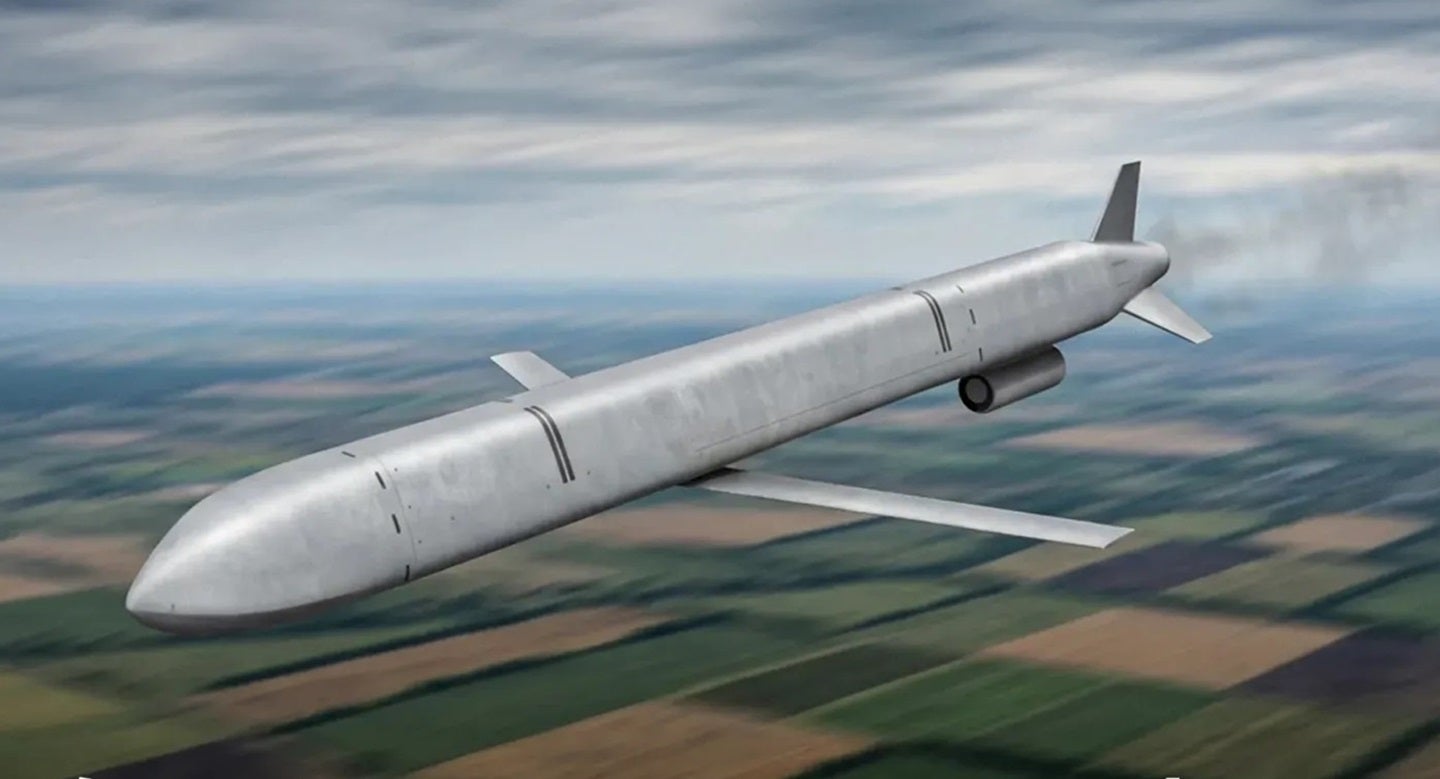
Polish officials reported three airspace violations: two cruise missiles and a jet-powered unmanned aircraft. The incidents occurred near Nowy Lipowiec, Mołodycz and Rudnik nad Sanem, roughly 50 to 60 kilometres from Nowa Dęba, where around 2,800 troops from ten countries were training with several thousand Polish personnel supporting them. British, French, Estonian, Lithuanian and Polish defence ministers were visiting the exercise site.
According to The Guardian, Poland's defence minister Władysław Kosiniak-Kamysz said it was unlikely to be accidental. Prime Minister Donald Tusk used stronger language, calling the incursion an intentional provocation. NATO Secretary General Mark Rutte described it as a “grave violation” of Polish airspace. Reuters separately reported Poland's condemnation after three violations.
Intent is not yet proven. That distinction matters. A cruise missile navigating a complex route toward Ukraine can stray; a damaged weapon can behave unpredictably. But Russia has now created a pattern in which the technical explanation does not erase the strategic effect. Moscow can test allied reaction time, force Poland to reveal air-defence procedures and make European governments debate escalation while Russian forces continue striking Ukraine.
Why NATO's Response Will Be Deliberately Limited
Poland's airspace is NATO territory, but an intrusion does not automatically trigger Article 5. The alliance's collective-defence clause is a political decision, not a vending machine that dispenses war after every radar track. Warsaw can request consultations under Article 4, raise air-defence readiness and seek more allied aircraft without asking the alliance to enter direct war with Russia.
That is exactly why this incident is dangerous. NATO must show that its eastern border is defended, while avoiding a response that allows the Kremlin to frame the alliance as the party widening the war. Scrambling fighters, placing Patriot batteries on heightened alert and increasing surveillance are militarily sensible. Shooting down every uncertain object is politically riskier, particularly when the target may be a weapon that has already exhausted its fuel or is falling away from populated areas.
The episode also exposes a practical problem that communiqués tend to hide: air defence is a chain, not a single missile battery. Poland needs early warning, identification, fighter control, layered interceptors and rules of engagement that work in seconds. A Patriot launcher may be excellent against a confirmed target, but it cannot compensate for ambiguous tracking, gaps in low-altitude coverage or a command system that waits for three capitals to agree.
The Exercise Was the Message
The timing gives the incident its political weight. European governments have spent years insisting that military exercises on NATO's eastern flank are about deterrence and reassurance. Russia has now placed real weapons, not simulated ones, inside that conversation. The message to Poland and its partners is blunt: support Ukraine and the war's geography can reach you without a formal declaration.
There is a second audience. Washington is trying to keep a diplomatic channel with Moscow open, while European governments are being asked to carry more of the burden for Ukraine's defence. A Russian strike that spills into Poland makes European security impossible to separate from the war, even if the United States would prefer to treat the two questions separately. Europe's argument for air defence, ammunition and industrial capacity has just acquired fresh evidence.
Russia may calculate that a non-lethal violation is useful precisely because it is deniable. If NATO responds weakly, Moscow learns that pressure works. If NATO responds dramatically, Moscow can claim that Europe is manufacturing a pretext for escalation. This is grey-zone coercion with a very real blast radius.
What to Watch Next
- Whether Poland publishes radar tracks or debris identification that clarifies the missiles' routes and intent.
- Whether NATO announces additional air-policing aircraft, sensors or Patriot deployments for Poland and the eastern flank.
- Whether the next Russian barrage produces another spillover incident, especially near allied exercises or logistics hubs.
- Whether European leaders connect this episode to long-term air-defence procurement instead of treating it as a one-day diplomatic flare-up.
The immediate lesson is not that NATO is about to fight Russia. It is that the alliance's red lines are being probed in increments—one missile, one drone, one “accident” at a time. Poland can absorb a crash without firing a shot. NATO cannot indefinitely absorb the political habit of treating repeated violations as background noise. The next test will be whether Europe builds enough air defence to make its warnings credible, or merely writes another statement after the next object falls.
Sources
- The Guardian, “Ukraine war briefing,” November 21, 2026.
- The Guardian, CCTV report on the crash near the Poland-Ukraine border, November 21, 2026.
- Reuters, “Poland condemns Russian provocation after three airspace violations,” November 20, 2026.
- Al Jazeera, “Russian missiles hit Poland: What happened, and could NATO respond?”, November 21, 2026.
On November 20, 2026, two Russian cruise missiles and a jet-powered drone violated Polish airspace, crashing near Nowy Lipowiec, Mołodycz, and Rudnik nad Sanem. This incident occurred during a military exercise involving approximately 2,800 troops from ten countries, prompting Polish officials to label the incursions as intentional provocations. NATO Secretary General Mark Rutte condemned the violations, highlighting their political implications for NATO's eastern border security.
- Two Russian cruise missiles and a drone crossed into Polish airspace.
- The incidents occurred near Nowy Lipowiec, Mołodycz, and Rudnik nad Sanem.
- Poland's defense minister indicated the violations were likely intentional.
- NATO Secretary General described the incidents as a grave violation of Polish airspace.
- The timing coincided with a military exercise involving 2,800 troops from ten countries.