
AUKUS Gave America a Stirling Submarine Base and Australia a 2032 Promise
 Marcus Chen
AUKUS Gave America a Stirling Submarine Base and Australia a 2032 Promise
Elbridge Colby, the Pentagon's third-ranking official and the author of the Trump administration's AUKUS review, told reporters Thursday that the submarine deal is "full steam ahead." The US is "very pleased with the progress" made since the review, he said, and Washington and Canberra have "a very clear understanding" of what each side must deliver. The first Virginia-class submarine is slated for sale to Australia in 2032.
Here is the math behind the optimism. US shipyards are producing Virginia-class boats at a rate of 1.1 to 1.2 per year. To meet US needs alone, that rate must reach 2.0 per year. To sell any boats to Australia, it must reach 2.33. The US submarine force currently sits at 49 boats against a force-level goal of 66 — about three-quarters of what the Navy says it needs. And before a single Virginia can change hands, the sitting president must certify that the transfer will not degrade US undersea capability. Colby, notably, was an avowed sceptic before he ran the review; the original draft was reportedly rewritten, on some accounts twice, to align with the president's line.
Enduring Access Is a Quiet Revolution
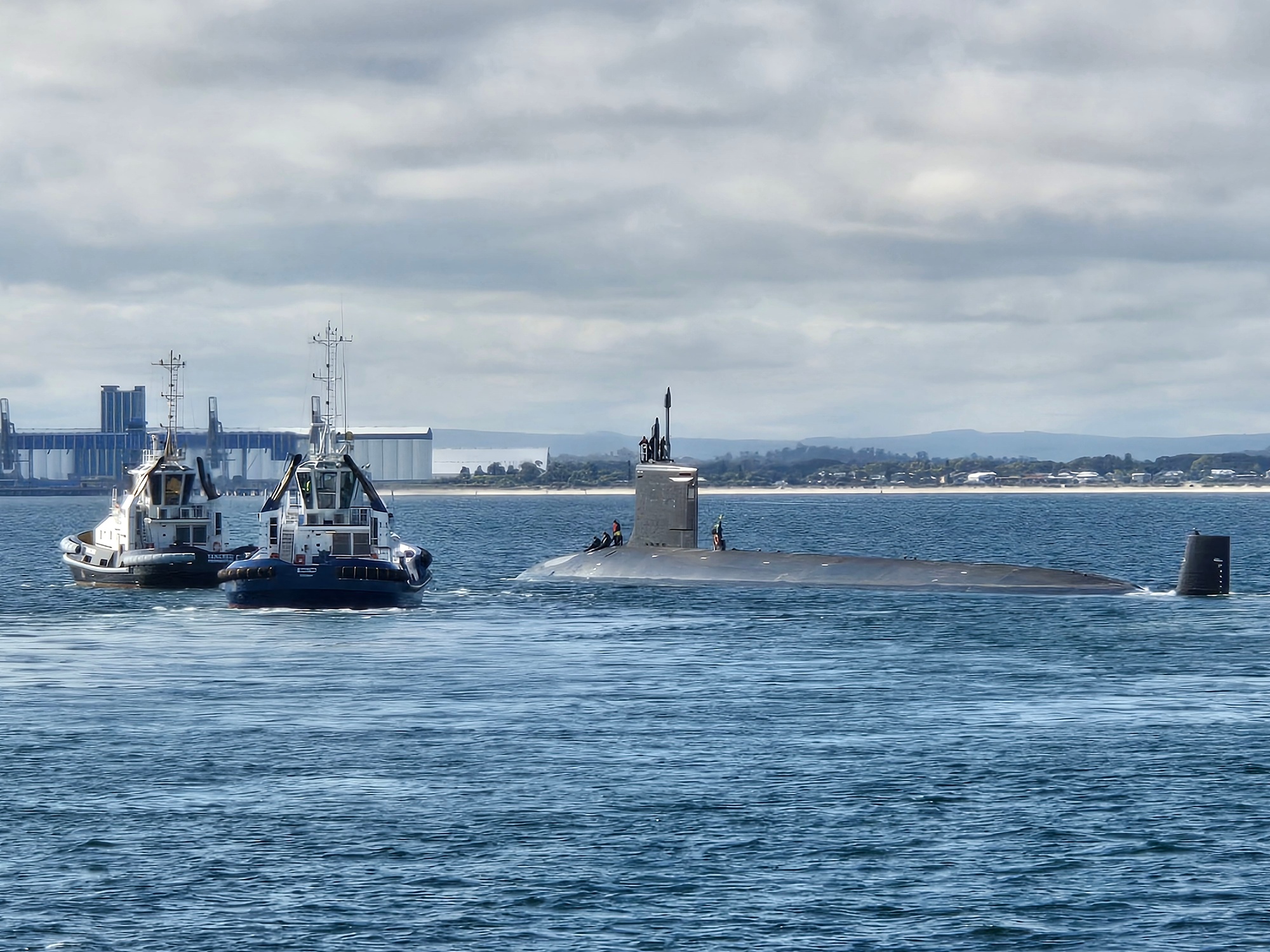
But the story that matters is not in the briefing room. It is at HMAS Stirling, the Royal Australian Navy base on Garden Island, Western Australia. On August 4, Australia's Chief of the Defence Force, Admiral Mark Hammond, formally confirmed that US attack submarines will retain "enduring access" to the base under Submarine Rotational Force-West. The declaration ended weeks of ambiguity that began when Defence Industry Minister Pat Conroy called SRF-West a "five-year commitment" that would "come to an end" in 2032, when Australia was expected to be "sovereign ready."
The Pentagon spent roughly 48 hours scrambling after Conroy's comments, because a fixed 2032 end date would have forced Washington to unwind personnel assignments, maintenance detachments, command structures and investment decisions. Defence Minister Richard Marles walked the statement back. Hammond made it permanent. The operational difference is real: a five-year rotation turns Stirling into a transition mechanism, while enduring access makes it a support node that US submarine commanders can plan around for decades.
America Already Built Its Base
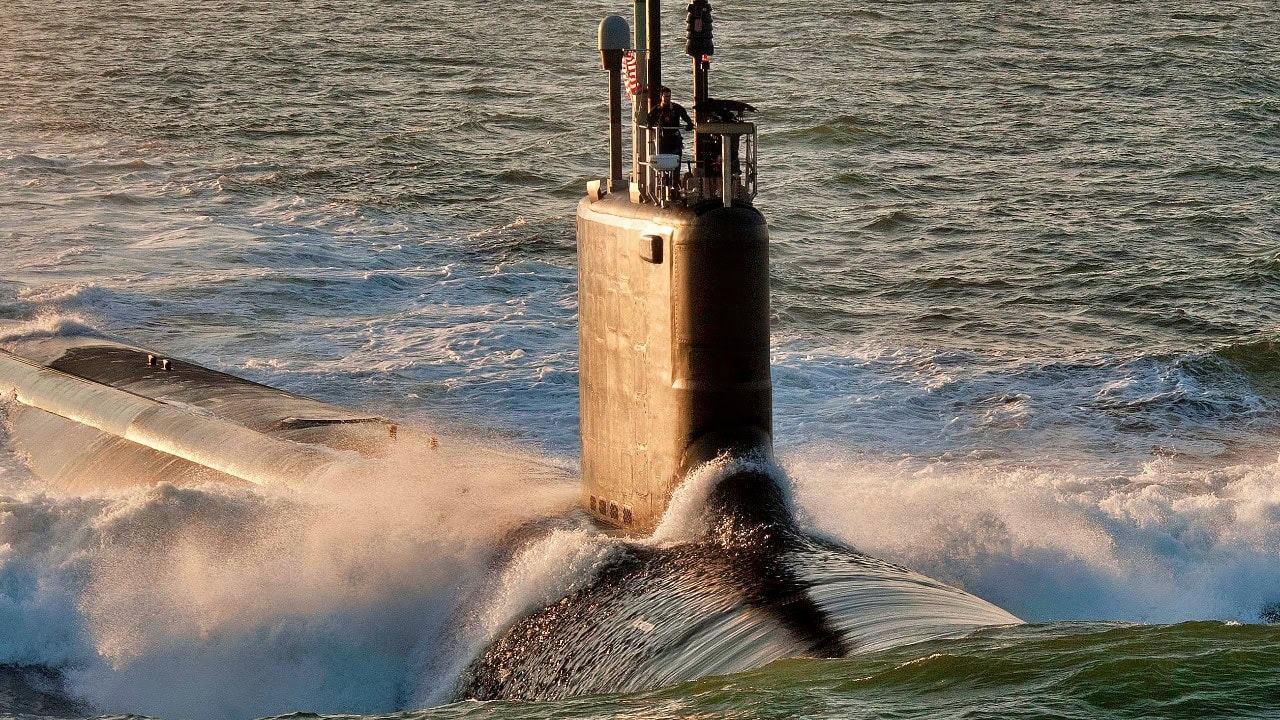
The infrastructure shows which interpretation won. Stirling is being expanded at a cost of A$8 billion to support up to four US Virginia-class and one British Astute-class submarine on rotation, with 2,300 US defense personnel — nearly double the 1,200 Canberra originally declared. On May 30, the US Navy quietly stood up Naval Support Activity Stirling, adopting the same administrative designation it uses for its most important overseas installations: NSA Bahrain, home of the Fifth Fleet; NSA Naples, headquarters of the Sixth Fleet; NSA Souda Bay, the Eastern Mediterranean's main logistics hub. The Navy also reactivated Submarine Squadron 3 at the base.
"In US parlance, a naval support activity is a shore facility with the full characteristics of a military base," said Elizabeth Buchanan, senior fellow for the US-Australia alliance at the Center for the National Interest. "While the Australian government of the day might not term NSA Stirling a base, the operator, Washington, certainly does."
This is not a semantic argument. Anyone who has served on a submarine knows an SSN can spend up to 80 percent of its operational life at sea; the value of a forward base is not the boat tied to the pier, it is the predictable shore architecture — nuclear-certified maintenance, logistics, crew support, regeneration — that keeps boats rotating on station. Enduring access means Washington plans Indian Ocean operations around Stirling the way it plans around Guam, not the way it plans around a port visit.
The Asymmetry Nobody in Canberra Wants to Name
The uncomfortable conclusion is that the deal has already delivered its most valuable asset — to one party. Even if Australia never receives a single Virginia-class boat, and even if the AUKUS-class boats from Adelaide slip into the 2040s or beyond, the United States has already secured what it needed: an Indian Ocean naval base, on the approaches to the Malacca Strait, with nuclear-certified infrastructure paid for by an A$8 billion Australian expansion and staffed by 2,300 Americans.
Consider the contrast in the same week. While Colby declared "full steam ahead" in Washington, Malcolm Turnbull told a parliamentary inquiry in Sydney that Australia's faith in the deal is "stark staring bonkers" and that the asymmetric arrangement would likely result in no submarines at all for Australia. Both men can be right at once — and that is the point. The boats are a promise subject to presidential certification, US shipyard rates and congressional mood. The base is a fact. It was stood up on May 30, expanded with Australian money and declared enduring on August 4.
What Canberra Actually Bought
The numbers make the trade plain. Australia is committed to spending up to A$368 billion through the mid-2050s for a submarine capability that may never arrive at the promised scale. In exchange, Washington gets a permanently available submarine-support hub in the Indian Ocean — the one piece of the arrangement that does not depend on certification, shipyard output or elections. Canberra is debating the terms of a promise. Washington has already banked the base.
The next test is not 2032. It is whether Submarine Squadron 3, NSA Stirling and the 2,300 Americans scheduled to arrive by 2030 behave like a rotation or like a garrison. The administrative framework is already in place. The only open question is whether anyone in Canberra will admit what the designation means — because the US Navy stopped pretending a long time ago.
The US and Australia are advancing their submarine deal, with the US securing enduring access to HMAS Stirling in Western Australia as of August 4, 2023. This arrangement allows for the rotation of US submarines, supported by an expansion costing A$8 billion. The first Virginia-class submarine is projected for sale to Australia in 2032, contingent on US certification and shipyard output.
- The US is expanding HMAS Stirling to support US submarines.
- 2,300 US defense personnel will be stationed at Stirling by 2030.
- The first Virginia-class submarine is expected to be sold to Australia in 2032.