
AUKUS Has Its First Submarine But Australia Still Lacks the Crew
 Marcus Chen
AUKUS Has Its First Submarine But Australia Still Lacks the Crew
The first U.S. attack submarine selected for Australia’s permanent AUKUS rotation is a real operational step. It is also a useful warning. Washington and Canberra can assign a Virginia-class boat today; they cannot produce the Australian personnel, infrastructure, and maintenance depth needed to sustain a submarine force on schedule.
The Rotation Is Moving From Paper to Steel
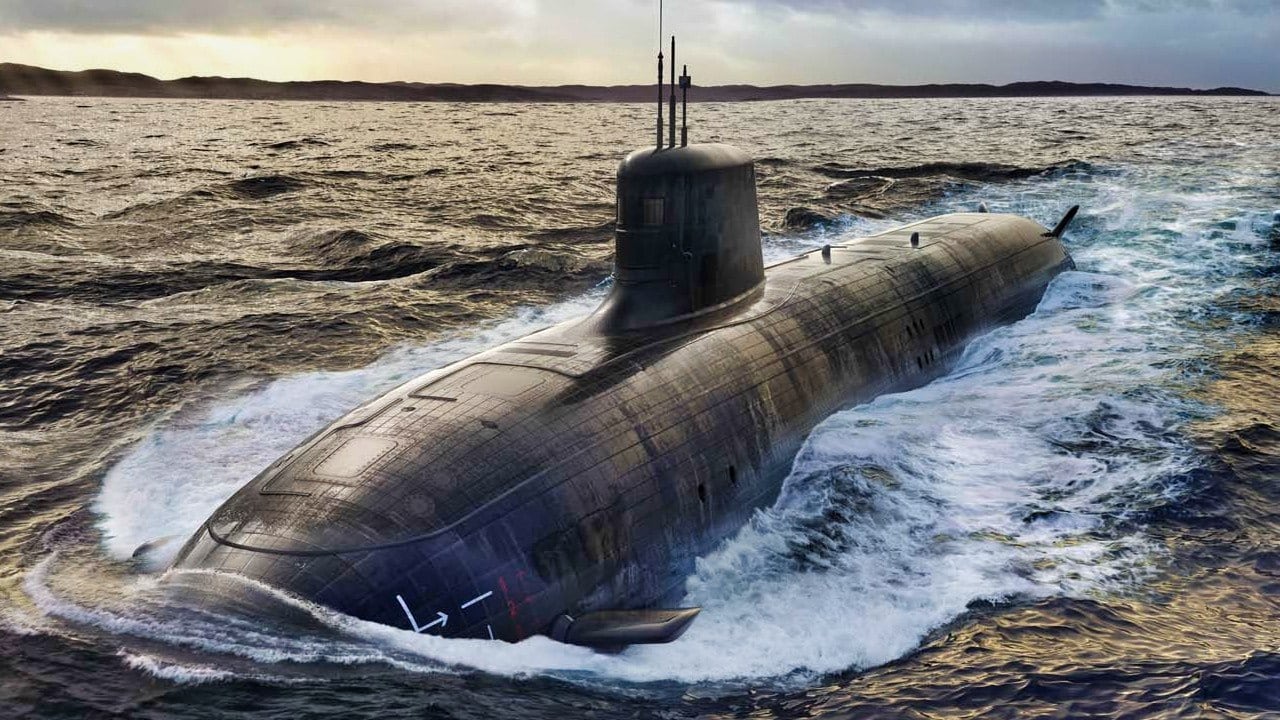
U.S. reporting on October 27 and 28 identified USS Colorado, a Virginia-class nuclear-powered attack submarine, as the first boat assigned to anchor the permanent AUKUS submarine rotation in Australia. A separate U.S. Navy release said a submarine had arrived in Western Australia for a scheduled maintenance period supporting AUKUS. USNI News reported that the Navy is planning the 2027 Australian assignment, while the Guardian reported that retired Australian admiral Peter Briggs believes Canberra must recruit hundreds more submariners to crew the future force.
Those are not contradictory developments. They describe two different clocks. The American clock is already running: a Virginia-class submarine can sail, deploy, and receive maintenance. The Australian clock is slower: nuclear stewardship, watch-keeping qualification, engineering training, security clearances, and a domestic command structure take years to build.
What a Virginia-Class Boat Actually Adds
A Virginia-class submarine is not a symbolic visit. It is a roughly 7,800-ton SSN with the endurance to remain submerged for extended periods, a sophisticated sonar suite, torpedoes, and vertical launch capacity for land-attack or anti-ship missions depending on its loadout. Its value near Australia is less about defending a single port than about extending the allied undersea picture across the approaches to the Philippine Sea and the Indonesian archipelago.
For a contingency involving Taiwan, one boat does not close a sea lane or guarantee sea control. It can, however, force the People’s Liberation Army Navy to spend more effort on anti-submarine warfare, complicate the movement of surface groups, and make surveillance data more valuable. The submarine’s greatest contribution may therefore be uncertainty. A Chinese commander who does not know where an allied SSN is must allocate aircraft, surface escorts, and sensors to search for it.
That is a meaningful improvement over an alliance plan that exists only in communiques. It is not a permanent undersea shield.
The Australian Bottleneck Is Human, Not Conceptual
Australia’s future fleet is expected to move through three stages: continued U.S. and British submarine rotations, Australian sailors serving aboard allied boats, and eventually conventionally armed, nuclear-powered SSNs built through the AUKUS program. Each stage depends on the one before it. If Canberra cannot generate enough qualified people for the first two stages, the delivery date for the third becomes a political aspiration rather than a force plan.
A Virginia-class submarine normally carries more than 130 personnel, but the manpower requirement for a rotation is larger than the crew visible on the boat. Australia needs relief crews, shore-based maintainers, nuclear-qualified officers, instructors, safety personnel, and a pipeline of candidates who can spend years training before taking a watch. It also needs enough people to absorb attrition without reducing the number of deployable boats.
Briggs’s warning that hundreds more Australians must be recruited is therefore the important number in this week’s news. The question is not whether Australia can find one submarine crew. The question is whether it can create a national system that repeatedly produces submarine crews while the Royal Australian Navy is already competing with civilian industry for engineers and technicians.
“A submarine rotation is a force-generation problem before it is a basing problem.”
Why the First Rotation Could Hide the Gap
There is a political advantage to announcing the first named U.S. boat. It gives AUKUS a visible milestone and reassures Canberra that the agreement has not stalled. But a named hull can also conceal the arithmetic. A single Virginia-class SSN on an Australian rotation is one operational asset. A credible undersea posture requires multiple boats, predictable relief, maintenance capacity, trained crews, and enough resilience to survive a deployment being extended or a boat entering an unscheduled repair period.
Maintenance is especially important. Submarines do not generate presence simply because a pier is available. They require depot work, spare parts, specialized tooling, nuclear safety controls, and technicians who understand the platform. The U.S. Navy is already managing a submarine industrial base under pressure. Sending boats to Australia increases allied access, but it does not create additional American shipyard capacity. Every rotational promise must be reconciled with the U.S. fleet’s own readiness demands.
The choice of a Virginia-class boat also sets a high training standard. Australia will not be learning on a simplified platform. It will be integrating into one of the most demanding naval systems in service, with procedures designed around a mature American nuclear enterprise. That is good for capability and unforgiving for timelines.
The AUKUS Test Is Sustained Presence
China will not judge AUKUS by the announcement of USS Colorado. Beijing will watch whether the rotation becomes routine, whether Australian sailors qualify in meaningful numbers, and whether the force can keep operating when U.S. priorities shift elsewhere. The People’s Liberation Army Navy has its own learning curve, but it benefits from operating close to home. Australia and the United States have to convert distance into access, and access into a repeatable sortie cycle.
That is why this development matters beyond the submarine itself. It moves AUKUS from a future procurement story into a near-term readiness test. The alliance now has to demonstrate that its crews, docks, maintenance schedules, and command arrangements can support the same submarine presence next year and the year after.
The first boat proves that Washington can provide an asset. It does not prove that Canberra can sustain a fleet. Until Australia solves the recruiting and training math, AUKUS has a submarine rotation—but not yet an Australian submarine force.
Sources
- U.S. Navy, “U.S. submarine arrives in Western Australia for scheduled maintenance period in support of AUKUS,” October 27, 2026.
- USNI News, “UPDATED: U.S. Navy Taps Attack Boat for 2027 Australian AUKUS Assignment,” October 26, 2026.
- The Guardian, “Australia must recruit hundreds more to crew AUKUS submarines, retired admiral warns,” October 28, 2026.
USS Colorado was assigned to the AUKUS submarine rotation in Western Australia, marking a significant operational step. However, Australia faces challenges in recruiting sufficient personnel to crew the submarine effectively. Retired Admiral Peter Briggs emphasized the need for hundreds more submariners to support this initiative, highlighting the importance of training and infrastructure for sustaining a submarine force.
- USS Colorado is the first Virginia-class submarine assigned to Australia for AUKUS.
- Australia lacks sufficient trained personnel to crew the submarine effectively.
- Retired Admiral Peter Briggs warns that hundreds more submariners need to be recruited.
- The Virginia-class submarine enhances undersea capabilities in the region.
- Australia's future submarine fleet development depends on successful personnel training and recruitment.