

Summary and Key Points – A retired UK rear admiral, Philip Mathias, argues the UK share of AUKUS is at serious risk of collapse because Britain lacks enough skilled people to build and sustain nuclear submarines.
-Under the 2023 “optimal pathway,” the UK and Australia plan to design and produce SSN-AUKUS boats for delivery from the late 2030s, including construction in South Australia.
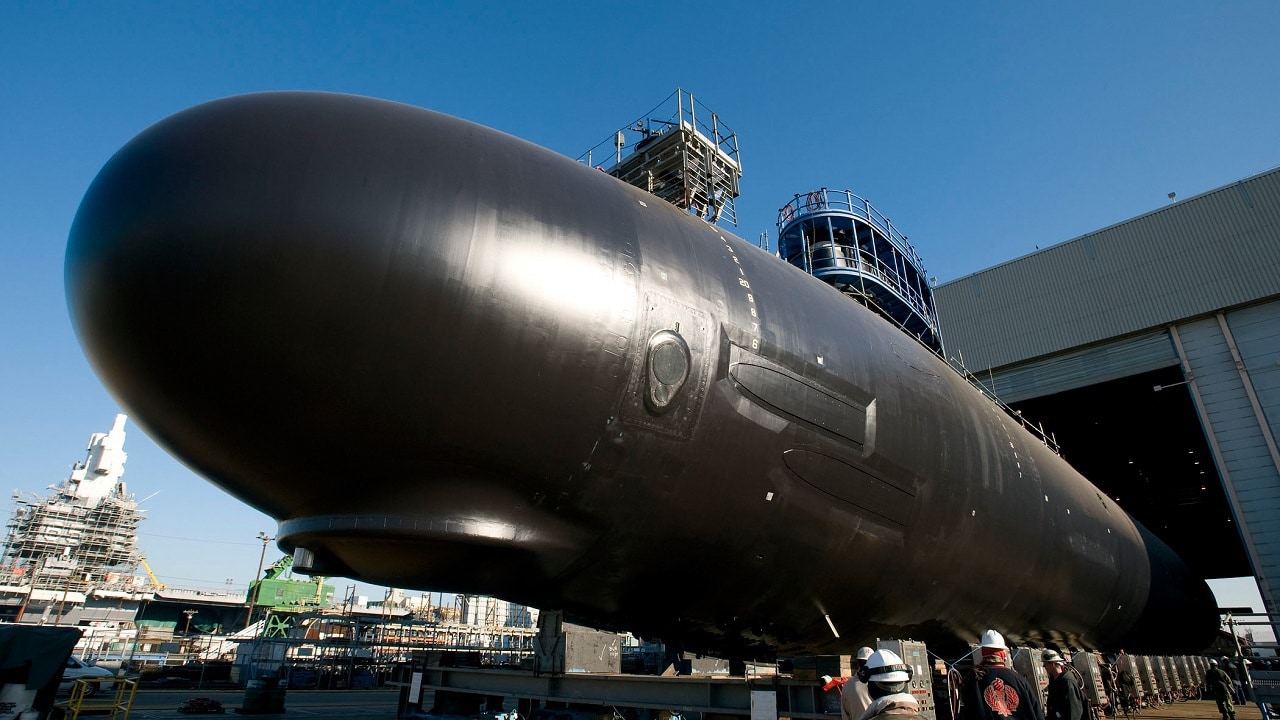
Virginia-Class. Image Credit: Creative Commons.
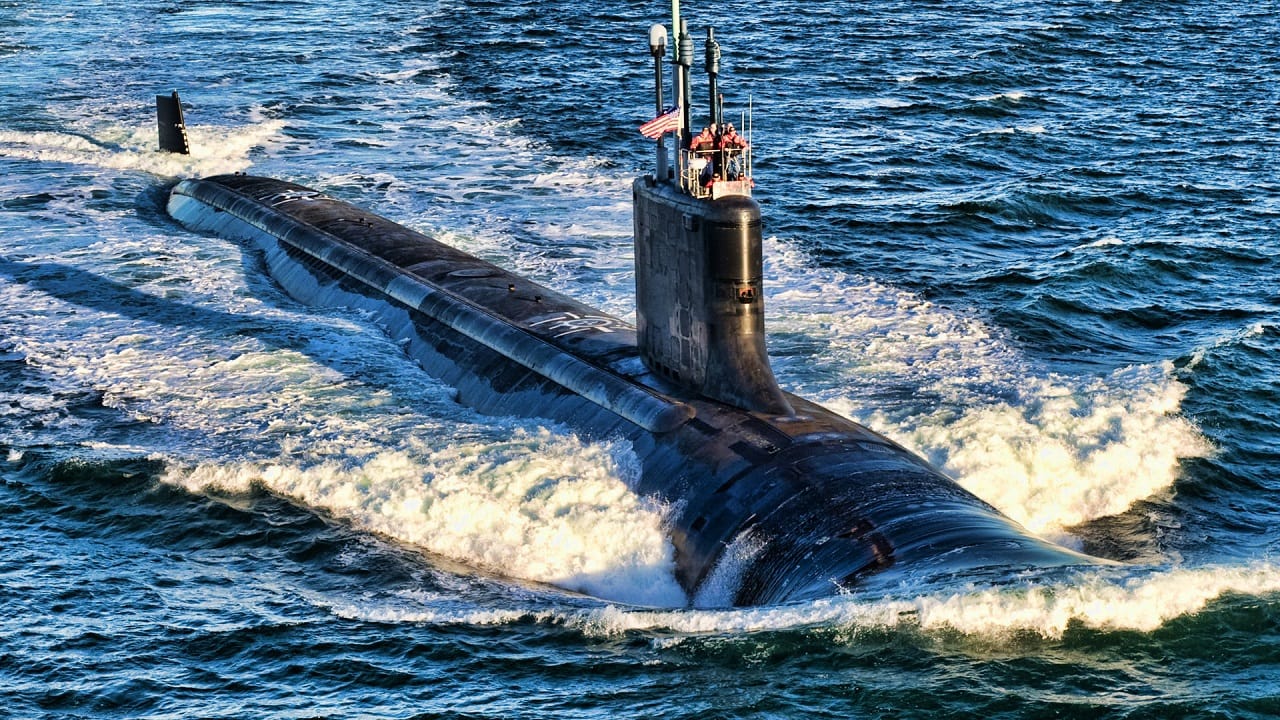
US Navy Attack Submarine. Image Credit: Creative Commons.
-Mathias warns Australia underestimated the Royal Navy’s readiness and industrial shortfalls, predicting the United States may still provide used Virginia-class submarines while the UK-Australia build effort falters amid management gaps, long refit backlogs, and strained patrol cycles.
Top Former UK Defense Official Says AUKUS Project Likely to Fail
A plan, more than four years old, to develop a new class of nuclear-powered submarine for Australia and the United Kingdom under the Australia-UK-US (AUKUS) pact is very likely to collapse. This is due to the parlous condition of the UK’s submarine service, a former top British defence official has warned.
Under the “optimal pathway” for the trilateral AUKUS agreement announced by the Australian Prime Minister Anthony Albanese’s government in March 2023, the UK Royal Navy (RN) and the Royal Australian Navy (RAN) would develop and manufacture a new class of nuclear-powered attack submarines, to be known as the SSN-AUKUS. These subs would, in theory, begin delivery in the late 2030s, with at least 5 built in South Australia.
The UK official was retired Rear Admiral Philip Mathias, a former director of nuclear policy with the UK Ministry of Defence. Speaking to the Australian daily, the Sydney Morning Herald, he said his impression was that the Australian Department of Defence was not adequately informed about the poor conditions within the RN—and that they could lead to the collapse of the effort.
He said that initially, UK politicians had enthusiastically embraced the industrial and economic opportunities of AUKUS. They were also intrigued by the prospects of expanding the UK’s military footprint in the Indo-Pacific theatre.
The UK and US Part of the Bargain
“But policy and money don’t build nuclear submarines. People do that and there are not enough of them with the right level of skills and experience,” said Mathias, who is himself an ex-nuclear submarine commanding officer.
Overall, his concern is that the US obligations to the pact will be fulfilled in the initial phases of the program, but that the effort will fall apart when it comes to the point of the UK and Australian shipbuilders developing the new AUKUS-class of nuclear-powered submarines.
“Whilst the United States may sell some [nuclear-powered submarines] to Australia, there is a high probability that the UK element of AUKUS will fail, making the international row in 2021 over the cancellation of the plan for Australia to build French-designed submarines look like a non-event.”
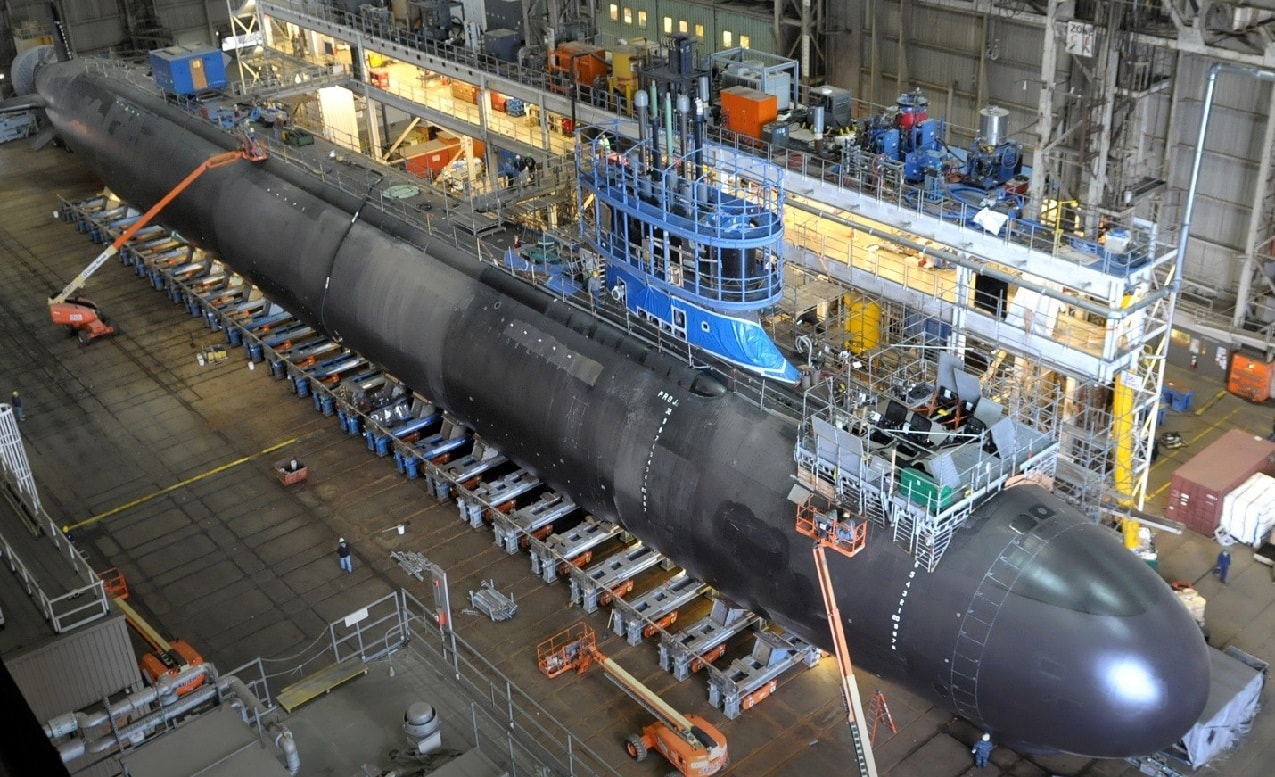
US Navy Virginia-class Submarine Under Construction.
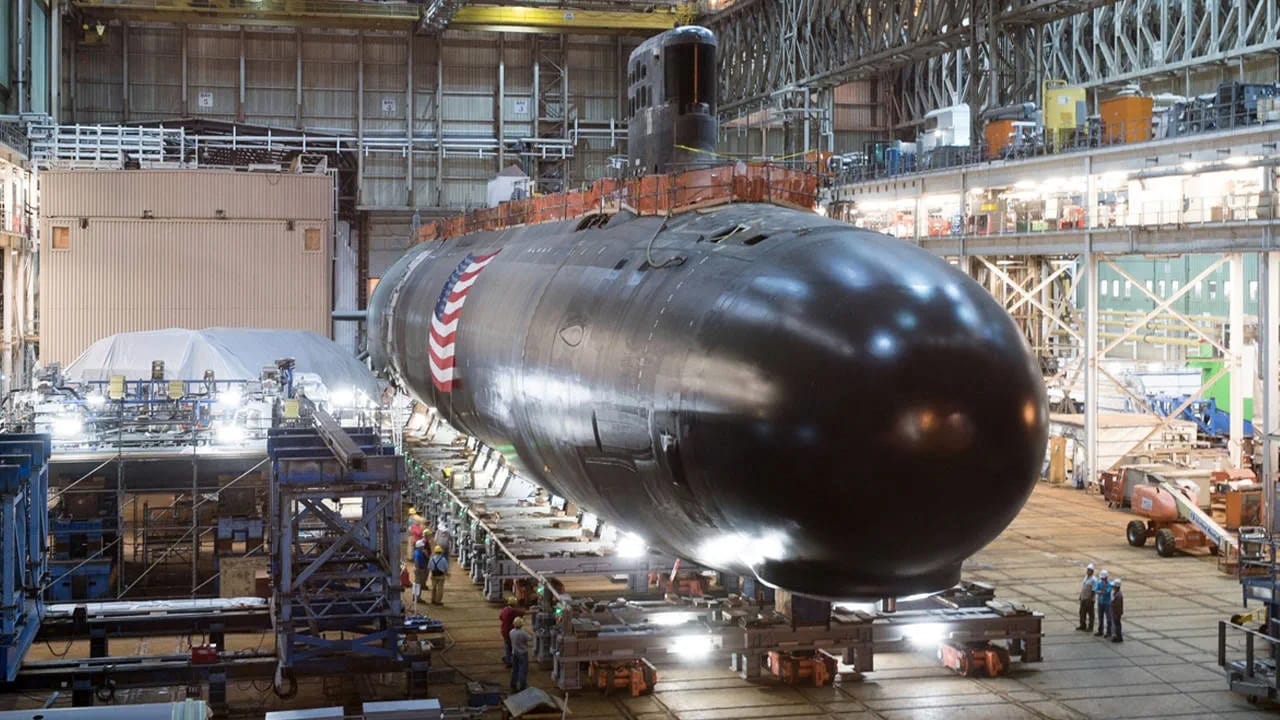
US Navy Virginia-class Submarine Under Construction.
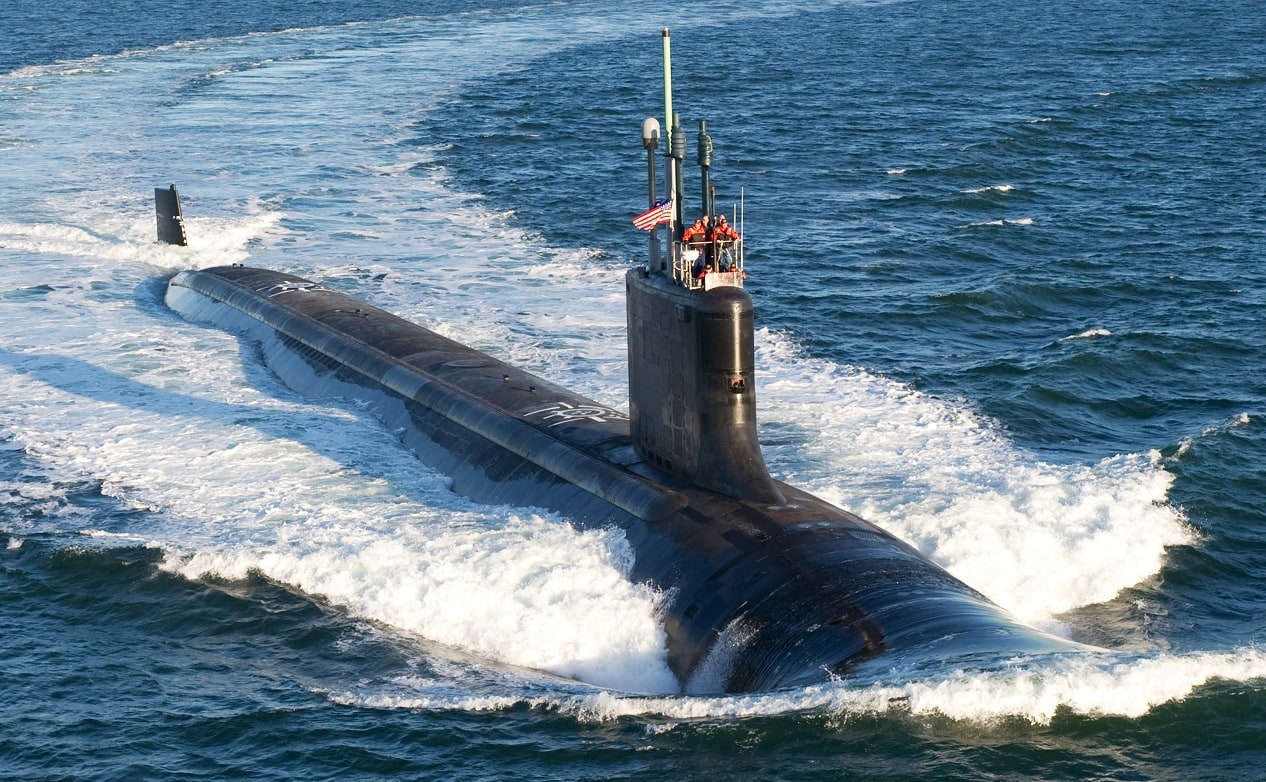
The Virginia-class attack submarine Pre-Commissioning Unit Mississippi (SSN 782) conducts alpha trials in the Atlantic Ocean. (U.S. Navy photo courtesy of General Dynamics Electric Boat)
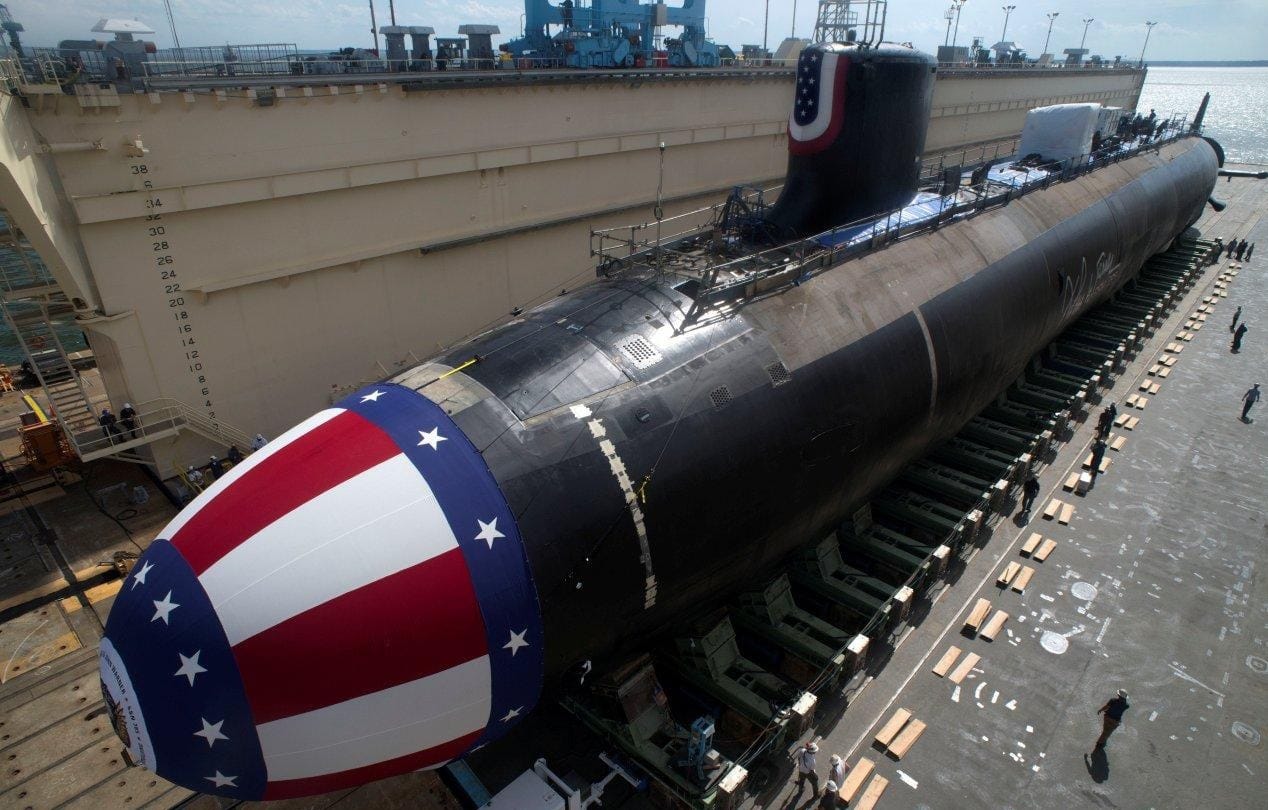
Image of Virginia-class Submarine. Image Credit: Creative Commons.
Mathias, was in charge of a 2010 review of the UK Trident nuclear-weapons system and commented: “It is clear that Australia has shown a great deal of naivety and did not conduct sufficient due diligence on the parlous state of the UK’s nuclear submarine program before signing up to AUKUS – and parting with billions of dollars – which it has already started to do.”
“In the last four years there have been plenty of announcements and political grandstanding, plus numerous international visits, forums and discussions but very little substantive progress on actually developing the industrial base needed to build and support nuclear-powered submarines.”
The Virginia-Class and the Russian Threat
The US is planning to sell Australia three second-hand Virginia-class submarines, in line with Washington’s obligations under the AUKUS pact. While this is taking place, the UK and Australia are separately developing the SSN-AUKUS, a replacement for the RN’s retiring Astute-class nuclear-powered submarine.
The SSN-AUKUS, still under design, is planned to enter service with the UK in the late 2030s and with the RAN in the early 2040s.
But the effort is bedevilled by what Mathias describes as problems with the key organisations responsible for the UK part of the program. They suffer from the program’s management being staffed with individuals bereft of any meaningful nuclear submarine experience or expertise. This, in turn, makes it problematic for the UK to support the development of the RAN’s nuclear-powered submarines meaningfully, he says.
If the SSN-AUKUS is delivered, the boat may well be “much bigger and less agile” than any previous classes of British nuclear-powered submarines. This he chalks up to the design requirements dictating trade-offs in capability and operations.
He also described the actual number of UK submarines that could successfully neutralize the threat posed in the North Atlantic by Russia’s nuclear fleet, or act as escorts for carrier strike groups in the Indo-Pacific theatre, as “shockingly low”.
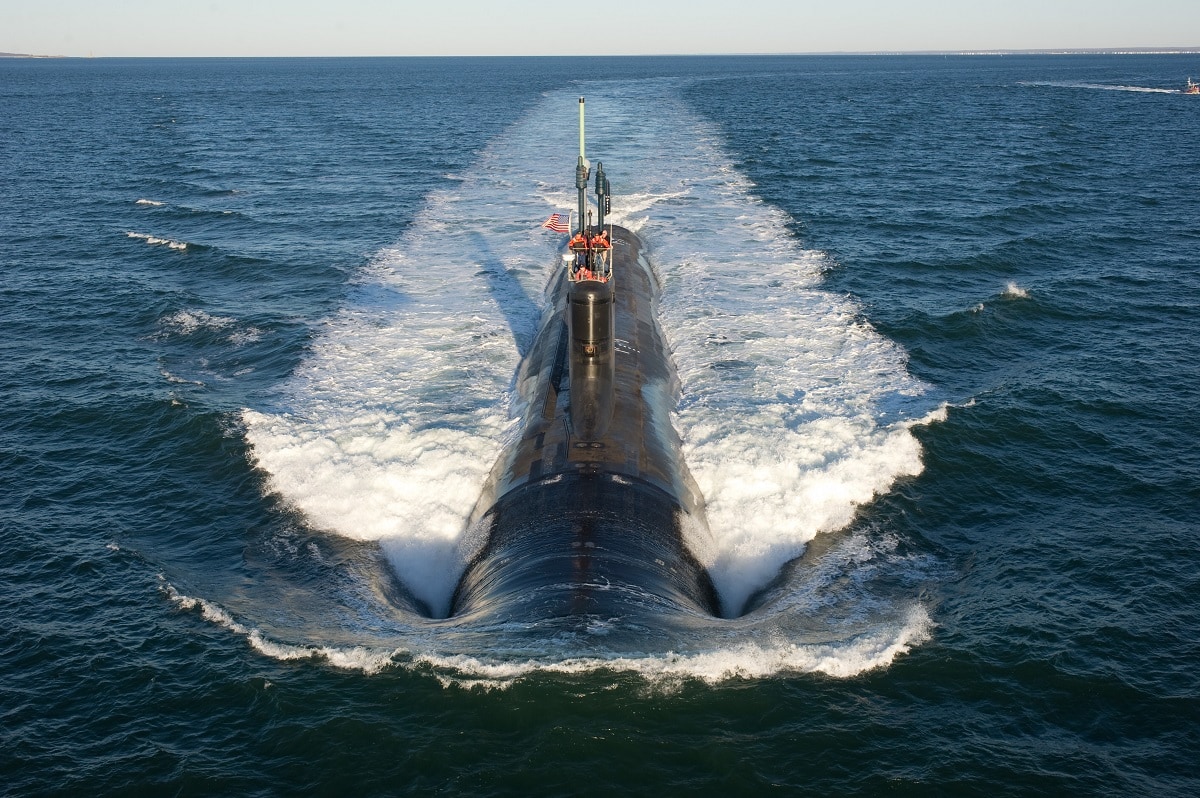
The Virginia-class attack submarine Pre-Commissioning Unit Mississippi (SSN 782) conducts alpha trials in the Atlantic Ocean. (U.S. Navy photo courtesy of General Dynamics Electric Boat)
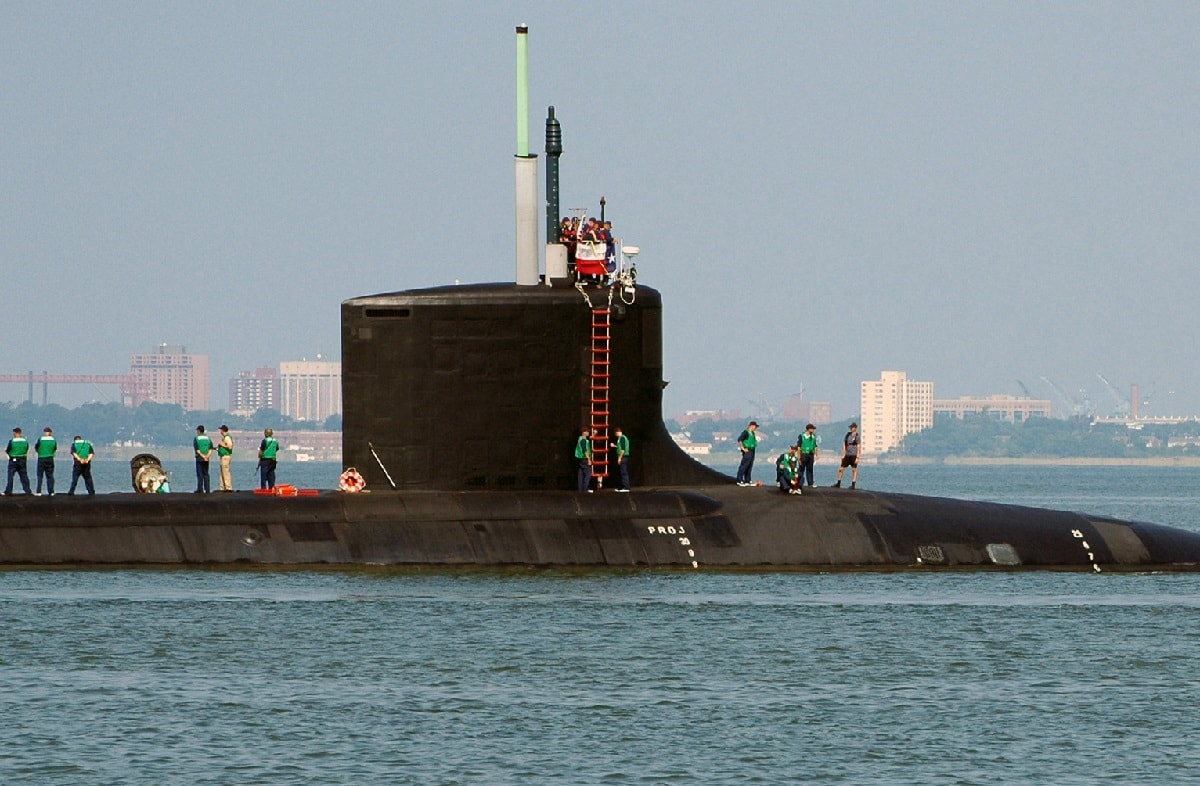
U.S. Navy Sailors stationed aboard the Virginia Class New Attack Submarine Pre-Commissioning Unit (PCU) TEXAS (SSN 775) stands topside as the boat gets underway from Naval Station Norfolk, Va., Aug. 22, 2006. TEXAS is the second Virginia Class submarine built and the first major U.S. Navy combatant vessel class designed with the post-Cold War security environment in mind. TEXAS will be commissioned Sept 9, 2006 in Galveston, Texas. (U.S. Navy photo by Mass Communication Specialist Seaman Kelvin Edwards) (Released)
A shortage of boats creates a very real strain on the silent service, with the UK’s ballistic missile submarines now required to conduct patrols lasting more than 200 days. In comparison, the standard submarine patrol duration during the Cold War was only about 70 days, he said.
The UK defense publication Navy Lookout reported last year that there were several recent periods when the RN had an inadequate number of nuclear-powered submarines at sea.
“Currently, only one of the six boats in commission is operational, and four of them are at very low readiness,” the publication reported.
Mathias previously created a stir in the RN community in December 2025 when he told the London Daily Telegraph that the UK is “no longer capable of managing a nuclear submarine program” and that “performance across all aspects of the program continues to get worse in every dimension.”
“This is an unprecedented situation in the nuclear submarine age,” he said. “It is a catastrophic failure of succession and leadership planning.”
About the Author: Reuben F. Johnson
Reuben F. Johnson has thirty-six years of experience analyzing and reporting on foreign weapons systems, defense technologies, and international arms export policy. Johnson is the Director of Research at the Casimir Pulaski Foundation. He is also a survivor of the Russian invasion of Ukraine in February 2022. He worked for years in the American defense industry as a foreign technology analyst and later as a consultant for the U.S. Department of Defense, the Departments of the Navy and Air Force, and the governments of the United Kingdom and Australia. In 2022-2023, he won two awards in a row for his defense reporting. He holds a bachelor’s degree from DePauw University and a master’s degree from Miami University in Ohio, specializing in Soviet and Russian studies. He lives in Warsaw.