
AUKUS Turns Five in 2026 With a Virginia-Class Submarine Gap
 S.W
S.WAUKUS Turns Five in 2026 With a Virginia-Class Submarine Gap
Five years after Australia, the United Kingdom, and the United States announced AUKUS, the partnership has produced training pipelines, shipyard plans, and legal agreements. It has not yet produced the one capability that gives the arrangement its military weight: an Australian nuclear-powered attack submarine. That distinction matters more than the anniversary language.
The program has built a pathway, not a fleet
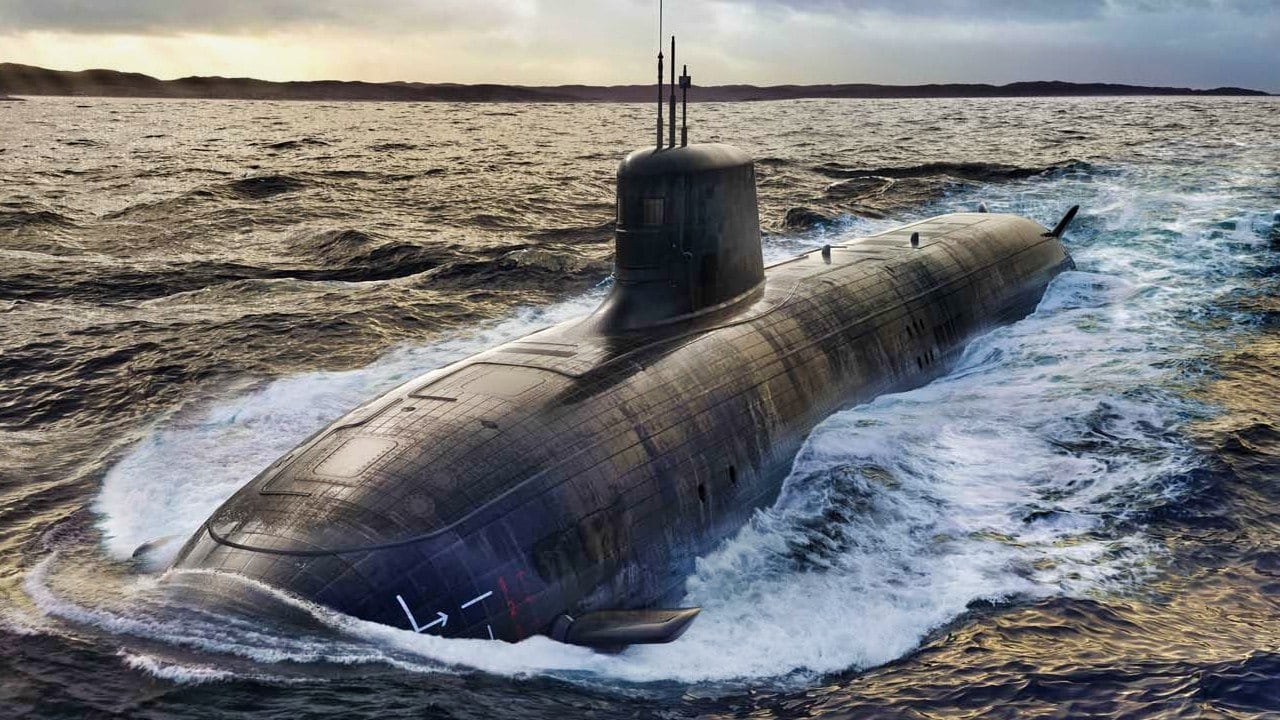
The Australian Submarine Agency says the fifth anniversary is marked by Australians training with the U.S. and Royal Navy, local companies entering submarine supply chains, and infrastructure work in Western and South Australia. Those are real outputs. They are also inputs. None of them puts a boat into the water.
The Optimal Pathway announced in March 2023 calls for Australia to buy three U.S. Virginia-class submarines, with an option for a fourth, before the SSN-AUKUS design enters Australian production. The first Australian-built boat is not expected until the early 2040s. Even on the most optimistic schedule, Canberra therefore faces a long transition in which its undersea deterrent still depends on six Collins-class diesel-electric submarines and a small number of visiting American and British nuclear boats.
That is not a criticism of the Collins fleet. It is a calendar problem. Submarines are not software. A delay in a combat system can be absorbed; a delay in a pressure hull consumes an entire patrol cycle.
Virginia-class availability is the hard constraint
The U.S. Navy is supposed to build two Virginia-class attack submarines a year while also starting the Columbia-class ballistic-missile submarine. In practice, the industrial base has struggled to deliver even one Virginia on schedule. Congressional Research Service assessments have repeatedly identified labor shortages, supplier bottlenecks, and shipyard congestion as the central risks to the production plan.
For AUKUS, the arithmetic is unforgiving. Washington needs Virginia boats for its own attack-submarine force, which is already below the fleet size planners say is required for global commitments. Australia is expected to receive its first purchased boat in the 2030s, but that transfer is politically and militarily contingent on the U.S. force not being weakened. If American construction slips by a year, the impact is not one year. It propagates through maintenance windows, crew training, certification, and the replacement schedule for the Collins fleet.
Any sailor who has served on a destroyer understands the difference between nominal inventory and deployable inventory. A submarine listed on a fleet spreadsheet may be in deep maintenance, working up, or waiting for a crew. AUKUS planning often speaks in hull numbers. The Indo-Pacific will be decided by patrol days, weapons loadouts, and the ability to regenerate a crew after deployment.
Australia is solving the industrial problem in the wrong order
Canberra is doing the sensible things first: training nuclear-qualified personnel, building a regulatory system, expanding facilities, and integrating Australian firms into the U.S. and British supply chains. The agency describes this as nation-building. It is. But nation-building does not automatically create a sovereign submarine enterprise.
Australia has never operated a nuclear-powered submarine. It must develop nuclear stewardship, maintenance, safety, dockyard skills, and a workforce large enough to sustain a boat that cannot simply be sent back to the United States for every major defect. The Collins life-extension program is therefore not a side project. It is the bridge that keeps Australian undersea presence alive while the new industrial system learns to function.
The danger is that political milestones will be mistaken for operational milestones. A treaty, a training cohort, or a new building can be announced on schedule. A submarine must complete design, fabrication, testing, sea trials, certification, and crew workups. The last steps are where optimistic calendars go to die.
What this means for the Indo-Pacific
China does not need to defeat AUKUS in a single confrontation. Beijing only needs to make the alliance spend its next decade managing delay. A Virginia-class boat operating from Western Australia would complicate Chinese planning across the eastern Indian Ocean, the approaches to Southeast Asia, and the South China Sea. An Australian SSN-AUKUS boat would eventually add endurance and local ownership to that effect. But a capability that arrives in 2042 cannot answer a crisis in 2032.
This is why the anniversary should be judged against three numbers: the number of Virginia-class boats the U.S. industrial base can deliver each year, the number of Collins-class boats available during the transition, and the date of the first Australian-built SSN-AUKUS sea trial. Training hours and construction cranes matter only if they move those numbers.
AUKUS has created a credible direction of travel. It has not yet created credible submarine mass.
The partnership can still succeed, but success requires treating the transition fleet as a combat requirement rather than a public-relations bridge. Australia needs Collins availability funded for the full gap. The United States needs to publish a delivery schedule that assumes shipyard reality, not political necessity. Britain needs to protect SSN-AUKUS design work from becoming a second set of promises competing for the same industrial skills.
Five years in, AUKUS is strong on intent and weak on hulls. Until the Virginia transfers are contractually protected, the Collins extension is resourced, and the first Australian-built submarine has a realistic date, the alliance remains a plan for undersea power—not undersea power itself.
Sources
- Australian Submarine Agency, Five years of AUKUS, September 2026.
- Congressional Research Service, AUKUS and Indo-Pacific Security.
- U.S. Navy and Royal Australian Navy reporting on Virginia-class operations and submarine industrial-base constraints.
Australia is training personnel and integrating local companies into submarine supply chains in Western and South Australia as part of the AUKUS partnership. The partnership has not yet produced an Australian nuclear-powered attack submarine, with the first expected in the early 2040s. The U.S. Navy's production of Virginia-class submarines is facing significant delays, impacting Australia's submarine capabilities.
- AUKUS partnership has not yet produced an Australian nuclear-powered attack submarine.
- Australia plans to buy three U.S. Virginia-class submarines before the SSN-AUKUS design enters production.
- The first Australian-built submarine is not expected until the early 2040s.
- The U.S. Navy struggles to deliver Virginia-class submarines on schedule due to industrial base issues.
- Australia's undersea deterrent relies on Collins-class submarines during the transition.