
Australia and the Philippines Need More Than a South China Sea Hub
 Marcus Chen
Australia and the Philippines Need More Than a South China Sea Hub
A four-country defense hub in the South China Sea sounds like a force multiplier. It is more likely to be a test of whether allied access arrangements can produce combat power before a crisis starts. Reports on November 16 said Australia and the Philippines had agreed to deepen military ties, while a separate proposal involving the Philippines, Australia, Japan, and the United States is being discussed as a way to counter Chinese pressure. The political signal is clear. The operational question is harder: what can these partners actually put on the water, in the air, and inside a contested command network?
The Agreement Is Useful but Not Yet a Force
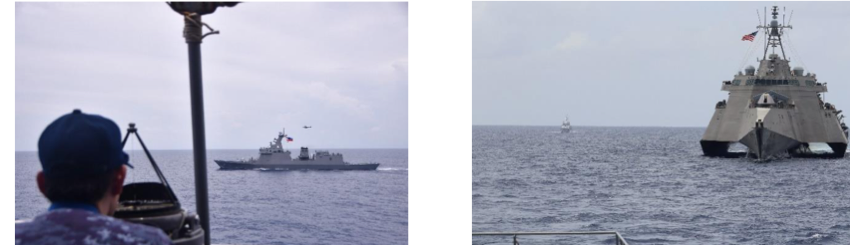
The Australia-Philippines deal matters because Manila is trying to turn access into a standing capability. Australian aircraft, ships, and surveillance teams can operate more effectively from Philippine territory than from bases thousands of miles to the south. Philippine forces, meanwhile, gain training, logistics links, and additional maritime awareness. That is the practical value of the arrangement.
But an agreement is not the same thing as a combined task force. A hub needs a host-nation support system, secure communications, fuel, munitions, maintenance crews, and a command relationship that survives the first missile warning. If the four governments have not decided who can authorize what, the hub will remain a diplomatic venue with uniforms.
The South China Morning Post described the concept as a new four-country defense hub. Baird Maritime and Euronews separately reported the deepening Australia-Philippines relationship. Those reports point to a useful political alignment, but they do not establish that a permanent four-nation headquarters, integrated air-defense network, or shared rules of engagement already exists. That distinction matters. Beijing will measure the hardware and permissions, not the headline.
Distance Still Sets the Arithmetic
Australia brings capable platforms, but geography imposes a tax. A Royal Australian Air Force P-8A Poseidon can cover large maritime sectors, and Australian surface combatants can add air-defense and strike capacity. The Philippines offers proximity to the South China Sea and access to facilities near the contested approaches. Japan and the United States bring the deeper sensor, tanker, and command architecture. Together, those pieces could improve the tracking of Chinese coast guard and naval activity.
Yet coverage is not control. A patrol aircraft may find a ship; it cannot keep a sea lane open by itself. A frigate may escort a Philippine vessel; it cannot remain on station indefinitely without fuel, spare parts, and a replacement crew. Even a useful base becomes a liability if its runway, fuel farm, or communications node is not hardened and dispersed.
That is the calculation allied planners should publish. How many aircraft can the hub generate each day? How many ships can it sustain for 30 days? How many anti-ship and air-defense missiles are physically stored nearby? How fast can a damaged sensor be replaced? Without those numbers, “presence” is doing too much work.
China Has More Ways to Raise the Cost
China does not need to attack the hub to make it ineffective. The People's Liberation Army can use maritime militia and coast guard vessels to create constant contact, aircraft to pressure airspace, cyber operations to disrupt planning, and legal or economic measures to punish the host government. The objective would be to force the coalition to spend its limited sorties and political attention on gray-zone incidents.
That is where the four-country format helps. A Philippine patrol under Australian, Japanese, or American surveillance support is harder to isolate politically than a lone Philippine operation. Shared data can expose patterns of coercion. More frequent exercises can shorten the time between detection and response. These are real gains.
They are also vulnerable gains. The Philippines remains the frontline state, and Manila will decide how much risk it is willing to accept. Canberra may support maritime security while resisting any automatic commitment to fight over every contested feature. Tokyo has its own escalation thresholds. Washington can provide the backbone, but it cannot be everywhere at once. A coalition that has not settled these differences before a crisis will discover them under pressure.
The Hub Needs a Mission Narrower Than Containment
The most credible mission is maritime domain awareness, convoy protection, search and rescue, and the defense of Philippine forces and resupply routes. Those tasks are concrete enough to train and measure. They also support deterrence without pretending that four partners can impose sea control across the entire South China Sea.
The wrong mission is to advertise the hub as a mechanism for containing China. That invites Beijing to treat every aircraft sortie and port visit as part of an offensive campaign. It also creates expectations the partners may not meet. Anyone who has served on a destroyer knows that a ship’s combat system is only as good as its communications, logistics, and rules of engagement. A coalition is no different.
What Should Happen Next
- Define the command chain. The partners should publish which nation controls surveillance, escort, and self-defense decisions during routine operations and a crisis.
- Stock the hub. Fuel, spare parts, medical support, and defensive missiles must be positioned before tensions rise, not shipped after the first incident.
- Exercise the ugly scenarios. Training should include damaged runways, jammed communications, civilian vessel interference, and a resupply convoy under coast guard pressure.
- Measure output. The test is sorties, patrol days, tracked contacts, and replenishment time—not the number of flags at an opening ceremony.
The Australia-Philippines agreement is a sensible move, and a four-country hub could make Chinese coercion more visible and more costly. But access is not power until it produces sustained operations. If Canberra, Manila, Tokyo, and Washington cannot turn this idea into fuel, sensors, missiles, and a clear decision chain, the hub will be another map symbol. China has plenty of those already.
Sources
Australia and the Philippines agreed to deepen military ties on November 16, discussing a four-country defense hub with Japan and the United States to counter Chinese pressure in the South China Sea. This arrangement aims to enhance operational capabilities and maritime awareness, although it currently lacks a permanent command structure and logistical support. The focus is on improving military readiness rather than merely establishing a diplomatic venue.
- Australia and the Philippines agreed to deepen military ties on November 16.
- A four-country defense hub involving Japan and the United States is being discussed.
- The hub aims to counter Chinese pressure in the South China Sea.
- The agreement focuses on operational capabilities rather than just diplomatic relations.
- The Philippines is enhancing its military capabilities through this arrangement.