

AUKUS is—understandably—associated with Australia gaining nuclear-powered submarines. That makes sense because submarines are the largest component of the trilateral agreement and the most politically visible portion of the deal.
Australia intends to spend hundreds of billions of AUD over the next few decades to develop a nuclear-submarine capability (rotating US and UK SSNs through Australia, then acquiring Virginia-class SSNs in the 2030s, and eventually operating the SSN-AUKUS platform).
But the planned schedule is at risk of industrial delays.
US submarine yards are already struggling to build enough Virginia-class boats for the US Navy.
To meet the production rate needed to satisfy combined US and Australian demand, the US will need to accelerate; currently, the tempo is below the required 2.33 boats per year.
This raises a question with difficult political ramifications: What if Australia doesn’t receive its submarines on time? What happens to AUKUS?
Maintaining AUKUS
AUKUS wouldn’t just disappear because the submarines weren’t delivered on time. Remember, the agreement has two pillars. Pillar I is a nuclear-powered submarine enterprise.
Pillar II is cooperation on broader advanced military technologies.
The second pillar, of course, survives without submarine transfer; it encompasses everything from AI to cyber to electronic warfare to hypersonic missiles.
So major submarine delays would undermine AUKUS’s central promise, but they wouldn’t destroy the partnership entirely.
If such a delay occurred, Australia could emphasize Pillar II, although Australia has admitted there is no official “Plan B” for nuclear submarines.
Running Out of Time
Australia can’t wait forever.
The existing Collins-class diesel-electric submarines entered service beginning in the 1990s.
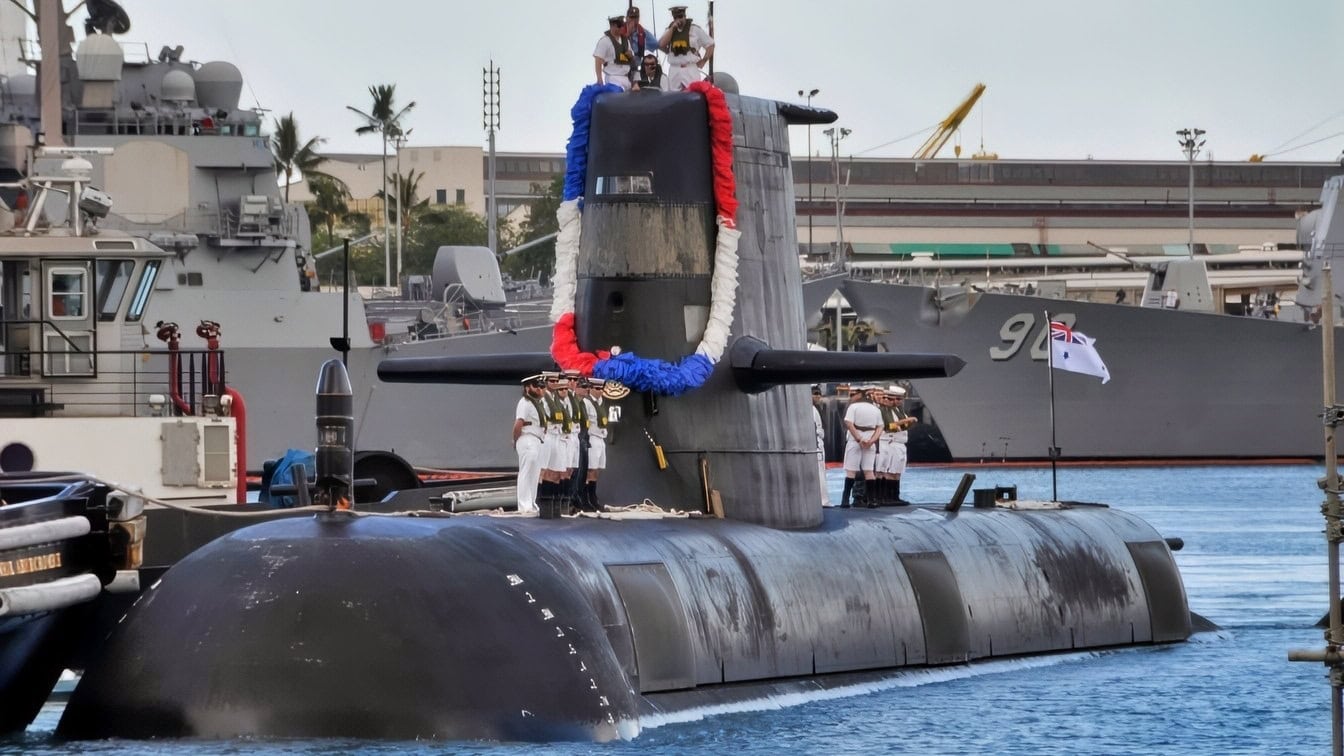
JOINT BASE PEARL HARBOR-HICKAM, Hawaii – (June 30, 2012) – Her Majesty’s Australian Ship, HMAS Farncomb (SSG 74), a Collins class submarine operated by the Royal Australian Navy, arrived at Joint Base Pearl Harbor-Hickam to participate in the Rim of the Pacific (RIMPAC) exercise, June 30. Twenty-two nations, more than 40 ships and submarines, more than 200 aircraft and 25,000 personnel will participate in the biennial RIMPAC exercise scheduled June 29 to Aug. 3, in and around the Hawaiian Islands. The world’s largest international maritime exercise, RIMPAC provides a unique training opportunity that helps participants foster and sustain the cooperative relationships that are critical to ensuring the safety of sea lanes and security on the world’s oceans. RIMPAC 2012 is the 23rd exercise in the series that began in 1971. (U.S. Navy photo by Mass Communication Specialist 1st Class Ronald Gutridge / Released)
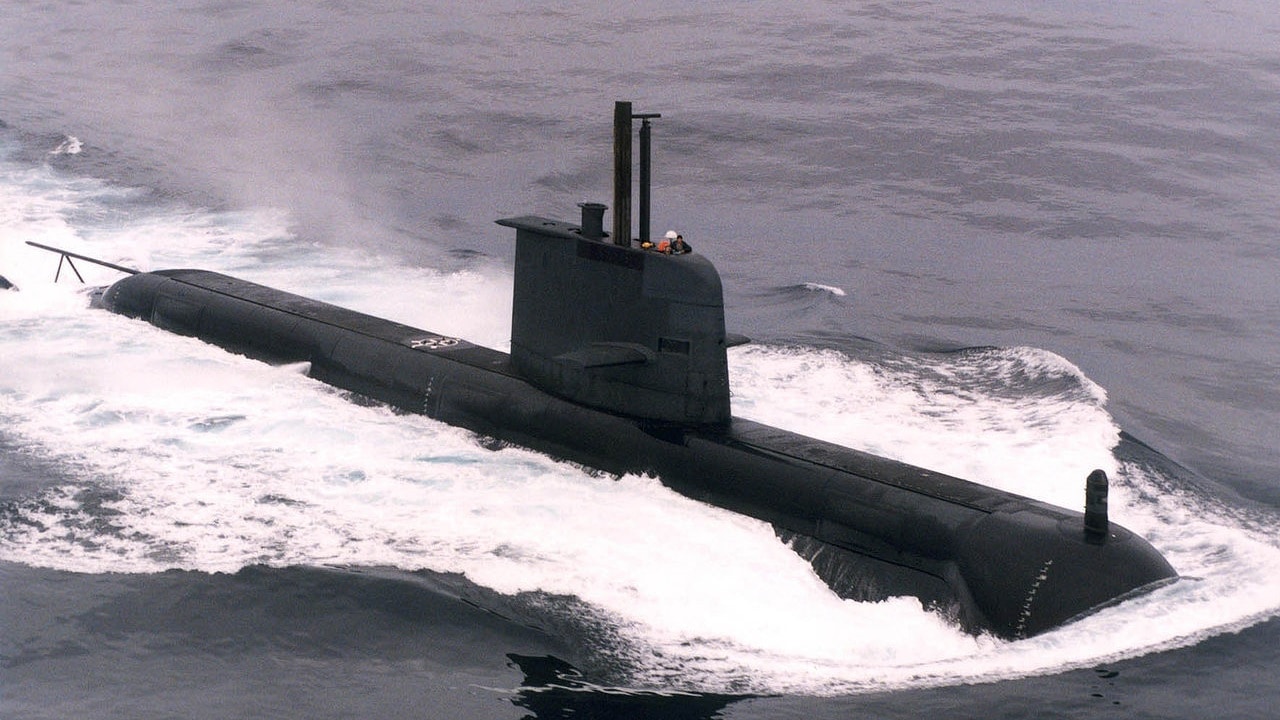
Collins-Class Submarine from Australia.
Australia is now extending the fleet because the replacement timeline stretches so far into the future. But the extension is finite, and Canberra risks a capability gap between the Collins retirement and the arrival of future SSNs.
Australia’s geography threatens to widen that gap. Australia sits in an isolated location, far from likely operating areas.
Nuclear submarines provide the sustained submerged speed and unlimited propulsion endurance needed to operate so far from friendly coastlines.
Integrating the B-21
Could the forthcoming B-21 Raider become part of the AUKUS package, perhaps as a Plan B to SSNs?
The B-21 is arguably the most plausible major alternative being discussed.
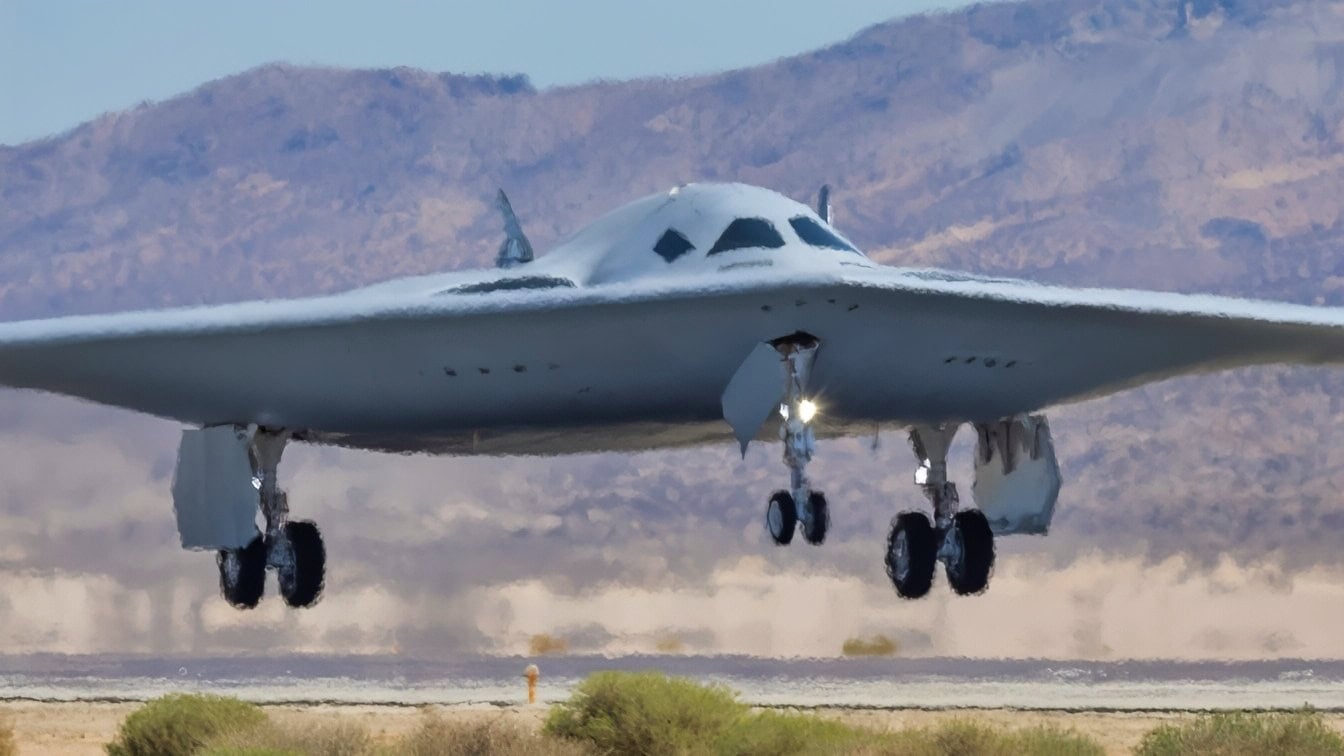
A B-21 Raider test aircraft lands at Edwards Air Force Base, Calif., during ongoing developmental flight testing, Sept. 11, 2025. The B-21 will be the backbone of the bomber fleet; it will incrementally replace the B-1 Lancer and B-2 Spirit bombers. (U.S Air Force photo by Todd Schannuth)
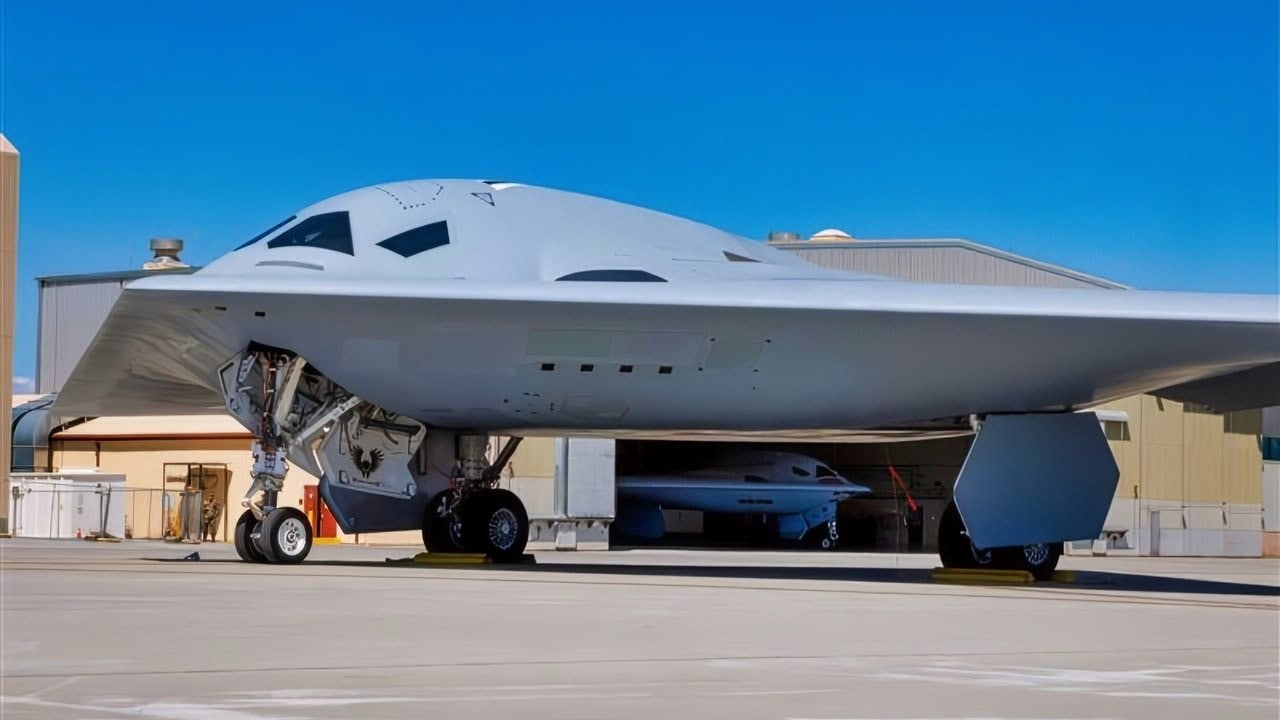
A second B-21 Raider, the world’s sixth-generation stealth bomber, test aircraft arrives at Edwards Air Force Base, Calif., Sept. 11, 2025. The addition of the second test aircraft expands mission systems and weapons integration testing, advancing the program toward operational readiness. (Courtesy photo)
Some Australian political and defense figures have suggested acquiring the stealth bomber.
But the purchase isn’t being conceived of as a direct swap for submarines.
Instead, Canberra would use long-range bombers as a hedge against delays in Australia’s long-range SSN strike capability.
The B-21 is a sensible supplement, offering very long range, penetrating stealth, and large internal weapons capacity.
It could operate across the enormous distances of the Indo-Pacific.
But of course, a bomber is not a submarine.
The two platforms overlap to a limited extent, but they perform fundamentally different jobs.
Export Controls?
Historically, America has preserved its highest-end stealth aircraft from being exported. The B-2 was never exported.
The F-22 was never exported.
The reasons were obvious: preventing the transfer or diffusion of exotic stealth materials, EW, sensors, signatures, mission systems, etc., into adversary hands.
The B-2 and F-22 represented generational leaps in technology that the US needed to keep in-house to preserve the technological advantage those systems offered. The B-21 is of the same lineage and may be preserved in the same way.
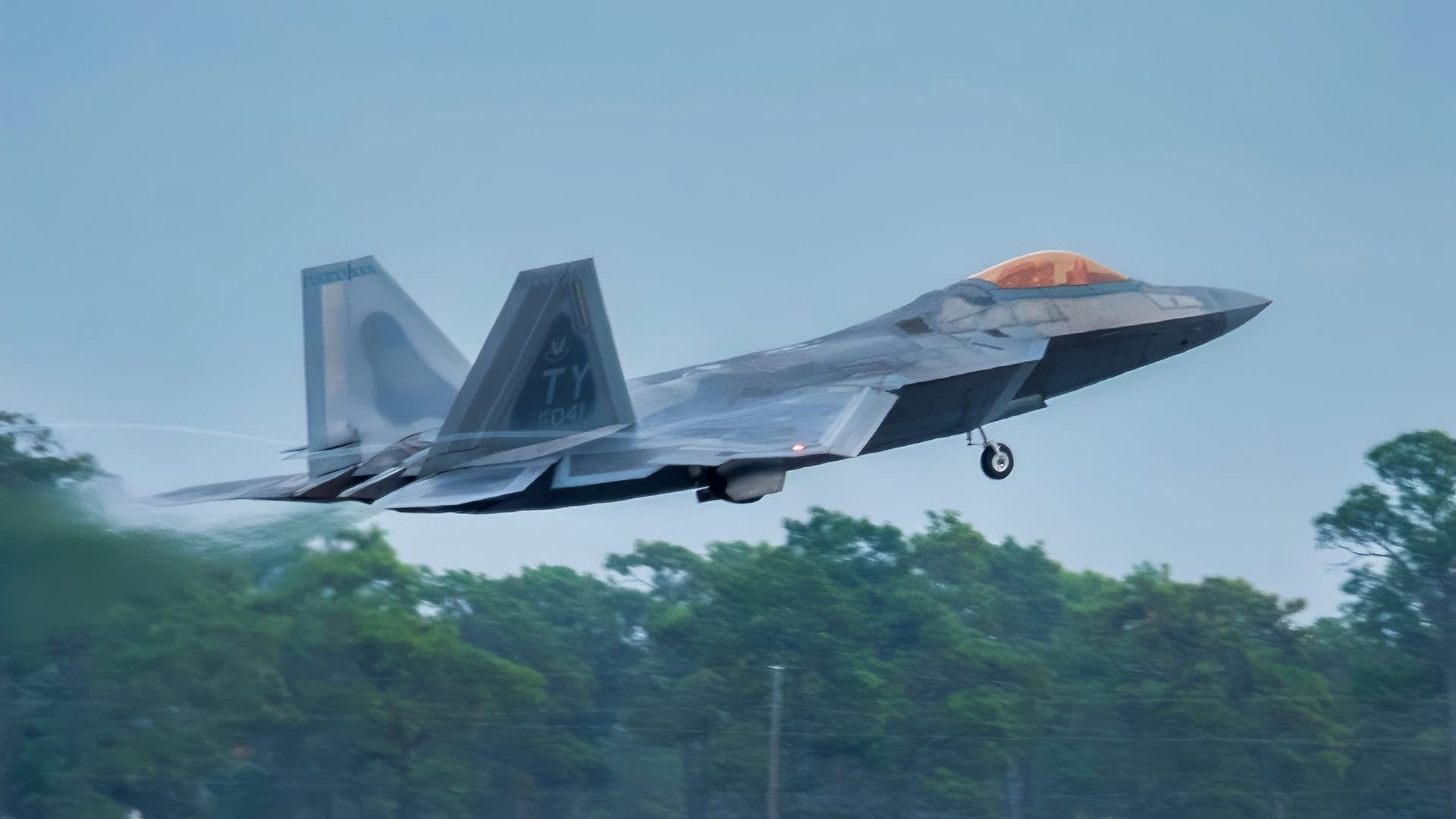
A 325th Fighter Wing F-22A Raptor takes off for a mission Oct. 28 at Eglin Air Force Base, Fla. A squadron of the wing’s Raptors have been at Eglin since Hurricane Michael devastated Tyndall Air Force Base in 2018. (U.S. Air Force photo/Jaime Bishopp)
However, it is possible that the US would consider exporting to Australia.
The existing agreement to transfer Virginia-class submarines demonstrates an extraordinary level of trust in Australia.
Perhaps that trust is sufficient to justify a B-21 transfer.
What About the F-47?
The F-47, by contrast, is a much bigger stretch. While the forthcoming sixth-generation fighter has been discussed as an AUKUS substitute, the new jet is being developed around USAF requirements.
The technology will be highly classified, and no export pathway exists. And either way, the F-47 wouldn’t solve the SSN capability gap.
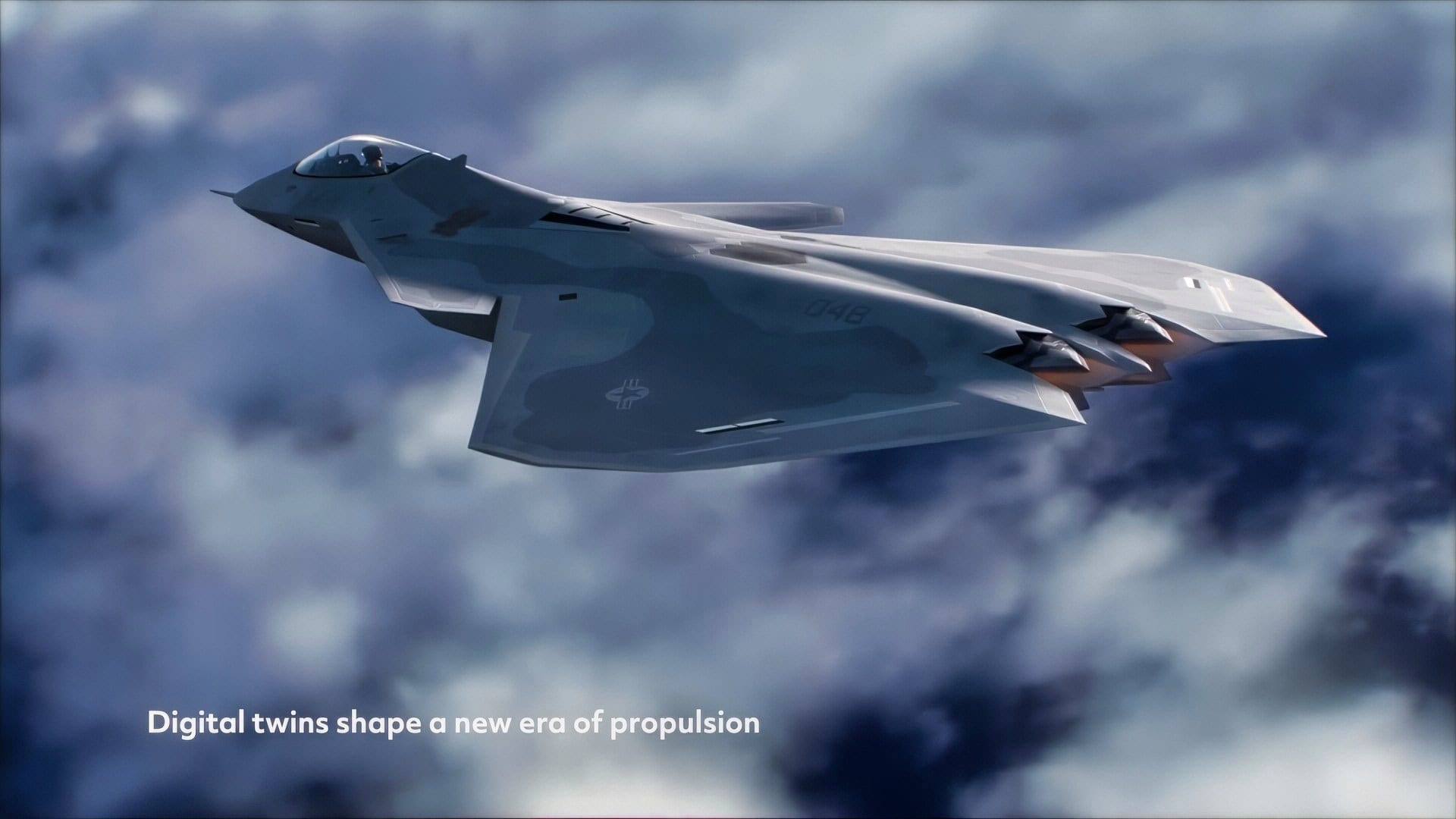
F-47 NGAD Fighter Possible Image. Image Credit: Screenshot.
The F-47 would only offer an incremental upgrade over the F-35A, which Australia already operates.
In the broadest sense, an eventual transfer of the F-47 to Australia is technically possible.
But don’t expect an F-47 transfer as part of a near-term submarine compromise.
About the Author: Harrison Kass
Harrison Kass is a writer and attorney focused on national security, technology, and political culture. His work has appeared in Tablet, City Journal, The Hill, The Spectator, and The Cipher Brief. He holds a JD from the University of Oregon and a master’s in Global & Joint Program Studies from NYU. More at harrisonkass.com.