
Automotive LiDAR maker lands new counter-drone contract
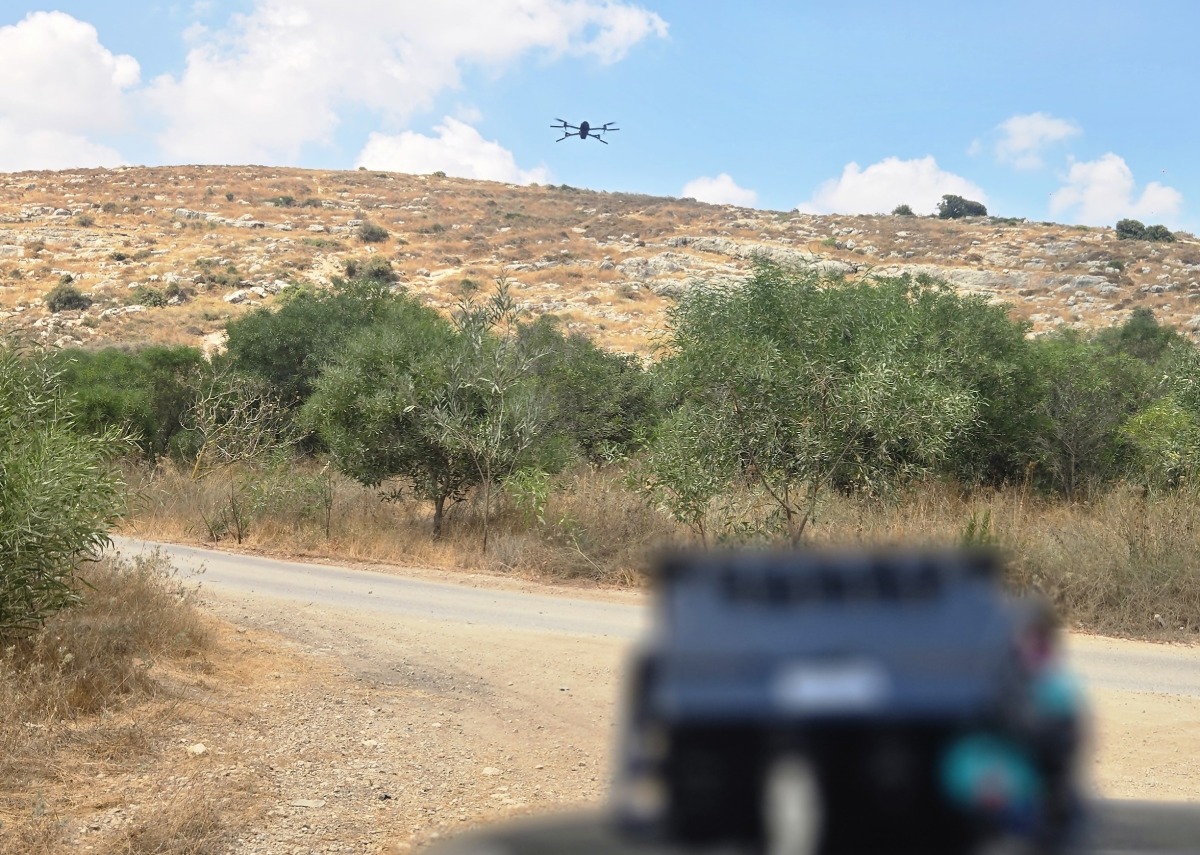
A company that has spent years perfecting sensors to keep self-driving cars from hitting pedestrians landed its first real defense contract, and the technology it is selling is built to solve a problem that has quietly frustrated counter-drone operators for years: knowing exactly where a threat is, not just that one exists.
Innoviz Technologies, an Israeli LiDAR sensor supplier, announced July 30, 2026, that it secured its first multimillion-dollar order from a defense customer, worth approximately $3.5 million and covering several hundred LiDAR units intended to power counter-drone systems and perimeter intrusion detection applications.
LiDAR, short for light detection and ranging, works by firing rapid pulses of laser light and measuring how long each pulse takes to bounce back off an object, building a precise three-dimensional map of everything around the sensor down to a level of detail conventional cameras and radar typically cannot match. Half the ordered units are expected to ship by the end of 2026, with Innoviz saying a customer could place a substantially larger follow-on order once the first deployment proves successful, though the company’s announcement does not name the customer or specify which country or agency is buying the equipment.
Innoviz built its business supplying automotive-grade LiDAR to major car manufacturers including BMW, Volkswagen, and Daimler Truck, along with autonomous driving technology company Mobileye, giving the company a sensor platform already proven against the strict reliability and safety standards the automotive industry demands before allowing any component into a mass-produced vehicle. That automotive pedigree matters because it means Innoviz enters the defense market with hardware already tested at scale, rather than a prototype built specifically for military use and untested in real-world commercial conditions.
The company began pivoting that automotive technology toward defense applications in mid-July 2026, launching a dedicated brand called Perciz specifically for defense, homeland security, and critical infrastructure customers, and announcing partnerships with six separate Israeli defense and security integrators within roughly a three-month span, including Givon Defense for precision threat localization, Cogniteam for AI-based drone classification, and AeroNous Solutions for command-and-control threat tracking, alongside earlier collaborations with Kela Technologies, Drive Group, and Regulus. Innoviz also appointed Maj. Gen. (Ret.) Yoav Har-Even, the former President and CEO of Rafael Advanced Defense Systems, one of Israel’s largest state-owned defense contractors, to its board of directors in connection with the Perciz launch, a hire that brought decades of senior Israeli defense industry experience directly into the company’s leadership as it built out its military product line.
The technical problem Innoviz says its LiDAR solves has become an increasingly urgent one for defense and homeland security operators worldwide. Radar, cameras, and radio frequency sensors, the traditional building blocks of most counter-drone detection systems, can reliably alert an operator that something is flying nearby, but the position data those systems return is frequently only approximate rather than exact, a gap that matters enormously when the target is a small, low-signature drone that needs to be precisely located and engaged within seconds. Innoviz says its LiDAR sensors close that gap by distinguishing a drone from background clutter and maintaining clear positional data through darkness, dust, smoke, fog, and glare conditions that routinely degrade the performance of conventional optical cameras, giving operators the kind of exact real-time location data that separates a general alert from an actionable response.
Omer Keilaf, CEO and founder of Innoviz, framed the shift into defense as part of a broader technological transformation in how machines perceive and respond to physical threats.
“Physical AI is redefining what machines can perceive, and in defense and homeland security, that shift is mission-critical,” Keilaf said.
Keilaf went on to describe precisely where Innoviz’s sensors fit within a broader counter-drone response chain, emphasizing that detecting a threat and locating it precisely enough to act on are two very different technical challenges.
“Detecting a threat is just the first step. Knowing precisely where it is, in real time, in conditions that blind other sensors, is what could separate an alert from an effective response. Innoviz LiDARs are the foundation of the operational picture, producing the high-resolution 3D data that the wider defense ecosystem depends on to act with precision,” Keilaf said.
That framing positions Innoviz not as a company selling a complete counter-drone weapon system, but as a component supplier providing the underlying sensor data that other companies’ detection, classification, and jamming or interception systems depend on to function accurately, a role that mirrors how the company has long operated within the automotive industry, supplying sensing hardware that automakers and software companies then build broader autonomous driving systems around.
Content preview only. Full article available at source. View Full Article
Innoviz Technologies secured a $3.5 million defense contract on July 30, 2026, for several hundred LiDAR units intended for counter-drone systems in Israel. The technology aims to enhance threat localization and detection capabilities, addressing limitations of traditional sensors. Half of the units are expected to ship by the end of 2026, with potential for larger follow-on orders based on initial deployment success.
- Innoviz Technologies secured a $3.5 million defense contract for LiDAR units.
- The contract involves several hundred units for counter-drone systems.
- Half of the ordered units are expected to ship by the end of 2026.
- Innoviz has partnerships with six Israeli defense integrators for defense applications.
- The technology aims to provide precise location data for drone threats.