
Iran buys 400 QW-12 and FN-16 missiles from China and reveals the air defense gap in the Gulf
 Ahmed Al-Rashid
Iran Purchases 400 QW-12 and FN-16 Missiles from China and Reveals Air Defense Gap in the Gulf
On July 30, 2026, Reuters reported from three sources that Iran is expecting the first shipment of a deal involving between 300 and 400 shoulder-fired air defense systems from China within weeks, valued at between $60 and $70 million. The names mentioned are not obscure in the world of light weapons: QW-12 and FN-16, infrared-guided missiles designed to target low-flying aircraft, helicopters, and drones. The news may seem small compared to Gulf contracts that start in the billions, but from a military perspective, it is more significant than many figures seen at defense exhibitions. Iran is not buying prestige; it is purchasing a rapid-response defensive layer after five months of war with the United States and Israel.
A Short Layer That Doesn't Solve the Problem but Confuses the Adversary
It is important not to exaggerate. MANPADS are not S-400 systems, and they cannot close the sky against F-35s, B-2s, or long-range cruise missiles. Their range is short, and their engagement altitude is limited, often relying on the vision and operation of small teams. However, they do something else: they make low-flying aircraft, helicopters, suicide drones, and some reconnaissance and strike munitions more costly. In an army whose radars and fixed batteries have been subjected to repeated strikes, the ability to deploy dozens of small teams around energy facilities, missile depots, the ports of Bandar Abbas, and IRGC sites becomes a practical value, not a symbolic one.
Any military personnel who has served in the region knows that air defense is not built with a single system, but with layers. The upper layer targets ballistic missiles and aircraft at long distances, the middle layer covers gaps, and the short layer prevents the attacker from moving freely at low altitudes. Iran has lost much of its confidence in the upper and middle layers after American and Israeli strikes. Therefore, the purchase of QW-12 and FN-16 seems to be an attempt to quickly repair the lowest tier, not to build a new ceiling.
The Chinese Route and Diplomatic Denial
The details of the deal reveal a sensitivity greater than its financial size. According to Reuters, the contract was made through Zhongqing Baoshang International Investment in Hong Kong, with an initial plan to transport the shipments by air from Ürümqi in western China and then through Pakistan to Iran. Beijing described the reports as unfounded, and the Chinese Ministry of Defense stated that it was not aware of the matter, while the Pakistani military denied any role in transporting air defense weapons to Tehran. These denials are expected, and they are almost part of the deal itself. In the besieged arms market, sensitive goods rarely move in a straight line and under an official banner.
If the information is correct, the issue is not that China has openly entered the Iranian war. Beijing is smarter than that. The issue is that Iran is seeking non-Western supply routes, and China can provide Tehran with what Moscow cannot easily offer now: extensive industrial production, dual-use components, and intermediary companies that can withstand political dust. Here lies the difference between the declared military alliance and the quiet supply network. The former produces statements, while the latter prolongs the war.
The Gulf Paradox Between Wealth and Shortage
On almost the same day, Defense News published an analysis based on CSIS estimates stating that the United States has consumed about 65% of its pre-war stock of Patriot interceptors, and that what remains may be less than a thousand missiles. The THAAD stockpile was estimated to have decreased by about 38% to between 234 and 278 missiles. The Pentagon has not confirmed these figures, but the U.S. Army's contract with Lockheed Martin worth up to $58.6 billion for the production of PAC-3 MSE until 2032 says enough: the problem is not just money, but time. The missile you pay for today may arrive in three or four years.
Here lies the Gulf paradox. Gulf countries possess Patriots and THAAD, and some are purchasing additional quantities of APKWS and drone interception munitions, but they rely on the same American stockpile and the same American production lines. When the Iran war depletes these stocks, Gulf batteries become part of an American distribution calculation, not a fully sovereign decision. Owning the system does not mean having priority in times of shortage. I have often said that the triangle of capability consists of equipment, training, and institution. The Gulf has generously purchased the equipment side, but it has left the industrial sustainability side to Washington.
What This Means for Upcoming Iranian Attacks
Introducing 300 to 400 portable launchers will not change the balance of the war alone, but it may change its method. Iran will seek to deploy them in a decentralized manner near the targets it expects to strike, perhaps around the approach paths of American and Israeli aircraft and drones. This does not prevent strikes, but it forces the adversary to use higher altitudes, longer-range munitions, more reconnaissance, and increased electronic suppression. In other words, Tehran is not seeking victory in open skies, but rather to make every strike require greater preparation and higher costs.
Conversely, the Gulf should not read the deal as merely an Iranian internal affair. If short-range Chinese systems are deployed within Iran, reconnaissance operations over the Gulf, tanker protection calculations, and even plans to strike coastal missile launch platforms will be affected. The greatest danger is not the downing of a single aircraft, but the emergence of a new logic: each side adds a layer of interception, and the other responds with longer and more expensive munitions. Thus, air defense turns into a war of attrition, not a stable protection network.
In Arab military parlance, we say that a weapon you cannot replace is not a shield but a deferred debt. This applies to the American Patriot as it does to the Iranian QW-12.
Conclusion
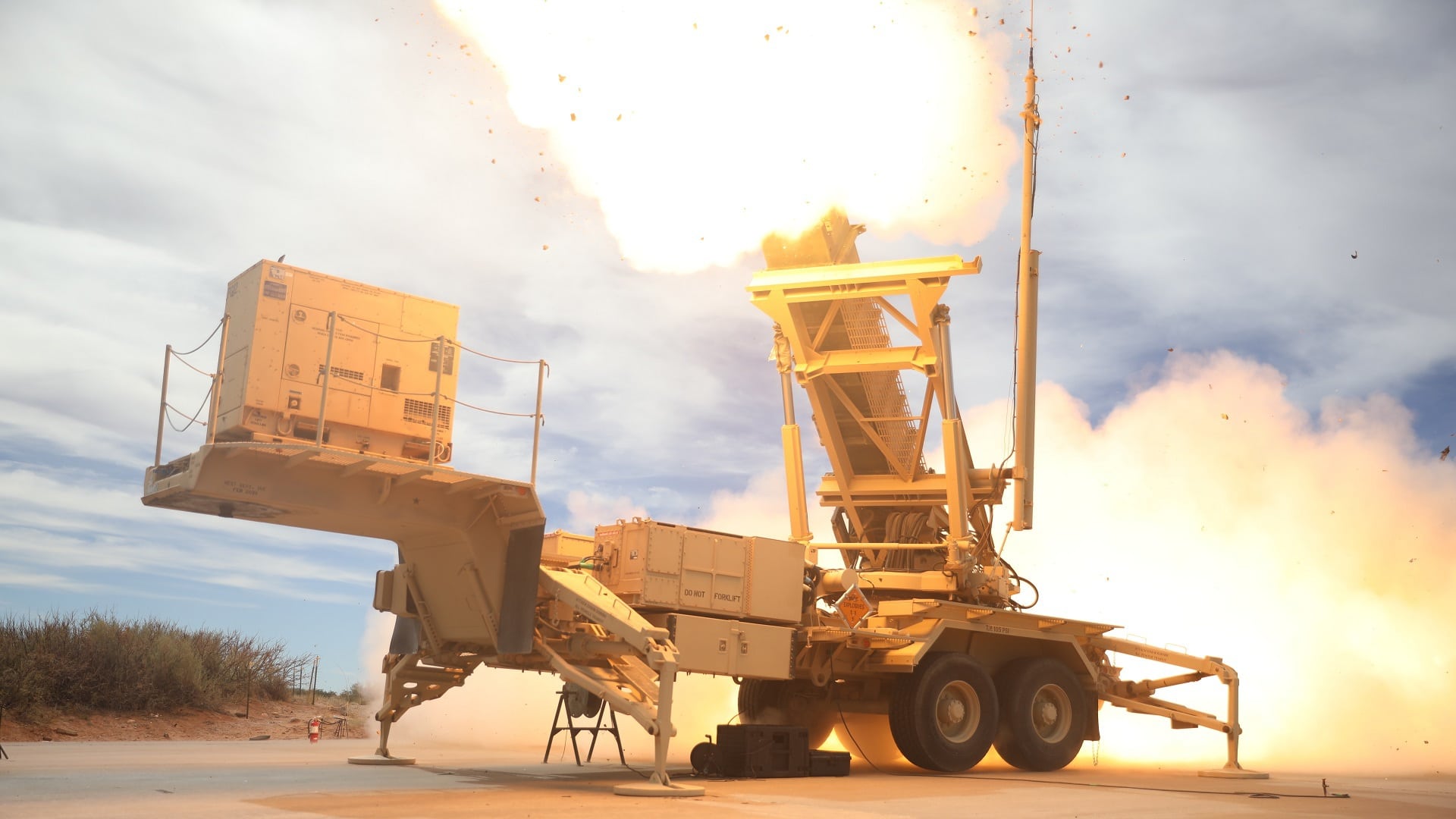
The Chinese deal with Iran, if completed, does not make Tehran invulnerable. However, it reveals something troubling for all Arab capitals overlooking the Gulf: war is no longer measured only by who possesses the most expensive system, but by who can replace the next missile. Iran compensates with scatter, backdoor routes, and relatively cheap systems. The United States compensates with massive contracts extending to 2032. Meanwhile, the Gulf stands between the two, rich in bills but poor in controlling the supply chain. This is the structural tension that cannot be resolved by the image of a Patriot battery on a display platform or a denial statement from Beijing.
Sources: Reuters via Defense News, CSIS analysis on industrial stockpiles, Military Times on the PAC-3 MSE contract, and statements from the Chinese Ministries of Foreign Affairs and Defense, as well as the Pakistani ISPR denial as reported in the articles published on July 30, 2026.
Iran is purchasing 400 QW-12 and FN-16 missiles from China, with the first shipment expected in the coming weeks. This acquisition, valued at $60 to $70 million, aims to bolster Iran's air defense capabilities following recent military engagements. The deal highlights a strategic shift in Iran's defense procurement, seeking alternative supply routes amid geopolitical tensions.
- Iran is purchasing 400 QW-12 and FN-16 missiles from China.
- The deal is valued between $60 and $70 million.
- The missiles are designed for low-altitude aircraft, helicopters, and drones.
- The procurement aims to enhance Iran's air defense capabilities after recent conflicts.
- The deal involves a complex supply route through China and Pakistan.