
Avoiding external surveillance, strengthening long-range strikes, Japan's establishment of a target range at the easternmost point is suspect.
【Global Times Special Correspondent Chen Yang】The Japan Ground Self-Defense Force recently announced on social media platform X that it has completed preparations for the missile range on Minami-Torishima, the country's easternmost point, and has deployed launch systems for the Type 12 anti-ship missile there. This marks the first time the Self-Defense Forces have deployed anti-ship missile-related equipment on Minami-Torishima, and it also conceals Japan's dual ambitions to develop long-range strike capabilities and strengthen its monitoring capabilities in the western Pacific.
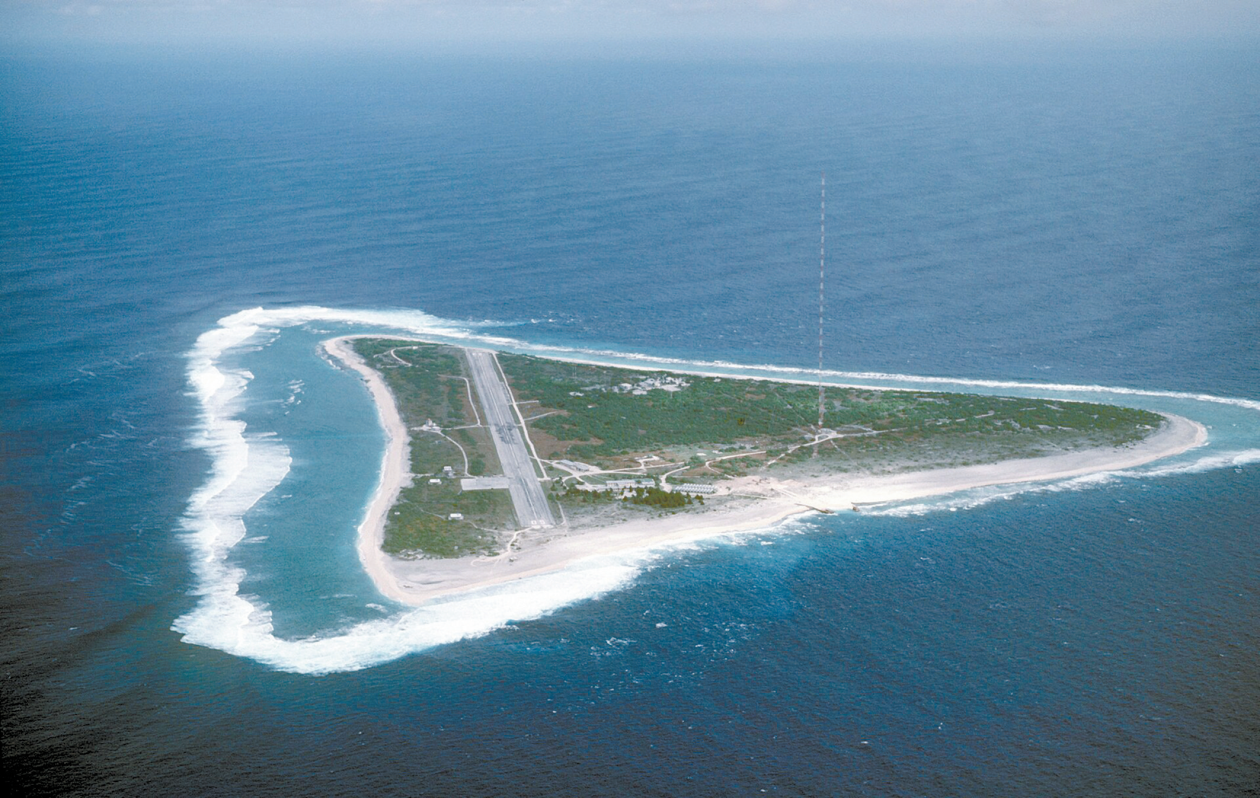
The First Dedicated Long-Range Missile Test Range
According to a report from Japan's NHK website on June 29, the Self-Defense Forces plan to start live-fire exercises on Minami-Torishima in the fiscal year 2027. The equipment that has arrived on the island includes launch systems for the Type 12 anti-ship missile and unmanned reconnaissance aircraft for target positioning, but the missiles themselves will take more time to arrive. To ensure the progress of the missile range construction on Minami-Torishima, the Self-Defense Forces have also confirmed whether the relevant equipment can perform normally. The report emphasizes that these actions signify Japan's ongoing efforts to strengthen its defense system on the Pacific side.
The news of the Japanese Ministry of Defense's decision to build a missile test range on Minami-Torishima was first reported as early as 2024. The island covers an area of 1.2 square kilometers, with the highest point at 9 meters above sea level. It hosts a Japan Maritime Self-Defense Force base, a small military airport, as well as facilities for the Meteorological Agency and the Japan Coast Guard. According to Kyodo News, this is Japan's first dedicated test range for missiles with a range exceeding 100 kilometers. The range is planned to be built on the west side of the Maritime Self-Defense Force base, with primary tasks including the reception, storage, and technical preparation of missiles; missile launches; tracking and measurement of missile flight, hit or miss measurements, and recovery of impact areas; analysis of test results and evaluation of combat technical indicators; missile identification and sampling inspections; and training for combat units. The range is expected to be operational from the fiscal year 2026, with several training sessions held each year, each lasting several weeks.
In March of this year, Japanese media revealed that the test range on the island was under construction for launch pad bases and roads, preparing for the temporary deployment of Type 12 anti-ship missile launch systems. On June 8, NHK reported that the Ground Self-Defense Force had transported the launch systems for the Type 12 anti-ship missiles and unmanned reconnaissance aircraft from a port in Chiba Prefecture to Minami-Torishima via ferry.
Aiming to Address Japan's Testing Issues for Offensive Weapons Development
The Japanese Ministry of Defense's extensive construction of the missile test range on Minami-Torishima is primarily aimed at addressing the testing issues for domestically produced long-range missiles. In the past, due to the constraints of the pacifist constitution, Japan's development of long-range offensive weapons was strictly limited, and the demand for dedicated long-range missile test ranges was not urgent. In recent years, Japan has begun to develop various types of advanced domestically produced offensive missiles, but finding suitable testing sites has been quite challenging. The main missile test site in Japan is the Shizunai Air-to-Ground Shooting Range located in Shin-Hidaka, Hokkaido. In June 2025, Japan conducted its first launch training for the Type 88 anti-ship missile, which has a range exceeding 100 kilometers, at this site. However, because the Shizunai Air-to-Ground Shooting Range is close to disputed territories between Japan and Russia, that test launch provoked strong opposition from Russia.
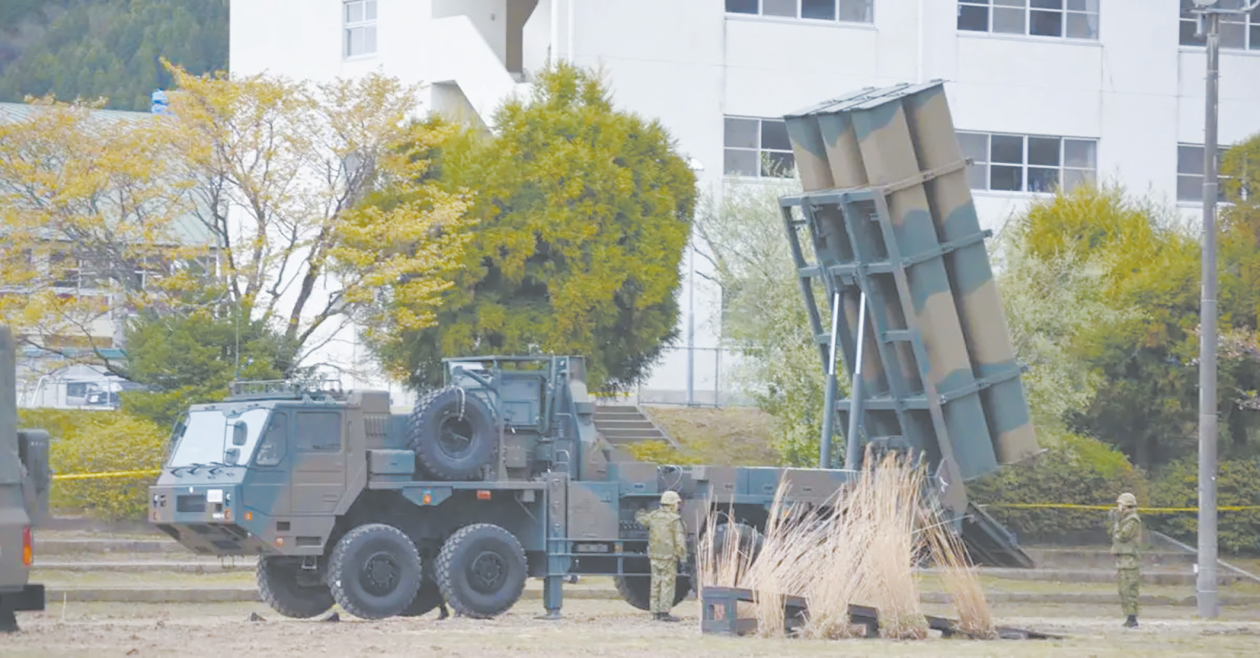
Kyodo News reported that with the further enhancement of the range of the Type 12 anti-ship missile (approximately 200 kilometers) and the new generation Type 25 anti-ship missile (with a range exceeding 1000 kilometers), the training range at Shizunai is clearly insufficient. According to U.S. Defense News, due to "space limitations and safety concerns," Japan has previously conducted missile tests mainly at the Bickley Croft Weapons Range on the east coast of Australia and the Pacific Missile Range in Hawaii.
However, the Japan Self-Defense Forces face challenges such as high transportation costs, long training cycles, and low training frequency when conducting live-fire exercises overseas. Particularly, the new generation Type 25 hypersonic glide missile, which has a range exceeding 1000 kilometers, is currently Japan's most powerful offensive weapon. All six tests of this hypersonic missile from March 2024 to January 2025 were conducted at the Naval Weapons Test Center at Point Mugu, California. Since these tests rely on the test range's sensors to collect complete data, it means that the secrets of Japan's most advanced offensive weapons are entirely in the hands of the United States.
It is precisely for this reason that the remote and civil aviation-free Minami-Torishima has been chosen by the Self-Defense Forces as the site for the new test range. Generally speaking, missile testing involves not only launching but also a series of processes including transportation, reception, storage, and assembly of missiles, which require a large pool of talent and technical reserves. Once the Minami-Torishima test range is operational, the Japan Self-Defense Forces can conduct relevant tests independently without being restricted by overseas limitations and can conduct in-depth and comprehensive analyses of test data. According to the Japanese Ministry of Defense's plan, the missile launch systems will be deployed on the west side of Minami-Torishima, and the missiles will be launched towards target ships located tens to hundreds of kilometers offshore, which will not have a significant impact on the surrounding area. Notably, the island has no permanent residents, which is very conducive to maintaining secrecy.
Strengthening Monitoring Capabilities in the Western Pacific
In addition to addressing the systematic construction of Japan's domestic missile training, Japan's choice to build a missile test range on Minami-Torishima also takes into account its strategic location.
Minami-Torishima is Japan's easternmost territory and has strong symbolic significance. It is located about 1900 kilometers southeast of Tokyo, near the second island chain. By deploying offensive weapons and test ranges there, Japan aims to turn it into a military outpost. Deploying radars or missile launch systems there can significantly extend Japan's situational awareness and firepower coverage, serving as a "bridgehead" for intervention deep into the western Pacific. Especially, Minami-Torishima is about 1500 kilometers from Guam and about 1300 kilometers from Saipan, and these three islands can form a vast triangular area in the Pacific, further expanding the detection and early warning range of the Japan-U.S. military alliance.
Moreover, compared to many of Japan's island bases primarily located in the first island chain, Minami-Torishima not only allows for safe missile testing but also serves as a key component in enhancing the Self-Defense Forces' so-called "counterattack capability," aiming to expand deterrence. Conducting missile tests there can somewhat avoid domestic public scrutiny in Japan and reduce the risk of being targeted by enemy fire during wartime. The missile test range can cover areas such as the Mariana Trench, posing a deterrent to the navies of other countries passing through that region. In the future, this test range may evolve into a fixed fortress, becoming a strategic point for Japan to blockade important waterways and enhance regional deterrence capabilities.
Recently, the discovery of rare earth-rich sediment on the deep-sea seabed near Minami-Torishima provides Japan with an excuse to strengthen its actual control over this remote island and consolidate its "island sovereignty." On June 29, Japanese Prime Minister Sanae Takaichi expressed hope to "quickly advance the industrial-scale development verification" of rare earth development in the seabed near Minami-Torishima during a meeting of the Comprehensive Ocean Policy Headquarters held at the official residence.
Therefore, some analysts believe that by constructing military facilities and deploying long-range offensive missiles on this remote island, Japan will practically strengthen its control over the island, transforming it from a mere "observation point" into a "military outpost" with combat functionality. However, Minami-Torishima is too small, with flat terrain and no cover, lacking deep-water ports and large runways, making it incapable of large-scale troop deployment and logistical support. Thus, in the event of a conflict, the garrison on the island would find it difficult to receive timely support, resulting in poor survival capability during wartime.
Recently, Major General Chen Xi, a spokesperson for the Chinese Ministry of National Defense, stated that Japan's continuous and significant military expansion, relaxation of lethal weapon exports, promotion of the deployment of medium- and long-range missiles, expansion of offensive military capabilities, and efforts to amend the pacifist constitution, even advocating for becoming a "combat-ready" nation, are turning a rapidly "remilitarizing" Japan into a "powder keg" in the Asia-Pacific region. Peace-loving people should remain highly vigilant and resolutely curb Japan's "new militarism" actions to prevent it from disrupting the world and to defend the post-war international order and lasting peace.
Japan's Ground Self-Defense Force has completed preparations for a missile test range on Minami-Torishima, deploying 12 Type 12 anti-ship missile launchers. The range is set to become operational in the 2027 fiscal year, aimed at enhancing Japan's long-range strike capabilities and monitoring in the Western Pacific. This marks a significant step in Japan's military capabilities, allowing for the testing of advanced weaponry without reliance on foreign facilities.
- Japan has established a missile test range on Minami-Torishima.
- 12 Type 12 anti-ship missile launchers have been deployed.
- The test range will be operational starting in the 2027 fiscal year.
- The range is intended for testing missiles with a range exceeding 100 kilometers.
- Japan aims to enhance its long-range strike capabilities and monitoring in the Western Pacific.