
B-1B, F-35, and Aegis are Running Short — Europe's NATO Planning 2026 Loses American Reserves
 Dr. Klaus Weber
B-1B, F-35, and Aegis Become Scarce — Europe's NATO Planning 2026 Loses American Reserves
A halving of American strategic bombers, a third fewer US fighter jets, fewer destroyers, and no US submarines for NATO crisis planning: If the numbers reported by Spiegel and Reuters are even close to being included in the Force Generation Conference in June, then this is not a rhetorical stress test but a planning watershed. Europe has been discussing higher quotas for years. Washington is now shifting the question from quotas to replaceability: Who will provide the capabilities when B-1B, F-35, Aegis destroyers, tankers, reconnaissance drones, and submarines are no longer readily available from the US?
The New American Message is Operational, Not Diplomatic
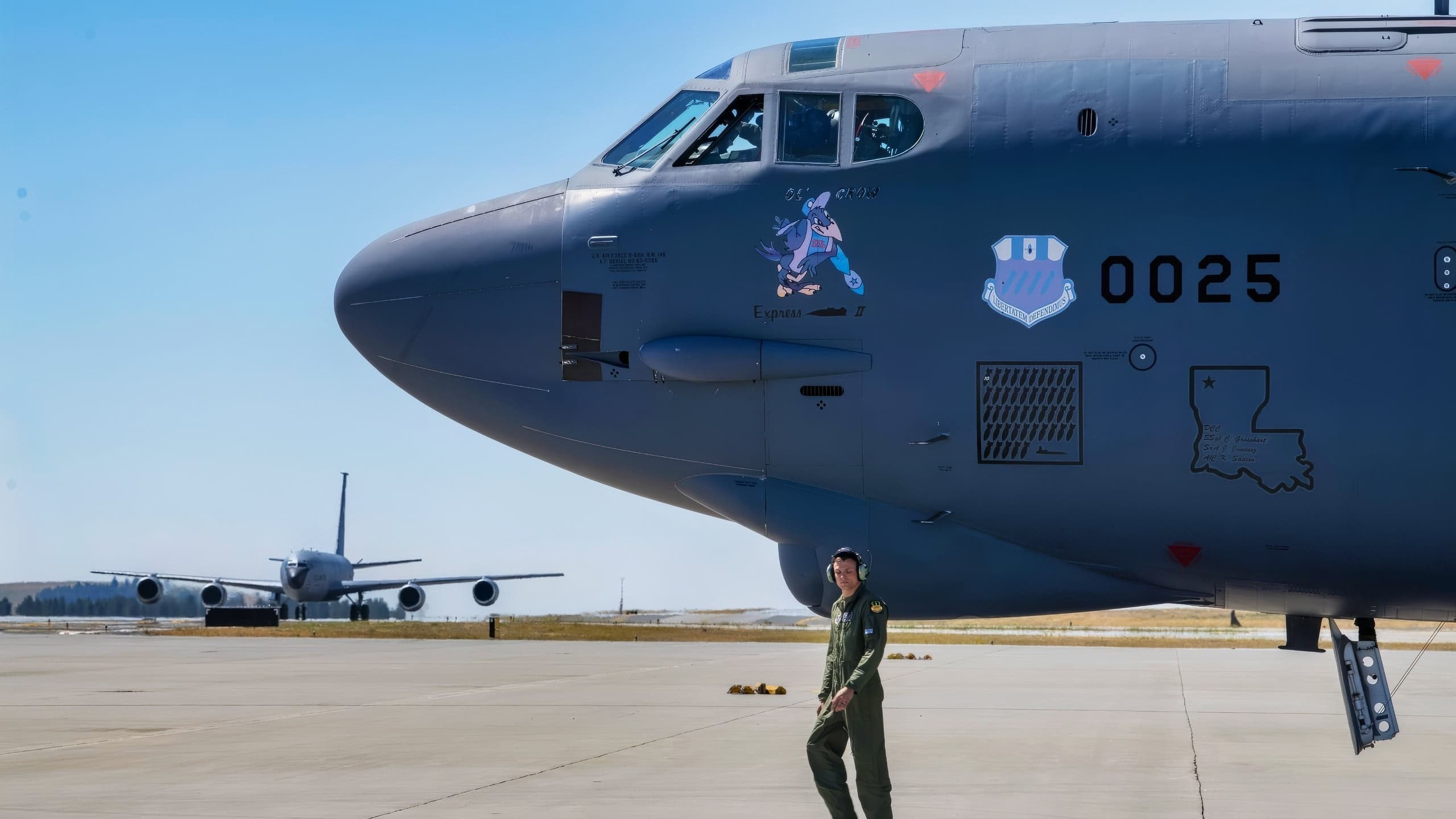
Defense News reported on May 26, citing Reuters and Spiegel, that an envoy from US Secretary of Defense Pete Hegseth informed NATO representatives in Brussels about a significant reduction in American crisis contributions. Strategic bombers are to be available in only half the previous numbers; fighter jets are to decrease by a third; the US Navy would provide fewer destroyers and no longer plan for submarines. Particularly revealing is the addition that Europe must provide its own reconnaissance drones while armed American systems are also being reduced.
This is the crucial point. In NATO planning, American platforms are not just additional mass. They often serve as the connective infrastructure: air refueling, long-range reconnaissance, maritime deterrence, underwater situational awareness, precision strike, and integrated command capability. A European Eurofighter can conduct an air defense mission. However, it does not replace an American tanker, a P-8A-like maritime patrol aircraft, a nuclear-capable strategic bomber, or an Aegis air defense architecture at sea.
Singapore Made the Political Line Visible
At the Shangri-La Dialogue in Singapore, Hegseth sharpened the political justification. He praised Asian partners for higher defense spending and stated that Europe and NATO have to make “big decisions.” Reuters also reported on May 31 that Washington is urging European and Asian allies to spend 3.5 percent of GDP on defense. Concurrently, the announced withdrawal of 5,000 US soldiers from Germany looms. Admiral Giuseppe Cavo Dragone, Chairman of the NATO Military Committee, articulated the new logic remarkably soberly: If the main actor needs power elsewhere, the others must step in.
This statement should not be misunderstood as reassurance. It marks the end of a comfortable division of labor. Europe has long been allowed to believe that American power could simultaneously serve as a security guarantee, capability reserve, and political buffer. These three functions are now separating from each other. The US remains in NATO, but it reserves the right to shift scarce military resources to the Indo-Pacific, the Middle East, or homeland defense. For European planners, this is more uncomfortable than a dramatic threat of withdrawal because it is much harder to address.
The 2 Percent Success Report Does Not Solve the Capability Problem
Formally, Europe is in a better position than it was ten years ago. NATO reported in March that for the first time all allies spent at least two percent of GDP on defense; European allies and Canada increased their spending by 20 percent in 2025. NATO estimates the combined defense spending of Europe and Canada in 2025 at more than $574 billion in 2021 prices. Since The Hague, the 5 percent target by 2035 has also been in effect.
But these numbers do not answer whether Europe can reproduce the American capabilities that are falling away. SIPRI's April assessment comes to a similar conclusion from a different perspective: European military spending rose by 14 percent in 2025 to $864 billion; the 29 European NATO members together spent $559 billion. Germany exceeded the two percent threshold for the first time since 1990 with $114 billion and 2.3 percent of GDP. Spain even increased its spending by 50 percent. At the same time, SIPRI warned that the new NATO targets could blur the line between military and other security-related expenditures.
This is Weber’s old but unresolved distinction: Defense spending does not equate to defense capability. If a state correctly accounts for pension burdens, infrastructure, internal security shares, or long-term research programs according to NATO definitions, it is politically legitimate. However, it does not create an immediately available tanker fleet, submarine hunting capacity, or magazines full of air-to-air and air defense missiles.
Europe's Gaps Are Exactly Where America Cuts
The American list does not randomly hit the most challenging capability areas. Strategic bombers cannot be replaced by national European programs. While fighter jets exist in large numbers on paper, availability, armament, electronic warfare, and tanker dependency limit their real operational value. Destroyers and submarines are even more problematic: Europe has maritime quality but lacks American mass and global rotational capability. Reconnaissance drones and armed MALE systems, on the other hand, have been an example of European procurement inertia for twenty years.
The EU instruments only help partially. SAFE can finance procurement, EDIP can structure industrial cooperation, and PESCO can bundle projects. But none of these instruments has yet proven that it can provide the high-value capabilities that have been taken for granted in American planning for decades within a few years. A credit program does not build crews. An industrial program does not replace an operational doctrine. A European capability list is not yet a European operational plan.
Germany is at the Center of the Uncomfortable Calculation
Berlin cannot escape the debate. If 5,000 US soldiers leave Germany and American air and sea components become scarcer, then Germany is not only the host country but also an integration problem. Ramstein, Spangdahlem, Büchel, the North Sea access points, and the land corridors towards Poland and the Baltics are not abstract NATO points. They are the physical infrastructure of European defense. Germany's special fund has closed important gaps, but it has been heavily tied up in catch-up procurement. For the new tasks — air refueling, integrated air defense, drone defense, munitions stocks, operational command — the political formula of “more money” is no longer sufficient.
The real question, therefore, is not whether Europe spends three, three and a half, or five percent. The question is whether these percentage points flow into the capabilities that American planners are now removing from the European equation. If not, a paradoxical result emerges: Europe will become more expensive but not more autonomous.
Source Situation
- Defense News / Reuters, May 26, 2026: Report on planned reductions in American NATO crisis contributions, including bombers, fighter jets, destroyers, submarines, and drones.
- Reuters via Investing.com, May 31, 2026: Hegseth's criticism of Europe at the Shangri-La Dialogue and European reactions.
- NATO, March 26 and April 10, 2026: Annual report data on 20 percent spending increase, 2 percent fulfillment, and 5 percent commitment.
- SIPRI, April 27, 2026: global military spending in 2025, European NATO spending, and methodological warning about blurred categories.
Conclusion
The American message is not that Europe will be left alone. It is harsher: Europe must prove which parts of deterrence it can actually bear itself. This is institutionally uncomfortable because it destroys the most convenient European excuse. One cannot simultaneously demand strategic autonomy, plan for American capability reserves, and leave national procurement policy unchanged. More money buys Europe time. But if this time flows back into fragmented programs, national industry quotas, and statistical target fulfillment, then the next NATO planning conference will only more precisely show what is already visible: The American reserve is shrinking faster than Europe's ability to replace it.
The U.S. Department of Defense announced a significant reduction in military contributions to NATO, including a halving of strategic bombers and a one-third reduction in fighter aircraft. This shift, communicated during a NATO meeting in Brussels, requires Europe to enhance its own defense capabilities, particularly in areas like reconnaissance drones. The U.S. is reallocating military resources to the Indo-Pacific and other regions, raising concerns about Europe's ability to maintain adequate defense without American support.
- U.S. strategic bombers will be reduced by half.
- One-third fewer U.S. fighter aircraft will be available.
- No U.S. submarines will be planned for NATO crisis response.
- Europe is urged to provide its own reconnaissance drones.
- The U.S. is reallocating military resources to other regions.