
Babcock offers Toyota-based truck to succeed British Army Land Rover
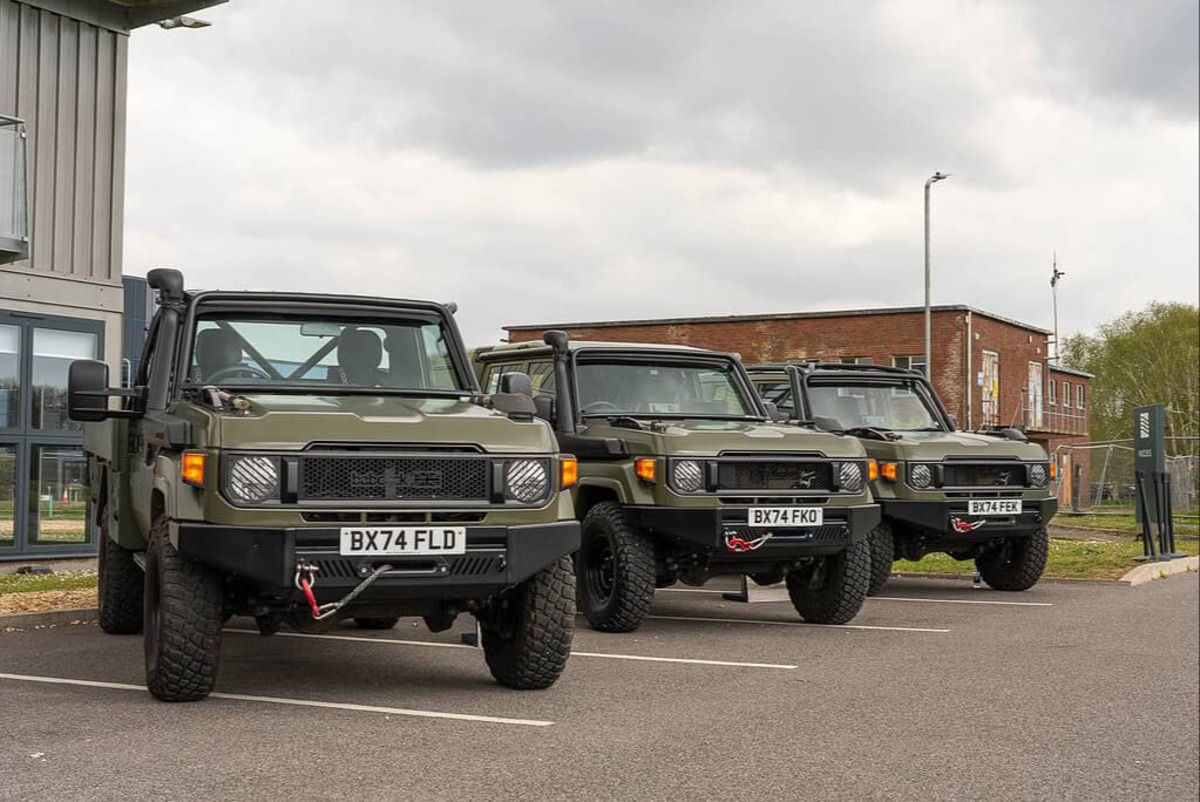
Babcock International is moving to position itself as the prime contractor for the British Army’s next generation of light utility vehicles, bringing together approximately 30 UK suppliers at a formal engagement event as it pitches its Toyota-based General Logistics Vehicle to replace the Land Rover fleet after 70 years of service.
Babcock convened the suppliers to outline requirements for the vehicle platforms and set expectations for building what the company describes as a sovereign solution — one manufactured and modified in the United Kingdom using a network of domestic small and medium-sized enterprises. The event builds on Babcock’s recently launched SME Engagement Charter, a framework designed to give smaller defense suppliers more accessible and structured routes into the defense supply chain.
The vehicle at the center of Babcock’s pitch is the General Logistics Vehicle, developed in strategic collaboration with Toyota. The GLV is a family of vehicles based on two established Toyota platforms: the Land Cruiser and the Hilux. Both are globally recognized for durability, reliability, and off-road capability across harsh operating environments. Babcock’s teams in the West Midlands will apply military-specific modifications to the commercial platforms to prepare them for operational service with the British Army. The scope of those modifications — armor provisions, communications integration, load configurations, and other mission-specific adaptations — will be delivered through the supplier network Babcock is now actively assembling.
The requirement the GLV is targeting is the British Army’s upcoming Light Mobility Vehicle programme. The Ministry of Defence recently announced the retirement of the Land Rover after seven decades as the Army’s primary light utility vehicle — a platform that became synonymous with British military operations from the Cold War through conflicts in the Falklands, the Gulf, the Balkans, Afghanistan, and Iraq. Replacing it is not a routine procurement. It is a generational transition in the Army’s ground mobility infrastructure, covering a wide range of tasks from logistics and command support to patrol and reconnaissance roles across the force.
The Land Rover’s retirement after 70 years of service marks the end of a vehicle lineage that defined British Army light mobility through most of the post-war era. The Defender and its predecessors became cultural fixtures as much as military workhorses — recognizable in conflicts and peacekeeping operations across every decade since the 1950s. Finding a successor capable of meeting modern operational requirements while matching the Land Rover’s reputation for rugged reliability in austere conditions is the central challenge the Light Mobility Vehicle programme presents to any bidder.
Babcock’s decision to build the GLV around proven Toyota commercial platforms reflects a deliberate procurement philosophy. Rather than developing a bespoke military vehicle from a clean sheet — an approach that historically drives up development costs and extends timelines — the GLV leverages an existing global supply chain, established manufacturing processes, and a platform already proven in demanding environments worldwide. The Land Cruiser in particular has accumulated decades of operational use in military and paramilitary roles across dozens of countries, providing a strong evidence base for its performance characteristics before any military-specific modifications are applied. The Hilux similarly carries a battlefield-proven reputation across multiple conflict environments.
The West Midlands modification facility places the vehicle’s military adaptation work firmly within the United Kingdom. That geographic anchor matters for the programme’s industrial case. The Light Mobility Vehicle competition is not just a vehicle procurement — it is, as Babcock’s framing makes explicit, an opportunity to generate and sustain skilled manufacturing employment within the UK defense industrial base. Chris Spicer, Managing Director for Babcock’s Engineering and Systems Integration business, described the programme in those terms directly. “We’re ensuring soldiers have a vehicle suited to modern operational requirements and by working with the UK’s brightest SMEs, we’re creating and sustaining high quality jobs within our supply chain and contributing to the UK’s defence dividend,” Spicer said.
The supplier network Babcock assembled at Dorset will provide the specialist components that differentiate the GLV from its commercial baseline. Military vehicle modification typically involves a wide range of specialist capabilities: protected communications systems, vehicle-specific electrical architecture, military-standard connectors and interfaces, load restraint and mounting systems, enhanced cooling, blackout lighting, and a range of role-specific equipment fits. None of those are standard Toyota production items. Each requires specialist suppliers capable of working to military standards, within military timelines, and under the quality management frameworks that defense contracts demand. The engagement day’s purpose was to identify and align those suppliers early in the competition cycle — before a contract is awarded — so that Babcock’s bid rests on a supply chain that is already structured and committed.
The British Army’s light vehicle fleet underpins a vast range of day-to-day military functions — moving personnel, equipment, and supplies across training areas and operational theatres, supporting headquarters elements, enabling reconnaissance, and sustaining the logistics chain that keeps larger formations operational. The Light Mobility Vehicle that eventually replaces the Land Rover will inherit all of those roles and carry them forward for the next generation of British soldiers. Babcock is betting that a Toyota platform, modified in the West Midlands by a network of UK suppliers, is the right answer to that requirement.
Content preview only. Full article available at source. View Full Article
Babcock International is positioning itself as the prime contractor for the British Army’s next generation of light utility vehicles, proposing a Toyota-based General Logistics Vehicle to replace the Land Rover fleet. The vehicle will be modified in the West Midlands using a network of approximately 30 UK suppliers to meet military specifications. This initiative marks a significant transition in the Army’s ground mobility infrastructure following the retirement of the Land Rover after 70 years of service.
- Babcock International is proposing a Toyota-based General Logistics Vehicle to replace the Land Rover fleet.
- The vehicle will be modified in the UK to meet military specifications.
- The British Army is transitioning to a new Light Mobility Vehicle programme after retiring the Land Rover.
- Babcock is engaging approximately 30 UK suppliers for this project.
- The GLV is based on proven Toyota platforms known for durability and reliability.