
"Base 101 of Niamey resumed with Russian assistance — Niger pays for the security failure of 2026"
 S.W
S.WBase 101 in Niamey retaken with Russian help — Niger pays for the security failure of 2026
In Niamey, during the night of August 28 to 29, soldiers largely from special forces occupied air base 101, on the edge of Diori Hamani airport, before attempting to extend the movement towards the presidency and national television. The power of General Abdourahamane Tiani eventually regained control, but only after hours of gunfire, dozens of arrests, and, according to RFI, with the decisive support of the Russian Africa Corps. This detail matters more than the mutiny itself. It shows that in Niger, three years after the coup of 2023, the most dangerous threat to the junta no longer comes solely from JNIM or the Islamic State in the Sahel. It also comes from the internal weariness of an army that fights without seeing the situation improve.
Base 101 is no longer a springboard, it’s a bunker
Base 101 is not a secondary barracks. It is adjacent to the international airport, houses a command hub, and symbolizes Niger's strategic reorientation since the departure of the Americans and the French. According to Al Jazeera, it now hosts the headquarters of the unified force of the Alliance of Sahel States and the local headquarters of the Africa Corps. In other words, the facility that was supposed to help project military power against armed groups now primarily serves to protect the regime from its own fragility.
This is new.
In the Sahelian wars, the temporary loss of such a sensitive point says something very concrete about the chain of command. To seize a base like 101, it is not enough to have anger. One must know the access points, the routines, the topography of the site, and believe that part of the army will follow. However, this rallying did not happen. The mutineers took the base, but not the palace. They seized the hub, not the entire state. Yet this is enough to reveal a deep fracture between the units holding the front and the inner circle of General Tiani.
The anger comes from the western front, not from the salons of Niamey
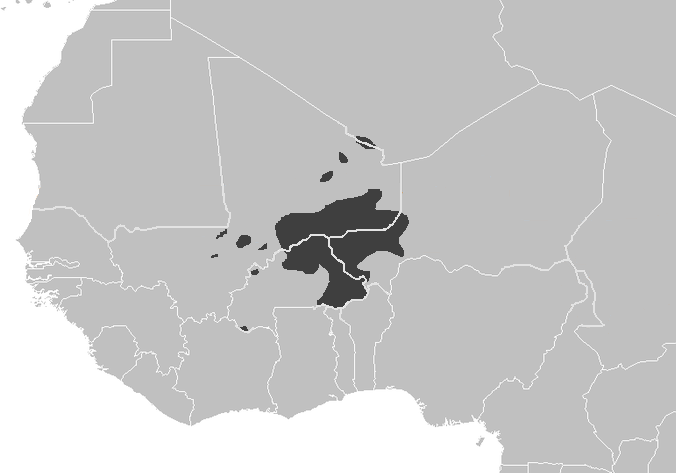
RFI locates the main origin of the mutineers in the special forces deployed notably from Tillabéri and Dosso, with men who have passed through the theater of the three borders. Reuters, cited by Al Jazeera, also mentions soldiers coming from Ouallam and Téra, that is, from areas where the Nigerien army has been absorbing the heaviest shocks against fighters linked to the Islamic State for months. For a field officer, this changes the entire reading of the event. We are not talking about a whim of an urban garrison. We are talking about units that experience real war, its ambushes, its logistical breaks, its slow evacuations, and its repeated losses.
- Base 101 is at the heart of the political and military apparatus of Niamey.
- The mutineers largely came from units engaged against jihadist groups on the southwest front.
- The recapture of the site required, according to several consistent sources, explicit Russian support.
The decisive point is here. The Sahelian juntas took power by promising a more effective, more sovereign, and more brutal war if necessary. But the soldier patrolling towards the Malian border does not judge a regime by its speeches. He judges it by the supply, rotation, air support, pay, and the ability to bring back the wounded. When these elements deteriorate, patriotic rhetoric quickly loses its value. The analysis published by AllAfrica summarizes this mechanism well: the longer insecurity lasts, the more it rises up the chain of command and becomes a political challenge within the military institution itself.
There are still gray areas. The exact number of mutineers, the degree of political preparation of the movement, and the identity of all the officers involved are not yet fully confirmed. But the essential is already visible: the junta was not surprised by an external enemy; it was fractured by the men supposed to hold the front line.
Moscow protects the palace, not the theater of operations
The Russian role is the other major lesson. According to RFI, the Africa Corps was directly requested to help retake the base. This is not a diplomatic detail. It is the admission that at the critical moment, Niamey did not primarily rely on a restored national cohesion, but on a foreign force installed to secure the regime and its key sites. Marie Dubois would have put it more bluntly on the ground: if your external partner saves your central base from the hands of your own soldiers, you have a sovereignty problem even before you have a communication problem.
Since 2023, General Tiani's bet has been clear: to break with Paris, distance Washington, and convert the Russian partnership into a security gain. However, the attacks in January and June 2026 against Niamey airport had already shown that the capital was no longer sanctified. The mutiny in August adds an even graver dimension: the protection of the political center may be progressing, but the stabilization of the western theater is not following. Russia can help retake a site, project an image of firmness, and frame the security of leaders. It does not replace rested units, reliable logistics, or a coherent strategy against a mobile adversary between the Nigerien Liptako, northern Benin, and western Nigeria.
The Beninese reaction on September 4 goes in the same direction. After being accused by Niamey of supporting the rebellion, Porto-Novo publicly denied it. When a power has to explain why such a sensitive base could fall for several hours, the temptation is strong to shift the narrative towards an external conspiracy. This reflex can serve to tighten the presidential camp. It does not repair the broken trust within the ranks.
The next test will be in western Niger
The real question is therefore not whether Tiani has survived politically on August 29. Yes, for now. The real question is what this survival costs him militarily. Every hour spent locking down Niamey is an hour, resources, and attention that are lacking for the more vulnerable axes. In this type of war, the enemy observes everything: if the best units are recalled to protect the capital or if they doubt their leaders, jihadist groups will immediately test isolated posts, supply routes, and precariously held localities.
The warning signal for the coming weeks will likely be between Tillabéri, Téra, and the corridors leading to the Beninese border, not in the official salons of Niamey. It is there that we will see if the mutiny was just a command accident or the advanced symptom of an exhausted army. A junta can retake a base in one night. Rebuilding the trust of units that feel they are dying far from the palace is another matter. In the Sahel, it is often this second battle that decides everything.
```Nigerien Special Forces occupied Base 101 in Niamey on the night of August 28-29, 2026, with significant fighting and arrests occurring. The occupation was supported by the Russian Africa Corps, highlighting the junta's reliance on foreign assistance amid internal military fractures. The base, crucial for military operations, symbolizes the shifting dynamics of power in Niger following the 2023 coup.
- Nigerien Special Forces occupied Base 101 with Russian support.
- The occupation led to significant fighting and arrests in Niamey.
- The base is strategically important, housing command nodes and military operations against jihadist groups.
- The mutiny reflects deep fractures within the Nigerien military.
- Russian forces were directly involved in assisting the Nigerien junta.