
Belgium and Burkina Faso Renew Dialogue — Brussels Returns to the Sahel via Ouagadougou in 2026
 Marie Dubois
Belgium and Burkina Faso Renew Dialogue — Brussels Returns to the Sahel via Ouagadougou in 2026
Ouagadougou, August 28. For three days, Belgian Deputy Prime Minister and Foreign Minister Maxime Prévot spoke where many Europeans no longer do. The visit concluded this Friday with a carefully chosen phrase: to build a "cooperation of respect" with Burkina Faso. The phrase may seem diplomatic. On the Sahelian ground, it means something else. Brussels admits that after two years of political rupture, mutual expulsions, and ineffective sermons, the isolation of the juntas has not brought security. It has only reduced the number of Western interlocutors still capable of understanding what is really happening north of Ouahigouya, towards Djibo, Dori, or the routes leading down to Kaya.
A Rare Visit in an Still Hostile Climate
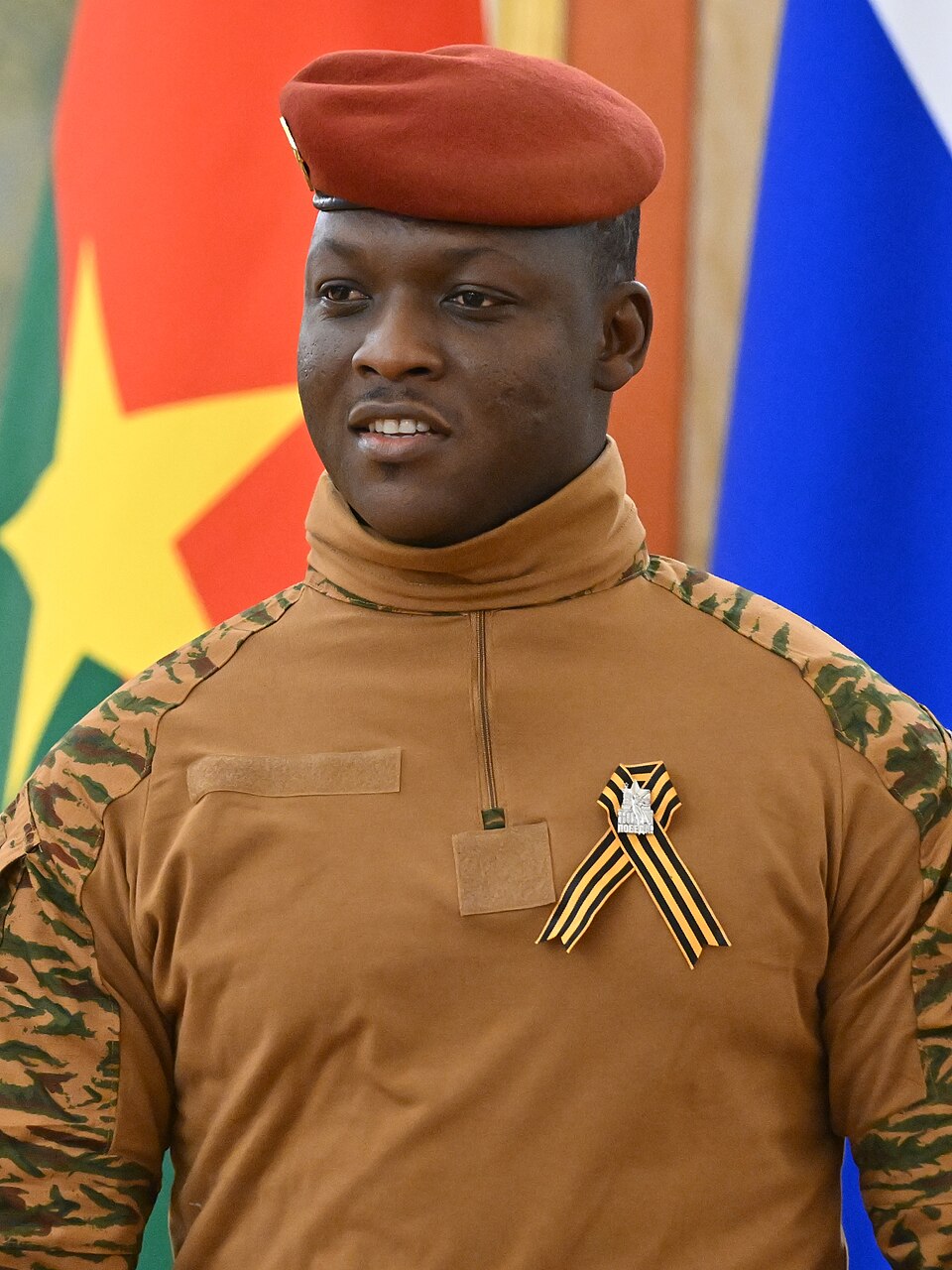
According to RFI, Prévot was received in Ouagadougou by his Burkinabè counterpart and then by Captain Ibrahim Traoré, at the end of a 72-hour official visit presented by the local press as an effort to revive an old bilateral relationship. The timing is not trivial. It comes just two months after the rupture of diplomatic relations between Burkina Faso and France, and a few weeks after the expulsion of two European Union officials. In other words, a member state of the EU agrees to return to a capital where the political signal sent to Europe has so far been distinctly defensive.
Prévot did not hide it in his statements reported by the Belgian press: dialogue must be maintained even with regimes with which one disagrees. This statement is not a moral concession. It is an operational observation. In the Sahel, one can no longer influence a crisis when one does not speak to the capitals, the general staffs, or the administrations that manage access, roads, and flight permissions. Belgium does not have the military mass of France, but it is testing something important for Europe here: the possibility of a political re-entry without demanding, from the very first hour, a rhetorical capitulation from the junta.
Why Brussels is Returning Now
The Belgian calculation is simple. The region has not lost its importance, as summarized by the Belgian press following this Sahelian tour. Burkina Faso remains a hub of the Sahelian theater of operations: to the north, the area towards Djibo and the Malian border; to the east, the areas sliding towards Fada N’Gourma and Benin; in the center, the vital Ouagadougou-Kaya axis, the security of which conditions the logistical depth of the state. As long as this country continues to degrade, the entire northern border of the coastal states remains exposed.
Brussels has also understood something that Paris learned later and more harshly: when a Sahelian regime seeks weapons, instructors, or simply less conditional suppliers, it will turn to Moscow, Ankara, Beijing, or others. Prévot acknowledged this in substance when he explained that it is difficult to blame Burkina for its military cooperation with Russia if Western licenses on weapon systems are systematically denied. This remark is worth more than a comment on exports. It means that Europe cannot denounce Ouagadougou's Russian orientation while leaving the security shelf empty.
On this point, one must remain clear-eyed. Nothing indicates that Belgium will replace Russia in the Burkinabè setup. The men of Africa Corps and the Russian security channels remain entrenched in the strategic landscape of the Sahel. But the visit shows that some Europeans at least want to prevent the relationship from falling to a point of no diplomatic return.
The Burkinabè Message is Just as Calculated
For Ouagadougou, receiving a European minister of this level primarily serves to demonstrate that the sovereignty policy displayed by Traoré does not preclude selective openings. The Burkinabè power can thus speak to Brussels without returning to Paris, and engage in dialogue with an EU member while maintaining its security partnership with Moscow. It is a way to loosen the diplomatic grip without visibly changing military direction.
This should not be confused with complete normalization. The gap remains deep. Europeans continue to worry about civic space, the concentration of power, and the actual effectiveness of Burkinabè security choices. For its part, Ouagadougou believes that European capitals have long spoken of governance while allowing the front lines to degrade. The two narratives still clash. Simply, they are starting to confront each other face to face again.
From experience, this type of resumption of contact matters most when it translates into concrete things: humanitarian access, logistical support, demining, limited intelligence, maintenance, military health, or funding for secure civilian corridors. If cooperation remains at the level of press releases, it will change nothing in the balance of power in the most contested provinces. And the real state of the Burkinabè ground remains incomplete: the authorities claim to control about 75% of the territory, but these percentages poorly reflect the difference between holding a city, securing a road, and dominating a rural area at night.
What This Visit Really Changes
The strategic significance of the visit is therefore not in what it announces, but in what it admits. It admits that the EU has no credible Sahelian policy without channels with the regimes in place. It also admits that the competition for influence is no longer only between Paris and Moscow, but among all actors capable of offering something useful, quickly, and without public humiliations. In this sense, Belgium is trying less to reconcile Europe with Ouagadougou than it is trying to save a residual European presence at a time when the window is closing.
The risk for Brussels is clear. If it returns without material leverage, it will give the Burkinabè power an additional diplomatic photo opportunity and recover very little in exchange. The risk for Ouagadougou is the opposite: multiplying partners without restoring security on the axes and in the countryside will ultimately expose even more the gap between sovereignist communication and operational reality.
The future will play out far from the salons. It will play out on the roads to Djibo, in eastern Burkina Faso where armed groups are still seeking to expand circulation corridors, and in the ability of the power to protect something other than urban centers. If the Belgian opening leads to useful cooperation, other Europeans may follow. Otherwise, Ouagadougou will keep the visits, Moscow will keep the ground, and northern Burkina Faso will remain the place where the real weakness of diplomatic promises is measured, kilometer by kilometer.
Belgium's Vice Prime Minister Maxime Prévot visited Ouagadougou on August 28, 2023, to re-establish diplomatic relations with Burkina Faso after a two-year political rupture. The visit aims to foster cooperation amidst ongoing security challenges in the Sahel region, acknowledging the importance of dialogue with local regimes. This engagement reflects Belgium's strategic interest in maintaining a presence in the region despite the complexities of international relations.
- Belgium's Vice Prime Minister Maxime Prévot visited Burkina Faso to discuss cooperation.
- The visit follows a two-year political rupture and aims to re-establish dialogue.
- Burkina Faso remains strategically important in the Sahel region, particularly regarding security and military cooperation.