
Belgium integrates 2026 GM200 MM/C into Blue Dome and tests Europe's air defense logic
 Dr. Klaus Weber
Belgium integrates GM200 MM/C into Blue Dome in 2026 and tests Europe's air defense logic
On November 10, 2026, Belgium announced an unspectacular but strategically important step. Thales is to integrate mobile GM200-MM/C radars into the new Belgian air defense program Blue Dome. The number of ordered systems, the price, and the delivery schedule remain open. This gap between political announcement and operational capability is the crucial point. Europe is increasingly purchasing sensors; however, it is not yet automatically building a common air defense network.
A radar for the dangerous middle
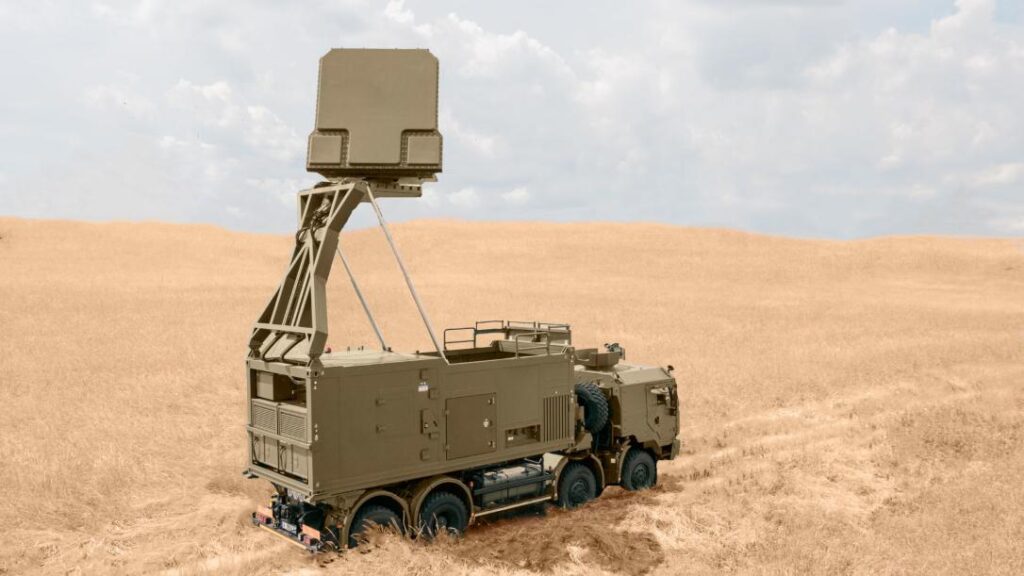
The GM200 MM/C is not a replacement for Patriot and is not an independent interceptor complex. Its task lies in the detection, classification, and tracking of targets. According to Thales, the system can simultaneously detect small drones, loitering munitions, cruise missiles, and low-flying aircraft. It can also track rockets, artillery shells, and mortar rounds. This is militarily relevant because Europe's air defense problem consists not only of a few ballistic missiles but also of a growing number of cheap and variably flying targets.
- mobile platform with a setup time of less than 60 seconds
- Remote operation and transport in a standard 20-foot container
- simultaneous detection and classification of multiple target types
- developed and built in the Netherlands
Technically, this is a sensible choice for the lower and middle sensor layer. Politically, it is not yet proof of Blue Dome. A radar generates a situational picture; it does not protect an airfield, an energy facility, or a city as long as command posts, effectors, data links, spare parts, and crews are lacking.
The real progress lies in the network
Nevertheless, the Belgian decision is of European interest. The Netherlands is already using the GM200 and has integrated it with Kongsberg's Fire Distribution Centre and AMRAAM missiles in the NASAMS framework. Norway, Denmark, Sweden, and Lithuania have also procured radars from this family. This at least creates a common technical starting point for training, maintenance, and software support. For a fragmented Europe, standardization is not a secondary issue but an operational capability.
However, one should not stretch the significance of the news too far. Common hardware is not yet a common air defense. The crucial question is whether Belgium will integrate its Blue Dome into NATO Integrated Air and Missile Defence, which national and allied sensors are allowed to exchange data, and who will make the interception decision in a crisis. Without binding rules of engagement, interoperability remains a brochure. Without sufficient ammunition stocks, it remains a demonstration.
Blue Dome and the European procurement trap
Belgium is trying to solve several problems simultaneously: the protection of critical infrastructure, the defense against drones and missiles, and the return to credible national defense. This is understandable. The procurement of a GM200 is faster and politically easier to explain than the establishment of a complete multi-layered architecture. However, therein lies the European temptation: contracts are counted as capabilities.
The choice of a Dutch-developed radar is a better signal than another national special path. It strengthens a European supply chain and facilitates cooperation with Nordic NATO partners. But Belgium now has to make the more expensive and less visible decisions. These include protected communication networks, redundant command posts, electronic warfare, sufficient operating personnel, and long-term financing of the interceptor missiles. A sensor without these additions is like an eye without a nervous system.
What the decision means for Germany
For Germany, the Belgian choice is a hint at its own debate. Berlin continues to discuss Patriot, IRIS-T, and the gaps in its national air defense. A European network can partially cushion German bottlenecks, but it does not replace German sensors and effectors. Conversely, Germany can benefit from common standards if it does not treat its systems as national islands. Therefore, the question is not whether Belgium will buy a radar. The question is whether European states are willing to plan their air defense as a common service and also lead it together in a crisis.
The GM200 MM/C is a useful building block for this task. Nothing more. Europe's problem is not the lack of individual sensors but the institutional separation between national procurement and common threats. Blue Dome will therefore have to be measured by three numbers: How many radars are actually delivered, how many operational hours can crews achieve, and how many targets can the connected effectors engage? Until then, the announcement remains a step forward in architecture, but not yet a closed dome.
Sources
Belgium announced the integration of GM200 MM/C radars into its Blue Dome air defense program on November 10, 2026. This radar system is designed to detect and track various aerial threats, contributing to European air defense efforts. The decision reflects Belgium's aim to enhance its military capabilities while addressing challenges related to interoperability and support for the new systems.
- Belgium announced the integration of GM200 MM/C radars into its Blue Dome air defense program on November 10, 2026.
- The GM200 MM/C radar can detect various aerial threats including drones and missiles.
- Belgium's decision is part of a broader European effort to enhance air defense capabilities.
- The integration of the GM200 MM/C is seen as a step towards standardization in European defense.
- Belgium faces challenges in ensuring interoperability and adequate support for the new systems.