
Berlin gets a front-row seat to German weapons’ performance in Ukraine

VIENNA — Germany is formalizing a system under which its defense industry will receive unprecedented access to combat performance data from its own weapons fighting in Ukraine, as part of a sweeping €4 billion ($4.72 billion) defense package signed in Berlin on Tuesday.
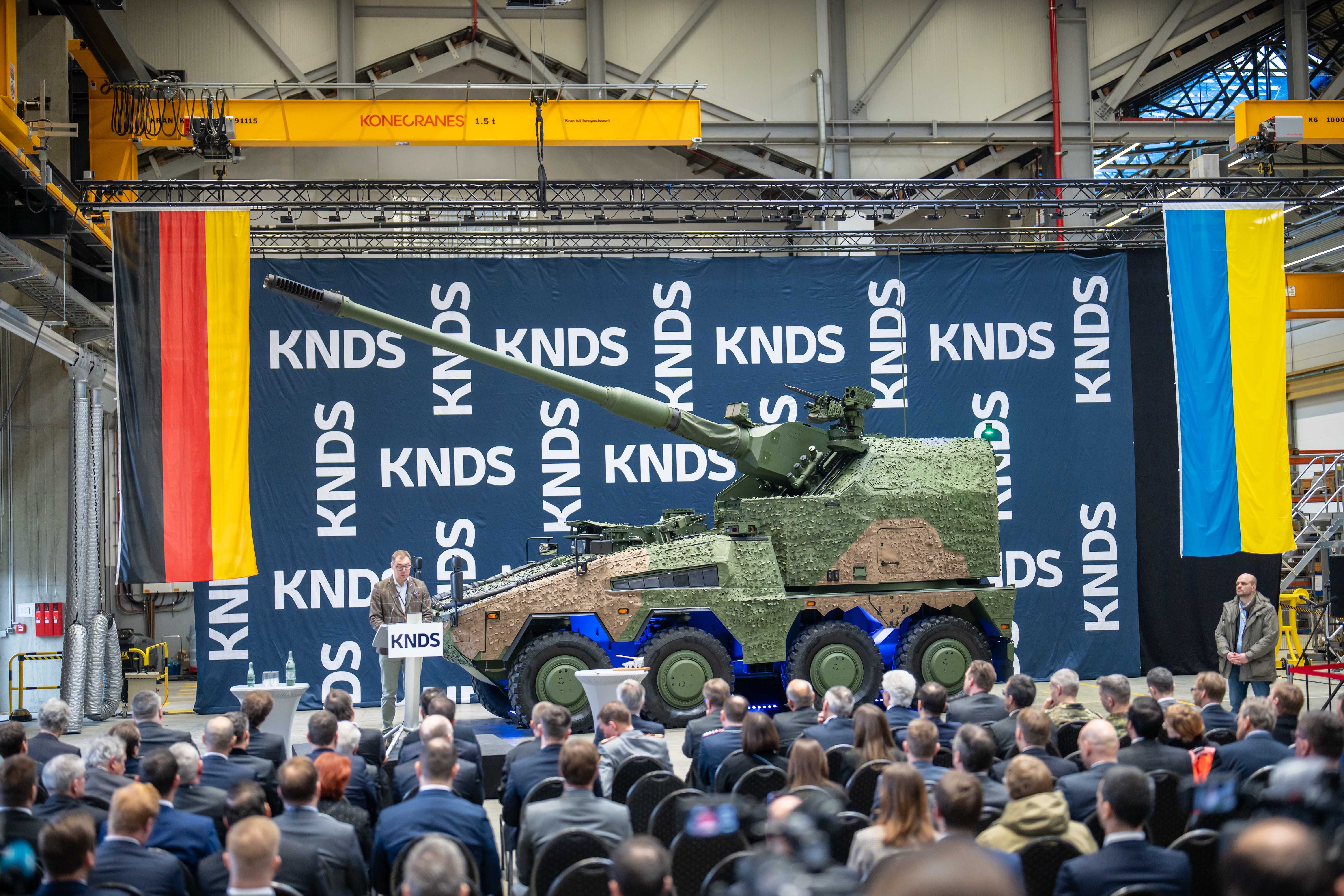
The battlefield data memorandum, described by Ukrainian Defense Minister Mykhailo Fedorov as the first agreement of its kind for Ukraine, covers performance data from the PzH 2000 self-propelled howitzer, the RCH 155 wheeled artillery system and the IRIS-T air defense launcher. Ukraine also provides Germany access to its real-time DELTA battlefield management system and other digital platforms for developing AI models and analytical tools.
The deal formalizes what has until now been a largely informal feedback loop. German defense firms have quietly incorporated Ukrainian combat data into next-generation upgrades: the PzH 2000, for example, faced barrel wear issues caused by Ukraine’s higher-than-NATO fire rate that have been a valuable learning experience, and the integration of the Israeli-made Trophy active protection system into the new Leopard 2A8 has likewise been attributed to lessons learned in Ukraine.
In return, Germany will continue to serve as Ukraine’s most important partner, as Chancellor Friedrich Merz called his country. Germany is financing a contract between Ukraine and Raytheon for several hundred Patriot PAC-2 interceptors, and a separate deal with Diehl Defence for 36 additional IRIS-T launchers. A further €300 million ($354 million) is earmarked for Ukraine’s long-range strike capabilities, alongside joint production of 5,000 AI-enabled mid-range strike drones under the “Build with Ukraine” initiative.
IRIS-T has been Germany’s most unambiguous success story in Ukraine, with Ukrainian forces reporting an interception rate of roughly 99% in deployed sectors and more than 250 confirmed combat kills. Kyiv has separately ordered 18 more launchers on its own.
German defense firms are, in effect, developing next-generation systems on the back of Ukraine’s wartime experience — paid for, in part, by German taxpayers. Zelenskyy struck an optimistic note, saying Ukraine’s battlefield know-how would be integrated “into the European security system.” Merz framed it as straightforwardly mutual.
The agreement continues a trend toward two-way deals in Western countries’ support for Ukraine as the war drags on. While in the first years of the Russian invasion, the ethos of defending Ukraine − and by extension, sending a firm signal to Moscow − were touted by European leaders as a worthy goal in and of itself, the supply of aid has become somewhat more transactional recently.
Conspicuously absent from the latest German weapons was the Taurus cruise missile, which Merz again ruled out. His reasoning − that Ukraine’s own technology has rendered Taurus unnecessary − sits uneasily alongside the €300 million for long-range strike capabilities included in the very same deal.
Germany formalized a €4 billion defense package with Ukraine, granting its defense industry access to combat performance data from weapons used in the conflict. This includes the PzH 2000 howitzer and IRIS-T air defense systems. In return, Germany will finance contracts for Patriot PAC-2 interceptors and additional IRIS-T launchers, enhancing Ukraine's military capabilities. The agreement reflects a growing trend of mutual military support between the two nations.
- Germany signed a €4 billion defense package with Ukraine.
- The agreement allows German defense firms access to combat performance data from weapons used in Ukraine.
- Germany is financing contracts for Patriot PAC-2 interceptors and additional IRIS-T launchers for Ukraine.
- Ukrainian forces reported a 99% interception rate for IRIS-T systems in combat.
- Germany is developing next-generation systems based on Ukrainian combat data.