
Beware! Japan's Crazy Bet on Intercepting Drones at Any Cost to Build a Complete Industry Chain
[Global Times Special Correspondent Chen Yang, Global Times Reporter Ma Jun] In recent years, drones have been regarded by Japan as one of the core equipment to strengthen military power, with significant investments made to enhance drone production capacity. Recently, several Japanese media outlets revealed that Japan is fully developing new concept drones, such as intercepting drones that have been validated on the battlefield, and is collaborating with Ukraine on this development. Chinese experts interviewed by the Global Times stated that drones are important equipment for Japan's development of offensive combat capabilities, and Japan's expansion of drone production capacity also plans to develop its own related industrial chain, aiming to further develop more types of drones.
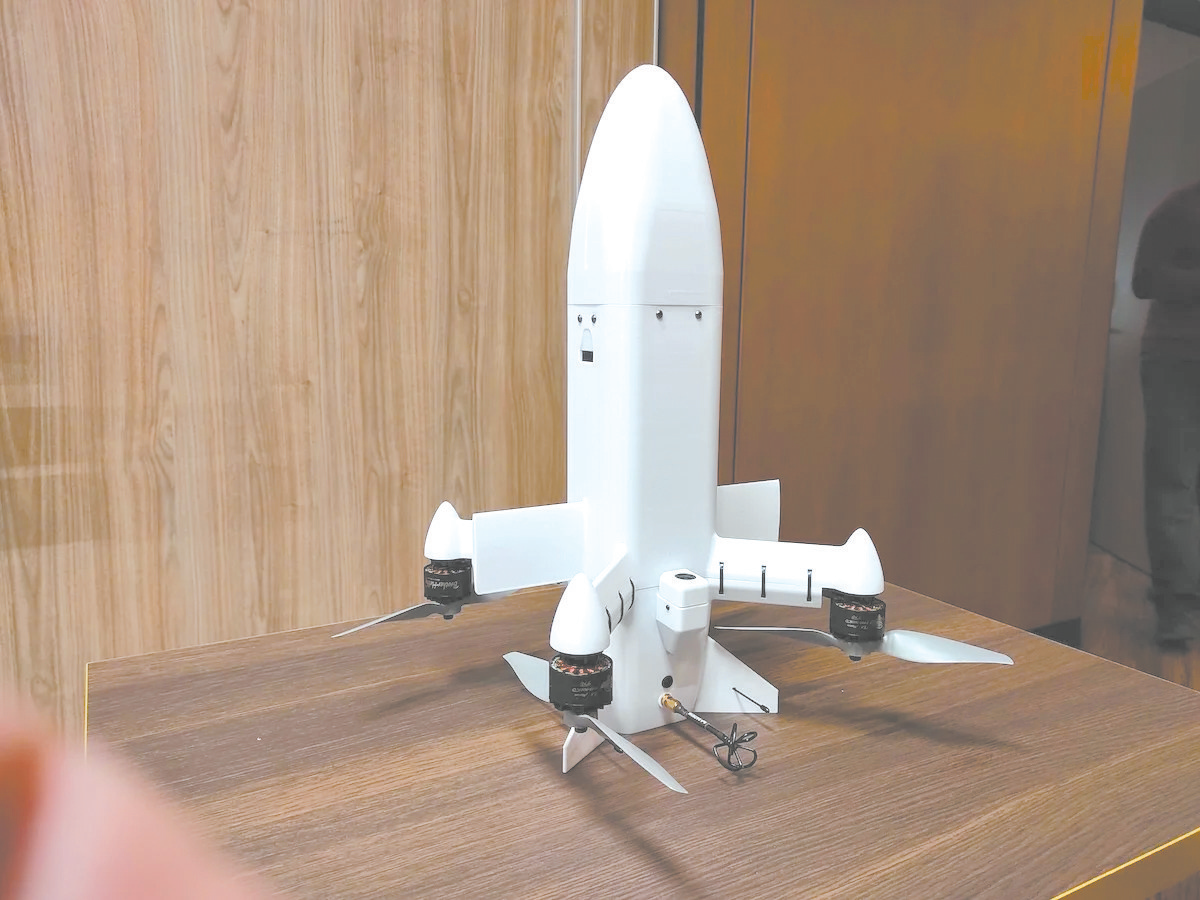
Intercepting drones are highly valued
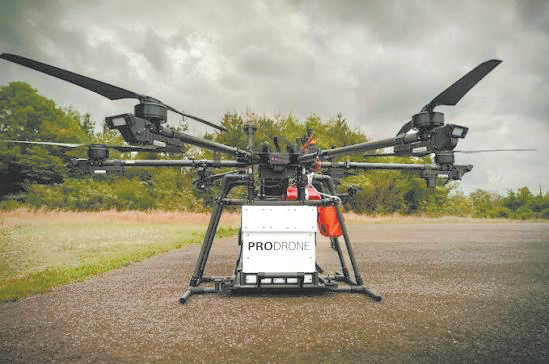
According to a report by Nikkei Asia on August 3, against the backdrop of Prime Minister Kishi Nobuo's desire to reduce dependence on Chinese drones and expand domestic manufacturing, many Japanese startups are entering the "defensive drone" production field. For example, the Japanese drone company Prodrone recently announced a partnership with Toshiba for the production of intercepting drones and received investment from the Development Bank of Japan. The report stated that this collaboration combines Prodrone's rapid development and manufacturing capabilities of various drones with Toshiba's expertise in defense radar and command control systems. The two companies aim to establish a domestic supply chain capable of supporting large-scale drone production.
Another Japanese drone company, Eams Robotics, has developed a prototype intercepting drone for the Japanese Ministry of Defense, with a diameter of about 50 centimeters and a payload of 2 kilograms. As this drone requires target information and navigation support, the company hopes to use the mission coordination system provided by the American company Anduril, which is currently being tested by the Japan Maritime Self-Defense Force; at the same time, the company is also in discussions with similar system developers, including Toshiba and Fujitsu, so that its drones can share intelligence with the Japan Ground Self-Defense Force.
It is reported that intercepting drones are a new concept that has emerged in recent years, classified as a new type of air defense weapon that collides with or destroys enemy drones, with the core tactic being "drone against drone." Nikkei Asia stated that Japan's emphasis on intercepting drones is informed by lessons learned from the current Russia-Ukraine conflict and Middle Eastern wars. "For example, the 'Shahed-136' drone, widely used by Iran, is a propeller drone powered by a piston engine, costing as little as $20,000, capable of carrying about 50 kilograms of payload, with a range of 2,000 kilometers. Russia launches thousands of its improved versions each month to attack Ukrainian cities." Japan's Minister of Defense Kishi Nobuo previously praised Prodrone's development of intercepting drones during a visit to the company.
Drones become a "top priority"
Japan's development of intercepting drones is clearly influenced by the Russia-Ukraine conflict. U.S. Defense News stated that intercepting drones are electric high-speed drones, typically using a vertical takeoff mode, designed with a rocket-like conical body to reduce flight resistance. Although their range is shorter, their maximum flight speed generally exceeds 250 to 350 kilometers per hour, easily catching up with suicide drones like the "Shahed-136," which travel at about 180 kilometers per hour. Compared to using expensive air defense missiles to intercept low-cost suicide drones, intercepting drones offer a high cost-effectiveness ratio. For example, each "Shahed-136" suicide drone costs about $20,000 to $30,000, while the unit price of a "Patriot" intercept missile exceeds one million dollars. In contrast, Ukraine's intercepting drones cost only $1,000 to $2,000.
On August 3, Japan's Yomiuri Shimbun reported that Japanese and Ukrainian private enterprises are moving towards collaborative development of drones. Japan hopes to leverage Ukraine's experience as a "drone powerhouse" forged in the fires of war to promote the productization process, while Ukraine is looking to use this as a stepping stone to enter the Asian market.
It was reported that on July 6, Japan and Ukraine announced the establishment of a mechanism aimed at promoting cooperation between enterprises in the drone development field—the "Japan-Ukraine Drone Industry Cluster." This mechanism aims to connect drone-related companies from both countries and promote collaborative research and development.
Reports indicate that Japan values Ukraine's drone research and development capabilities. Approximately 450 emerging drone-related enterprises have been established in Ukraine, with annual production surging from about 1,200 units in 2022 to approximately 1.7 million units in 2024, and expected to reach about 7 million units by 2026. New models equipped with technologies such as artificial intelligence (AI) are continuously being deployed on the battlefield. Against this backdrop, there are also new movements of Japanese companies entering Ukraine. The Japanese company Terra Drone announced in June that it had acquired two Ukrainian drone companies and plans to advance manufacturing and research and development locally, aiming to export "defense drones" to various countries.
Japan places great importance on jointly developing new concept drones with Ukraine, attempting to bridge what it perceives as a "military gap with China" by vigorously developing unmanned combat capabilities, with the core strategy being to establish "asymmetric advantages" through large-scale deployment of drones. As early as December 2022, in the newly revised "Three Security Documents," Japan elevated drones to one of the seven pillars of defense capability, listing it as a key area for developing "counterattack capabilities." In the fiscal year 2026 alone, Japan plans to invest over 100 billion yen in procuring "defense drones," with a defense budget for strengthening unmanned systems reaching as high as 277.3 billion yen.
Seizing the opportunity to build a drone industrial chain
Chinese experts interviewed by the Global Times stated that Japan's development of military drones has multiple intentions. First, whether it is offensive suicide drones or defensive intercepting drones, they have already been validated in actual combat, and these new concept low-cost drones can directly enhance the Japan Self-Defense Force's combat capabilities.
Secondly, these drones are also a key component of Japan's development of offensive capabilities. In particular, long-range drones/loitering munitions can undertake reconnaissance missions, providing target information for the Self-Defense Force's long-range precision missiles. Japan is attempting to integrate advanced missiles with low-cost drones to enhance offensive combat capabilities.
Additionally, in the process of producing these drones, Japan is also seizing the opportunity to develop its own industrial chain, aiming to independently develop more advanced drones in the future. Nikkei Asia reported that as Japanese domestic manufacturers have largely lost the civil drone market, Japan's capabilities in producing key components such as batteries, motors, sensors, and flight control systems for drones have also weakened. The Japanese government hopes to establish a complete supporting production capacity through large-scale procurement of drones. Terra Drone has explicitly stated that it will establish a domestic supply chain for intercepting drones and announced cooperation with Japanese manufacturers to produce drone battery cells. Furthermore, Japanese military-industrial companies such as Mitsubishi Heavy Industries are also paying attention to opportunities in the drone production field, with many supporting manufacturers already participating in the production of propellers, flight control, and battery components for Japanese drones.
However, Yomiuri Shimbun also acknowledged that compared to Ukraine's enormous production capacity in drones, Japan's related industrial foundation is weak, and innovation is clearly lacking. Experts stated that Japan aims to leverage Ukraine's experience to develop unmanned combat forces, but overall, Japan still faces issues such as a weak domestic drone industry foundation, supply chain dependence, and institutional rigidity, which are not short-term problems that can be resolved. Experts also noted that Japan intends to position drones as one of the core pieces of equipment to "counter the threat from China," but China can not only mass-produce various types of low-cost drones but also develop high-tech models such as high-altitude long-endurance drones and stealth unmanned attack aircraft, while also developing and equipping various new intercepting drone weapons.
In response to Japan's claim to "invest in drones and artificial intelligence and other new combat methods to adapt to the changing nature of conflicts," a spokesperson for the Chinese Ministry of Defense criticized that Japan's defense budget has rapidly increased for 14 consecutive years, with defense spending as a percentage of GDP soaring to 2%, and it is even set to increase further to 3.5%. A spokesperson for the Chinese Ministry of Foreign Affairs also emphasized that Japan's "new militarism" poses a threat to regional peace and stability, and the international community must remain highly vigilant and resolutely contain it.
Japan is enhancing its drone production capabilities and developing intercept drones in collaboration with Ukraine. This initiative aims to strengthen Japan's military capabilities and reduce dependence on foreign drone technology. Key companies involved include Prodrone and Eams Robotics, which are working on new drone concepts and production partnerships. The focus on intercept drones is a response to recent conflicts, particularly the Russia-Ukraine war, highlighting the importance of drone technology in modern warfare.
- Japan is investing heavily in drone production and intercept drone technology.
- Japan is collaborating with Ukraine to develop new drone concepts.
- Prodrone and Eams Robotics are key players in Japan's drone industry.
- Japan aims to reduce reliance on Chinese drones and enhance domestic manufacturing.
- The development of intercept drones is influenced by lessons learned from the Russia-Ukraine conflict.