
Boeing KC-46A export deal ceiling jumps to $19.1 billion
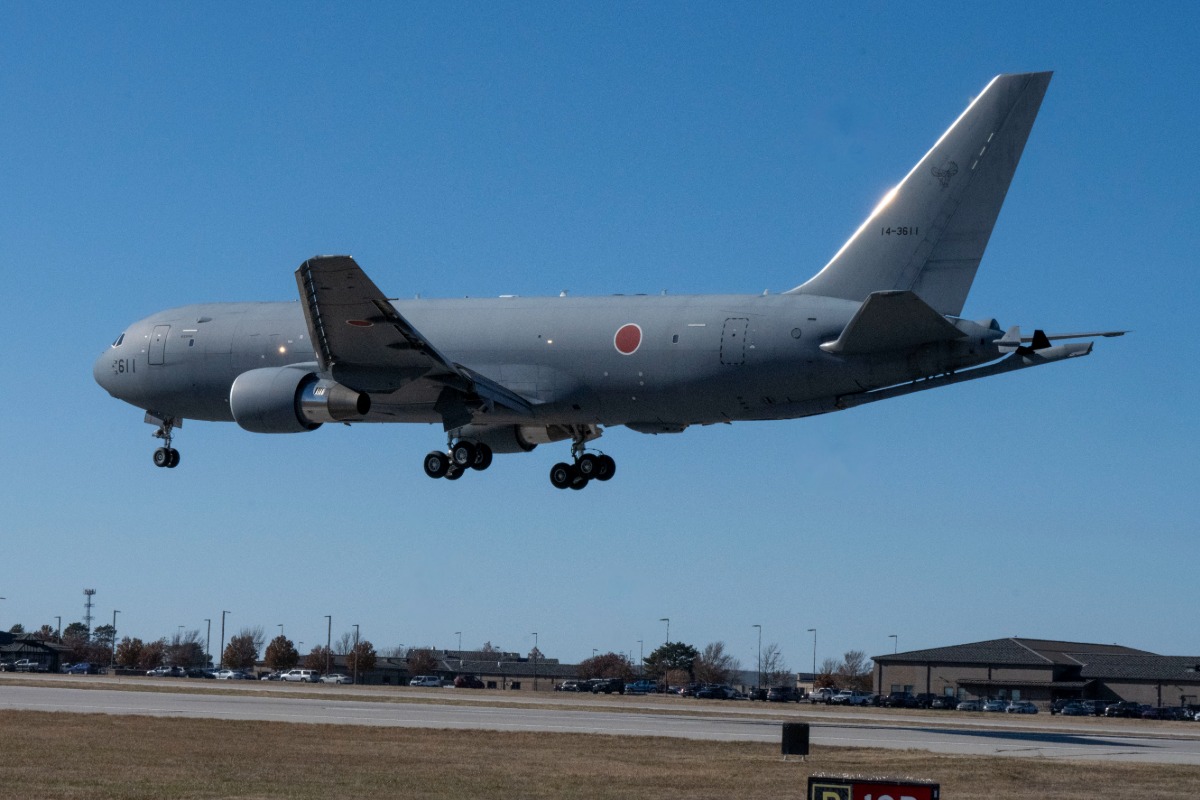
The U.S. Air Force just gave itself a lot more room to sell Boeing’s aerial refueling tanker overseas. In a contract modification worth $13.4 billion, the Air Force raised the ceiling on an existing Foreign Military Sales agreement for the KC-46A Pegasus tanker from $5.7 billion to $19.1 billion, more than tripling how much business can flow through that single contract.
It’s worth being clear about what this modification is not: it doesn’t order any new planes, and no money is actually changing hands with this award. What the Air Force did was simply widen the lane ahead of time, similar to a company raising the credit limit on an account before the big purchases start coming in rather than making those purchases itself. Work connected to the contract will continue through April 28, 2035, which gives some sense of how long the Air Force expects this sales pipeline to stay active.
The contract already covers KC-46A sales to two close U.S. allies, Japan and Israel, and the Air Force left the door open for what it called future country partners without naming who those might be. Raising the ceiling now means that if another country signs on later, or if Japan or Israel wants more aircraft, the Air Force can process that business under the same contract instead of starting from scratch each time.
To understand why any of this matters, it helps to know what the KC-46A actually does. Modern combat aircraft can’t fly forever on a single tank of gas, and refueling tankers exist to solve that problem, meeting fighters and bombers mid-flight and pumping fuel into them so missions can stretch on for hours longer than they otherwise could. The KC-46A is built on the frame of Boeing’s 767 commercial airliner, adapted with a boom, hoses and fuel systems, and it’s meant to eventually replace the Air Force’s KC-135 Stratotankers, some of which have been flying since the Eisenhower administration.
The KC-46A’s road into service hasn’t been smooth. Since deliveries began in 2019, the program has been dogged by a persistent problem with its Remote Vision System, essentially a set of cameras and screens that let a boom operator, sitting inside the tanker rather than lying in a rear compartment as on older tankers, watch the refueling boom connect with the aircraft behind it. When the imagery came out distorted, it made the job harder than it should have been, and there have been real incidents where the boom scraped against the aircraft it was trying to refuel. Boeing has spent years working on a fix, an upgraded system called RVS 2.0, paired with a redesigned operator’s station.
That history is directly relevant to the foreign sales covered by this contract. Japan’s Air Self-Defense Force has already bought at least four KC-46As, and a separate order placed in October covered delivery of its third and fourth aircraft for $342.1 million. Israel’s path to the tanker has been bigger still: the U.S. State Department cleared a sale of eight KC-46As to Israel valued at roughly $2.4 billion, and earlier this year a contract under this same vehicle covered four of those aircraft along with the specific engineering work needed to fit them with the upgraded RVS 2.0 camera system and its companion operator station. In other words, some of the foreign buyers are effectively helping fund the fix for a problem that has troubled the Air Force’s own fleet.
There’s also a business logic to why the Air Force wants a bigger ceiling on this particular contract rather than negotiating fresh paperwork for every future sale. Foreign military sales don’t just bring in money for Boeing; they help spread out the fixed costs of running a production line, and they tend to keep a program’s supply chain healthier over a longer stretch of years. A tanker sold to Tokyo or Tel Aviv still depends on the same parts suppliers and technicians that build tankers for the U.S. Air Force, so more foreign orders can mean a steadier drumbeat of work at Boeing’s Seattle-area facilities.
What isn’t clear yet is which countries might take advantage of the newly expanded ceiling, or how many additional tankers the extra $13.4 billion in capacity is actually meant to cover. The Air Force didn’t say, and neither figure will likely become public until a specific country’s order shows up in a future contract announcement.
Content preview only. Full article available at source. View Full Article
The U.S. Air Force modified the Foreign Military Sales agreement for the KC-46A Pegasus tanker, increasing the ceiling from $5.7 billion to $19.1 billion. This change allows for expanded sales to allies like Japan and Israel without needing new contracts for each order. The contract will remain active until April 28, 2035, supporting ongoing foreign military sales and logistics for the KC-46A.
- The U.S. Air Force raised the ceiling on the KC-46A Foreign Military Sales agreement from $5.7 billion to $19.1 billion.
- The modification does not involve new aircraft orders or immediate financial transactions.
- The contract covers sales to Japan and Israel, with potential for future partners.
- The KC-46A is designed to replace the aging KC-135 Stratotankers.
- The contract work is expected to continue until April 28, 2035.