
Boeing to supply flight control tech for special ops Chinooks
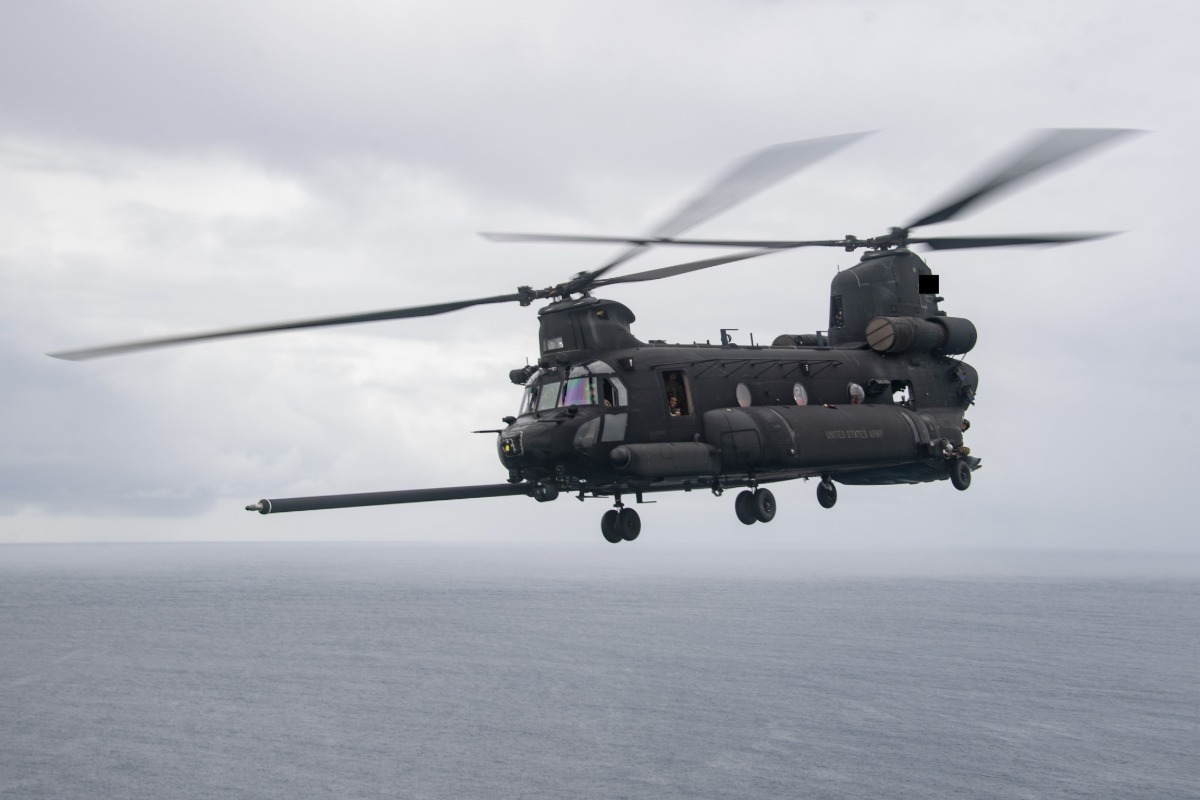
U.S. Special Operations Command has awarded Boeing a $55.4 million order to supply Active Parallel Actuator Systems and related parts for the MH-47G special operations helicopter fleet, according to a Department of War contract announcement.
The order, issued under a basic ordering agreement, will be performed primarily at Boeing’s Ridley Park, Pennsylvania, facility and is expected to be completed by August 2033. U.S. Special Operations Command, based at MacDill Air Force Base, Florida, is managing the contract.
The Active Parallel Actuator System, known as APAS, is a flight control technology Boeing developed with BAE Systems for the CH-47F and MH-47G Chinook helicopters. The system replaces the fixed mechanical stops that normally guide pilots to the edge of an aircraft’s flight envelope with electronically generated stops that adjust to actual flight conditions in real time. It also delivers tactile feedback through the flight controls, warning pilots as they approach performance limits, while the Chinook retains its underlying hydromechanical flight control system rather than switching to full fly-by-wire controls.
Boeing began installing APAS directly on its Chinook production line earlier this year, adding the system to a United Kingdom Extended Range Chinook in February and formally incorporating it into standard production in April, according to the company. The MH-47G Block II, the special operations variant flown by Army special operations aviation units, was designed to be the first Chinook configuration to carry APAS as standard equipment. Boeing has said the system is intended to reduce pilot workload and improve safety margins during high-risk maneuvers, benefits the company has tied specifically to special operations flight profiles.
The MH-47G supports U.S. Special Operations Command’s most demanding aviation missions, including long-range infiltration and exfiltration, aerial refueling and precision cargo delivery in contested or austere environments. Boeing has built the aircraft under a series of Block II contracts since the early 2020s, with the Army Special Operations Aviation Command previously placing orders covering 30 or more of the helicopters.
The new order does not specify how many APAS units or associated parts Boeing will deliver under the contract, nor does it identify which MH-47G units or bases will receive the equipment. The nearly seven-year performance window suggests the work will extend across multiple aircraft deliveries or retrofit batches rather than a single production run.
Content preview only. Full article available at source. View Full Article
Boeing has been awarded a $55.4 million contract by U.S. Special Operations Command to supply Active Parallel Actuator Systems for the MH-47G special operations helicopter fleet. The contract will be executed primarily at Boeing’s facility in Ridley Park, Pennsylvania, and is expected to be completed by August 2033. This new flight control technology aims to enhance safety and reduce pilot workload during special operations missions.
- Boeing received a $55.4 million contract from U.S. Special Operations Command.
- The contract is for Active Parallel Actuator Systems for the MH-47G helicopter fleet.
- The work will be performed at Boeing’s Ridley Park facility in Pennsylvania.
- The contract is expected to be completed by August 2033.
- The APAS technology is designed to improve safety and reduce pilot workload.