
Boko Haram and ISWAP refuse to die in Nigeria — the army relies on the offensive after 17 years of war in 2026
 Marie Dubois
Boko Haram and ISWAP refuse to die in Nigeria — the army relies on the offensive after 17 years of war in 2026
Abuja, November 6, 2026. In the briefing rooms of the capital, the word "ceasefire" has just been erased from the board. The spokesperson for the Nigerian armed forces, Major General Samaila Uba, stated on Thursday that there is no truce agreement with Boko Haram or the Islamic State in West Africa (ISWAP). His statement responds to a more embarrassing reality than victory announcements: in the Northeast, attacks on military positions have intensified in recent weeks, after seventeen years of operations.
The declaration does not announce a new campaign. It rather reveals that the previous one never produced the necessary territorial control. In the operational theater of the Lake Chad basin, a base held during the day can be isolated at night, then circumvented by fighters on motorcycles or canoes. The border is not a line: it is a succession of paths, islands, and villages that change allegiance based on the available protection.
An offensive that is no longer enough to hold the ground
According to Reuters, relayed by TimesLIVE, General Uba cites insurgents killed, suspects arrested, and hostages freed to justify the continuation of military pressure. Business Post Nigeria confirms the same message and situates the recent attacks in the states of Borno and Yobe. The vocabulary is classic: "neutralize," "recover," "maintain pressure." It describes tactical results, not a strategic breakthrough.
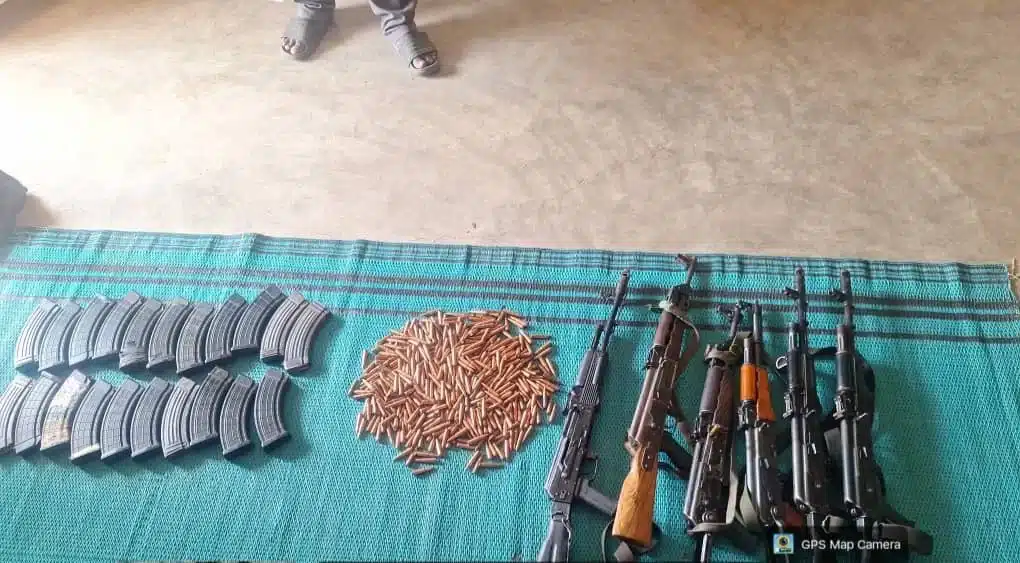
The figures published by Security Digest Nigeria, in a report attributed to the army and Zagazola Makama, give an idea of the intensity of the fighting. Between October 29 and 30, the army claims to have repelled coordinated attacks in Bitta, in the Gwoza area, and in Buni Yadi, in Yobe State. It reports over 84 insurgents killed and the recovery of AK-47 rifles, machine guns, and a 60 mm mortar. On October 31, an operation in Kukawa reportedly killed Abu Hajara, described as a member of the ISWAP shura council, as well as Abul Walid, the group's commander.
This information is important, but it remains Nigerian operational claims. Casualty reports in this area are difficult to verify independently, and armed groups have an interest in concealing their setbacks. Therefore, it is necessary to distinguish the immediate effect of a raid from the ability to prevent the reconstitution of a unit in the following weeks.
The problem lies between the bases
On the ground, the difficulty is not only to storm an insurgent position. It is then necessary to supply it, protect the route, and prevent the enemy from returning. Bitta and Buni Yadi are located in environments where distances, vegetation, and improvised explosive devices slow down any response. A column can win a confrontation and lose the initiative as soon as it returns to its base.
ISWAP retains an organizational advantage in the rural areas of Borno: intelligence gathering, local knowledge, mobility, and the ability to strike garrisons rather than large urban centers. Boko Haram, more fragmented, remains capable of exploiting the same spaces and the porosity of the Lake Chad basin. The rivalry between the two organizations does not automatically produce a benefit for Abuja. It also multiplies armed actors, clandestine routes, and threats against communities that refuse to cooperate.
The most revealing figure may not be that of the fighters reported as killed, but that of the hostages freed and the weapons seized. An effective operation must reduce the enemy's logistics: motorcycles, ammunition, phones, informants, and access to markets. Without this continuous pressure, the elimination of a shura member resembles a service interruption, not a defeat.
The return of regional cooperation as a political test
General Uba also indicated that Nigeria is discussing security and diplomatic cooperation with neighboring Sahelian states that have left ECOWAS, including Niger, Mali, and Burkina Faso. This is a significant change in approach. Lagos can no longer rely on pre-coup regional mechanisms to automatically secure the northern borders.
However, the announced cooperation will need to address a concrete problem: the Nigerien, Malian, and Burkinabè forces do not necessarily share the same priorities or intelligence channels as Nigeria. The juntas of the Sahel States Alliance want to defend their sovereignty and limit the influence of ECOWAS. Abuja, for its part, is primarily seeking to prevent the Lake Chad corridor and the routes to northwestern Nigeria from becoming an operational continuum for jihadist and criminal groups.
The announced end of any truce is therefore not a strategy in itself. It is a position of firmness intended to reassure the army and public opinion at a time when attacks against military posts are on the rise again. The risk is to confuse offensive tempo with sustainable control. I have seen, on the ground, positions considered "cleared" become vulnerable again as soon as the armored vehicles left the track.
The next battle will be one of permanence
In the coming weeks, three indicators will need to be monitored: the repetition of coordinated attacks against several bases, the army's ability to maintain detachments after sweep operations, and the movement of fighters towards the border areas with Niger, Chad, and Cameroon. If attacks focus on garrisons rather than civilians, ISWAP will likely seek to test the chain of command and logistical stocks.
Abuja is right to refuse an improvised truce with groups that use negotiations to buy time. But a seventeen-year war cannot be won solely by the accumulation of victorious statements. The real test will be simple and brutal: after the column departs, who controls the road, the market, and the night?
Sources
The Nigerian Armed Forces reported intensified attacks by Boko Haram and ISWAP in Northeast Nigeria from October 29 to 31, 2026, resulting in 84 insurgents killed. General Samaila Uba confirmed no ceasefire exists with these groups, emphasizing ongoing military pressure. Operations in Bitta and Buni Yadi led to significant insurgent casualties and the recovery of weapons, highlighting the challenges of maintaining control in the region.
- Nigerian military reported 84 insurgents killed in recent operations.
- Attacks against military positions have intensified in the Northeast.
- General Uba stated there is no ceasefire agreement with Boko Haram or ISWAP.
- Recent operations included the killing of ISWAP leaders Abu Hajara and Abul Walid.
- The Nigerian military is focusing on maintaining pressure on insurgent groups.