
Boko Haram and ISWAP Strike Nigeria — Five Dead Reveal the Chad Lake Flaw in 2026
 Marie Dubois
Boko Haram and ISWAP Strike Nigeria — Five Dead Reveal the Chad Basin Flaw in 2026
In Wumbi, in the local government area of Kala-Balge, the attack on September 21 lasted only long enough to empty a village of its farmers. However, it produced a broader military effect. A militia leader was killed, and then four others died when an explosive device placed on a body detonated during the evacuation. The Borno State police confirmed the toll, reported on September 24 by Daily Post. The rest of the account remains attributed to local sources and cannot be independently verified.
Wumbi is located near the Cameroonian border, in an area where telephone communications are so fragile that information took several days to reach Maiduguri. This is an operational detail, not an anecdote. An army that receives news after the assailants have left does not truly control its theater of operations.
Wumbi Shows the Cost of Delegated Security
The assailants reportedly used rifles, improvised explosive devices, and a group large enough to force the residents to flee. Therefore, the primary objective was not necessarily to hold the ground. It was to disrupt the local presence, strike the person responsible for the alert, and make the return of civilians more dangerous than their departure.
The killed leader belonged to the local security architecture — Civilian Joint Task Force, militias, and vigilantes — on which the Nigerian army relies in rural areas. This architecture has an obvious utility. The locals know the paths, displaced families, and unusual movements. But it also has a structural weakness: it exposes the same informants to predictable revenge, without providing them the means to deal with an explosive device.
The trap around the body is telling. It transforms a tactical loss into a secondary attack against those who come to help. This process prohibits immediate evacuation, delays victim identification, and breaks the trust between the population and security forces. In a village already nearly deserted, this is enough to make the last core of civil presence disappear.
Simultaneous Military Pressure on the Border
The attack on Wumbi is not an isolated event. In Pulka, in the Gwoza region, the Nigerian army announced it had repelled an attack attributed to the Islamic State in West Africa, or ISWAP, on September 7. According to the statement from the HADIN KAI operation, air support provided intelligence, surveillance, and reconnaissance, then struck fleeing elements. One soldier was injured, while the forces claimed to have maintained their positions.
These two episodes must be read together, without artificially attributing them a common command. In Pulka, a fortified military post resisted thanks to the ground-air-intelligence combination. In Wumbi, a poorly connected agricultural community was struck through its vigilante system. The groups designated in reports as Boko Haram or ISWAP do not need to conquer every base. They can bypass hard points, choose the margins, and impose on Nigerian forces a permanent guard over a territory that stretches to Cameroon.
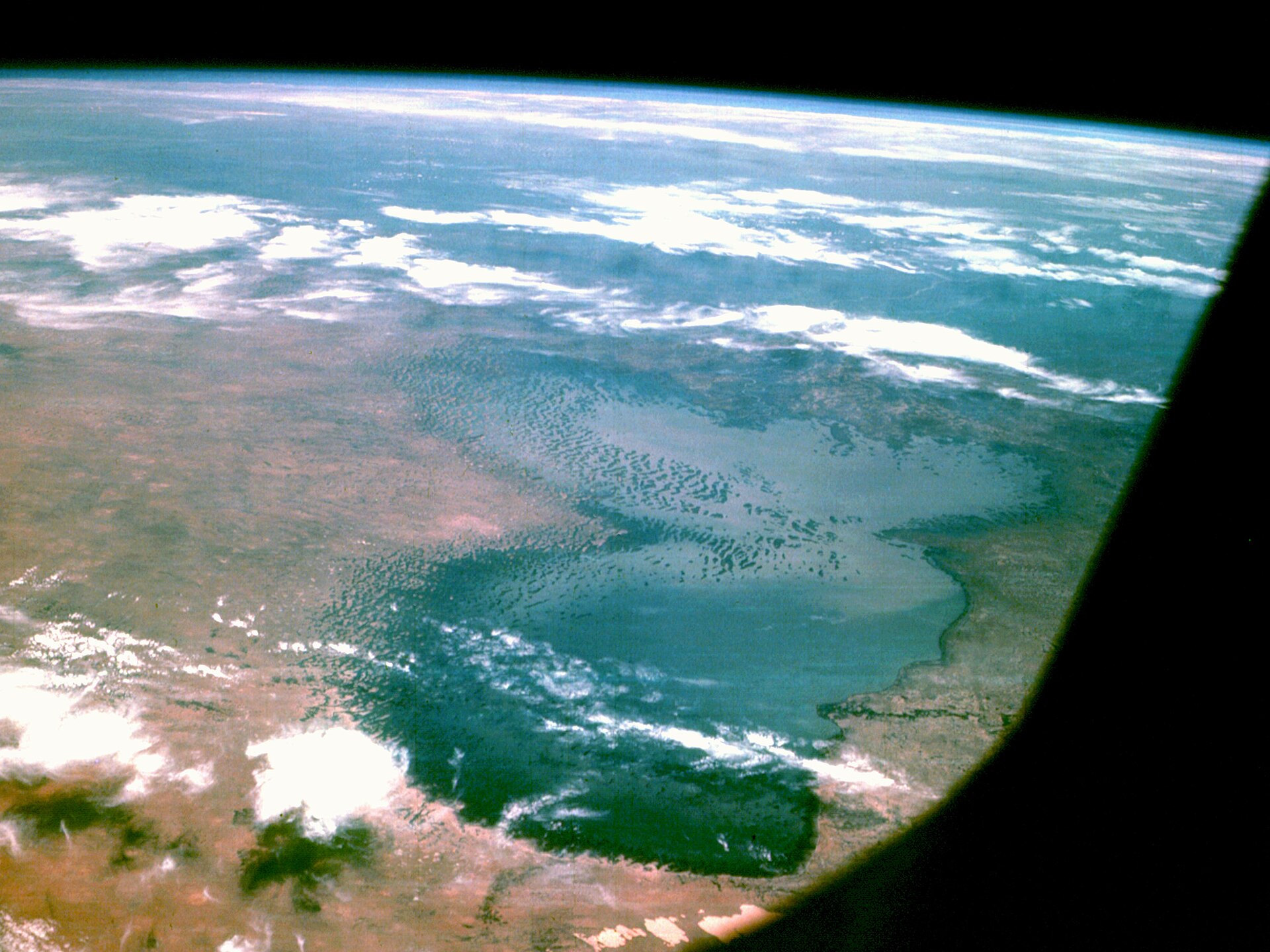
The geography of the Lake Chad basin favors this method. The roads are discontinuous, the villages remote, and the administrative border does not correspond to the routes used by fighters, fishermen, and farmers. A few kilometers from a held position, a secondary path may be sufficient to move men or equipment. The military map shows states: the armed group thinks in corridors, water points, and communities capable of providing shelter.
The Death Toll Does Not Tell the Whole Story
The toll of five dead in Wumbi may seem modest in the face of the large offensives announced in northeastern Nigeria. It would be a mistake to treat it as a minor attack. The death of the vigilante leader deprives the village of an intelligence relay. The secondary explosion punishes mutual aid. The flight of farmers reduces local production and creates a population that must cross the border to work their fields under protection.
This mechanism is precisely what allows an insurgency to gain control without openly administering territories. Data compiled by ACLED and cited by The Guardian recorded 2,145 violent events involving jihadist groups in Mali, Burkina Faso, and Niger during the first eight months of 2026, after 2,845 in 2025. The Lake Chad basin is not included in this total, but it illustrates the same logic: pressure is measured less by a capital taken than by the number of roads a civilian can no longer use.
Nigerian authorities can rightly claim the defense of Pulka. But a victory over a base does not automatically restore movement between Pulka, Gwoza, Kala-Balge, and the agricultural areas near the border. Air support is decisive against a spotted column. It is much less effective when the attack dissolves into a village and then continues with an explosive left on the ground.
The Next Test Will Be the Reopening of the Countryside
The credible response is not limited to increasing patrols. It is necessary to maintain a radio or satellite link when the civil network fails, neutralize explosives with teams actually present nearby, and protect vigilante leaders without turning every community into a sacrificial outpost. Above all, Abuja will need to coordinate its operations with Cameroon: a village emptied on one side of the border does not become safe because the inhabitants reappear on the other.
Information about the exact identity of the assailants and their losses remains incomplete. But the operational indicator is clear. If farmers can only return to Wumbi in convoy and under escort, the enemy will have achieved area control without raising a single flag. In the Lake Chad theater, the next battle may not be for a base. It will be the ability to move a demining team, then farmers, along the same path without asking them to choose between hunger and an ambush.
Sources : Daily Post Nigeria, September 24, 2026; Vanguard Nigeria, statement from the HADIN KAI operation; The Guardian, ACLED data on jihadist violence in 2026.
Boko Haram and ISWAP attacked the village of Wumbi on September 21, 2026, resulting in five fatalities, including a militia leader. The assault caused significant civilian displacement and highlighted vulnerabilities in local security. Concurrently, the Nigerian Army repelled an ISWAP attack in Pulka on September 7, 2026, maintaining their positions with air support.
- Boko Haram and ISWAP attacked Wumbi on September 21, 2026.
- Five fatalities were reported, including a militia leader and four civilians.
- An explosive device detonated during the evacuation of the village.
- The attack disrupted local agricultural activities and community security.
- The Nigerian Army reported a separate incident in Pulka on September 7, 2026, involving ISWAP.