
Borgu in Shock — Over 60 Worshippers Abducted as Lakurawa Opens a Front Towards Benin
 Marie Dubois
Borgu in Shock — Over 60 Worshippers Abducted as Lakurawa Opens a Front Towards Benin
On Friday, August 22, in Kpenya and neighboring villages in the Dekara district of Nigerian Borgu, Friday prayers ended in a raid operation. Armed men attributed to the Lakurawa group attacked the mosque and then the surrounding localities, taking dozens of residents into the bush. The numbers remain fluid — the police have not yet confirmed a definitive toll, while locals speak of over 60 people abducted and uncounted dead — but the strategic signal is already clear. Lakurawa is no longer just testing Nigeria's northwestern border. It is now pushing towards a much more sensitive axis, between Borgu, Lake Kainji, and the Benin border.
An Attack That Is Not Just a Simple Repetition
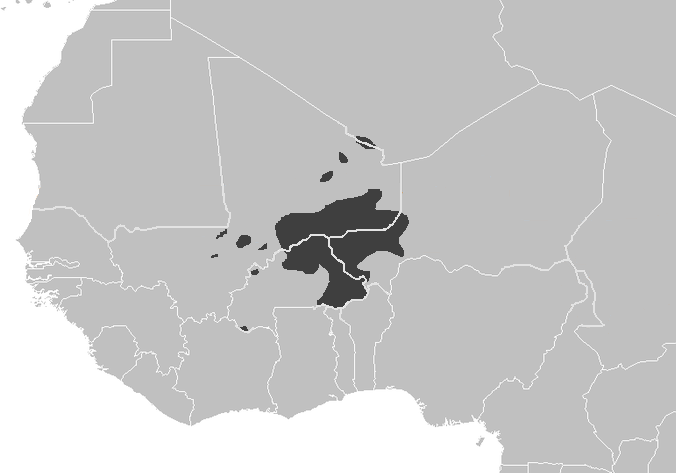
According to accounts gathered by Reuters via Al Jazeera and by AFP via Daily Sabah, the assault occurred shortly after the main prayer. Survivors describe fighters coming in by the hundreds, armed with rifles as well as machetes and knives, indicating an operation designed not only to kill but to terrorize, sort captives, and force local submission. In this area, violence is not an abstract background noise. Roads are scarce, villages are sparse, and the late arrival of security forces leaves the attackers several hours of tactical initiative.
It is important to note a significant uncertainty: the place names and even the exact number of localities struck vary according to initial testimonies. Kpenya, Gidan-Zana, Dikera, or Binzi appear depending on the sources. This ambiguity does not invalidate the event; it rather says something about the terrain. In rural Borgu, the state documents poorly, arrives late, and then rebuilds. For an armed group, this is an operational advantage. Confusion is part of the battlefield.
The Real Message Comes from Geography
Marie Dubois first looks at the map. And the map here deserves attention. Borgu is neither Maiduguri nor the old insurgent heart of Borno. It is not just the Sokoto-Kebbi corridor where Lakurawa has already made its mark. Borgu opens to the west, towards Benin, and to the southwest through the forested and lacustrine complex of Kainji. For jihadist or criminal groups that want to survive under military pressure, this kind of space matters more than an administrative border. One travels by paths, disperses hostages, and recomposes groups after contact.
In other words, Friday's attack suggests an attempt to expand the theater of operations. If Lakurawa consolidates a presence in this strip, Abuja will face a different threat: no longer just an infiltration from the Sahel to the northwest, but a mobile arc linking the Sahelian margins, Nigeria's interior forests, and border areas with Benin. This is new in its scope. And it is more difficult to contain than a simple border raid.
The Lakurawa-Mahmuda Shock Reveals a More Dangerous Fragmentation
The most revealing detail may not be the abduction itself, but the intervention of a rival group, Mahmuda or Mamudawa, which reportedly confronted the attackers and allowed some captives to escape. At first glance, one might see this as good news: jihadists fighting among themselves means energy they are not dedicating to the state. This is too short a reading.
On the ground, rivalry between factions mainly means that several entrepreneurs of violence are competing for the same social space, the same taxes, the same recruits, and the same routes. When two competing armed groups operate in the same area, the civilian population does not gain protection; it becomes the stake. Villages must pay twice, negotiate twice, flee further. And the state finds itself chasing a mosaic of actors who change alliances faster than motorized columns can be redeployed.
Nigerian authorities claimed in 2025 to have dismantled Mahmuda and weakened Ansaru. The mere fact that this name resurfaces amid a real confrontation shows either that the dismantling was overestimated or that the networks have survived in another form. In either case, the official diagnosis seems to lag behind reality.
Abuja Also Pays for the Rift with the Sahel
This local offensive is part of a broader regional dynamic. Al Jazeera's analysis published the same day on the security rift between Nigeria and the states of the Sahel Alliance highlights an essential point: armed groups cross borders more easily than bureaucracies. Since Niger's withdrawal from the multinational force of the Lake Chad basin and the political degradation between Abuja and Sahelian capitals, coordination mechanisms have thinned just as threats are spreading.
Lakurawa thrives precisely in these interstices. The group remains poorly mapped, and its exact degree of alignment with the Islamic State in the Sahel must be handled with caution. But on the ground, the difference becomes secondary if fighters, weapons, motorcycles, and hostages can cross several gray areas without coherent pursuit. A politically tense and militarily porous border creates strategic depth for the enemy.
What to Watch Now
The next indicator will not be an official statement, but the repetition. If other incursions affect the Borgu-Kainji axis in the coming days, it will need to be concluded that we are no longer facing a spectacular raid, but the methodical opening of a new corridor. This would put pressure not only on Niger State but also on trade and security links to Benin and, further, to the Gulf of Guinea.
On the ground, the priority should not be rhetoric about imminent victory, but the closure of dispersal paths, monitoring the outskirts of Kainji, and restoring minimal coordination with neighbors. Otherwise, Abuja risks discovering too late that Lakurawa has not only struck a mosque. The group may have found a new entry point into western Nigeria.
The Lakurawa group attacked a mosque in Kpenya, Nigeria, on August 22, abducting over 60 individuals and causing unconfirmed fatalities. The assault involved hundreds of armed attackers and marks a strategic expansion towards the Benin border. Rival group Mahmuda reportedly intervened, enabling some captives to escape, highlighting the complex security dynamics in the region.
- Over 60 individuals were abducted during the attack.
- The Lakurawa group conducted the assault shortly after Friday prayers.
- Survivors reported hundreds of attackers armed with rifles, machetes, and knives.
- The attack signifies a strategic push towards the Benin border.
- A rival group, Mahmuda, intervened, allowing some captives to escape.