
Brazil gets domestically produced MAX anti-tank missiles
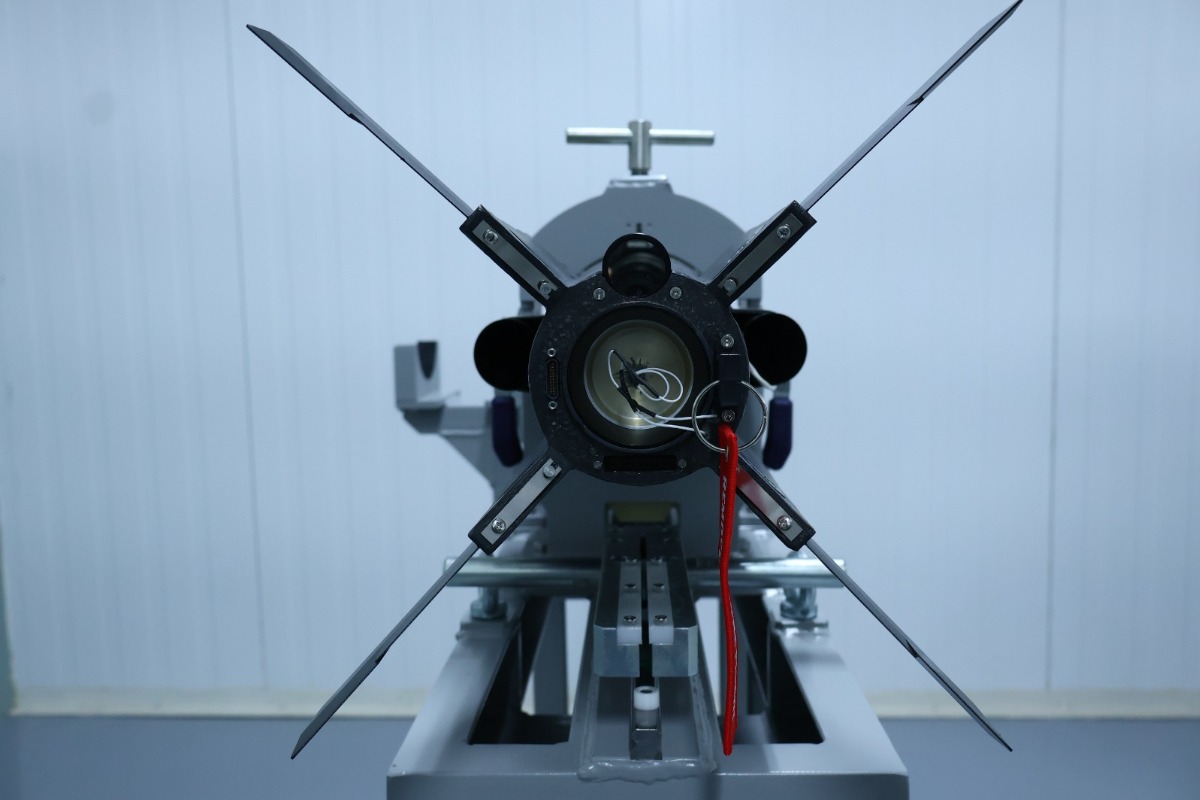
SIATT delivered the first production batch of MAX 1.2 AC anti-tank guided missiles to the Brazilian Army in Formosa, Goiás, on May 14, 2026, closing a development cycle that began decades ago and turning a domestically designed weapon into a fielded, factory-produced reality. The missiles came off the line at SIATT’s new industrial facility in Caçapava, São Paulo, a plant built specifically to take the MAX from prototype status into serial manufacture.
The MAX 1.2 AC is a laser-guided anti-tank missile developed jointly by SIATT and CTEx, the Brazilian Army Technological Center, the army’s primary institution for weapons research and evaluation. It measures approximately 1.38 meters in length, weighs around 15.4 kilograms, and reaches a maximum speed of 274 meters per second. Its warhead carries 2.2 kilograms of HMX explosive in a shaped charge capable of penetrating 700 millimeters of rolled homogeneous armor. Guidance works through a laser beam riding system: the operator keeps the weapon’s crosshair on the target while the missile tracks a coded laser beam projected downrange, a semi-automatic arrangement that delivers high accuracy against both static and moving targets at ranges between 200 meters and approximately 3.2 kilometers. The complete system weighs 52 kilograms, configured for a two-person infantry crew or vehicle mounting, and integrates with thermal imaging systems for night and adverse-weather operations.
MAX honors Sergeant Max Wolff Filho, a Brazilian soldier who served in the Italian Campaign during World War II as part of the Brazilian Expeditionary Force and became one of the country’s most decorated combat veterans. When the Brazilian Army formally renamed the weapon from its earlier MSS 1.2 AC designation to MAX at a September 2024 ceremony at the Army Evaluation Center in Marambaia, Rio de Janeiro, it was a conscious act of identity, connecting Brazil’s first domestically produced guided anti-tank missile to a national hero. At that same ceremony, the Army’s Department of Science and Technology signed the production and commercialization licensing agreement with SIATT, authorizing domestic manufacturing and clearing the path for exports.
The Formosa delivery feeds into a specific operational structure the Brazilian Army has been building. In late 2024, the army activated its first dedicated front-line anti-tank unit, the 1st Mechanized Anti-Tank Company, based in Osasco, São Paulo state, subordinate to the 11th Mechanized Infantry Brigade of Campinas. The unit initially deployed with Israeli-made Rafael Spike LR2 missiles, with MAX-equipped platoons planned to join in 2025. The Caçapava delivery fulfills that schedule, putting domestically produced anti-armor capability into a unit built around it. Formosa itself is an established army logistics and training hub in central Brazil, a practical base for the initial fielding of a new weapons system.
The urgency behind Brazil’s push for a domestic anti-tank missile goes beyond procurement policy. During the Guyana-Venezuela border crisis, the Brazilian Army deployed earlier MSS 1.2 AC prototype stocks to Roraima in the country’s far north to provide anti-tank coverage against potential contact with Venezuelan T-72 tanks, specifically because imported systems like the Spike LR2 were difficult to obtain quickly. That deployment of development-stage weapons for a live operational contingency demonstrated exactly why self-sufficient production matters: when a crisis arrives, a country either has the capability on its own shelves or it waits.
Content preview only. Full article available at source. View Full Article
SIATT delivered the first production batch of MAX 1.2 AC anti-tank guided missiles to the Brazilian Army in Formosa, Goiás, on May 14, 2026. This marks the transition of the domestically designed missile into a fielded weapon, produced at SIATT's new facility in Caçapava, São Paulo. The MAX 1.2 AC is a laser-guided missile with significant armor penetration capabilities, enhancing the Brazilian Army's anti-tank capabilities.
- SIATT delivered the first production batch of MAX 1.2 AC missiles to the Brazilian Army on May 14, 2026.
- The missiles were produced at SIATT's facility in Caçapava, São Paulo.
- The MAX 1.2 AC is a laser-guided missile capable of penetrating 700 mm of armor.
- The Brazilian Army activated its first dedicated anti-tank unit in late 2024.
- The delivery supports Brazil's self-sufficiency in defense capabilities.