
Britain delivers 1,000 air defense missiles to Ukraine in 2026 — Europe's shield remains fragmented
 Dr. Klaus Weber
Britain delivers 1,000 air defense missiles to Ukraine 2026 — Europe's shield remains fragmented
More than 1,000 additional short-range air defense missiles and over a dozen radars for £240 million: The British winter package for Ukraine sounds like a clear response to Russia's drone war. However, the actual political statement is more uncomfortable. Europe can mobilize ammunition in the short term, but it still lacks a common mechanism that transforms individual national commitments into a robust air defense architecture.
A concrete package with limited range
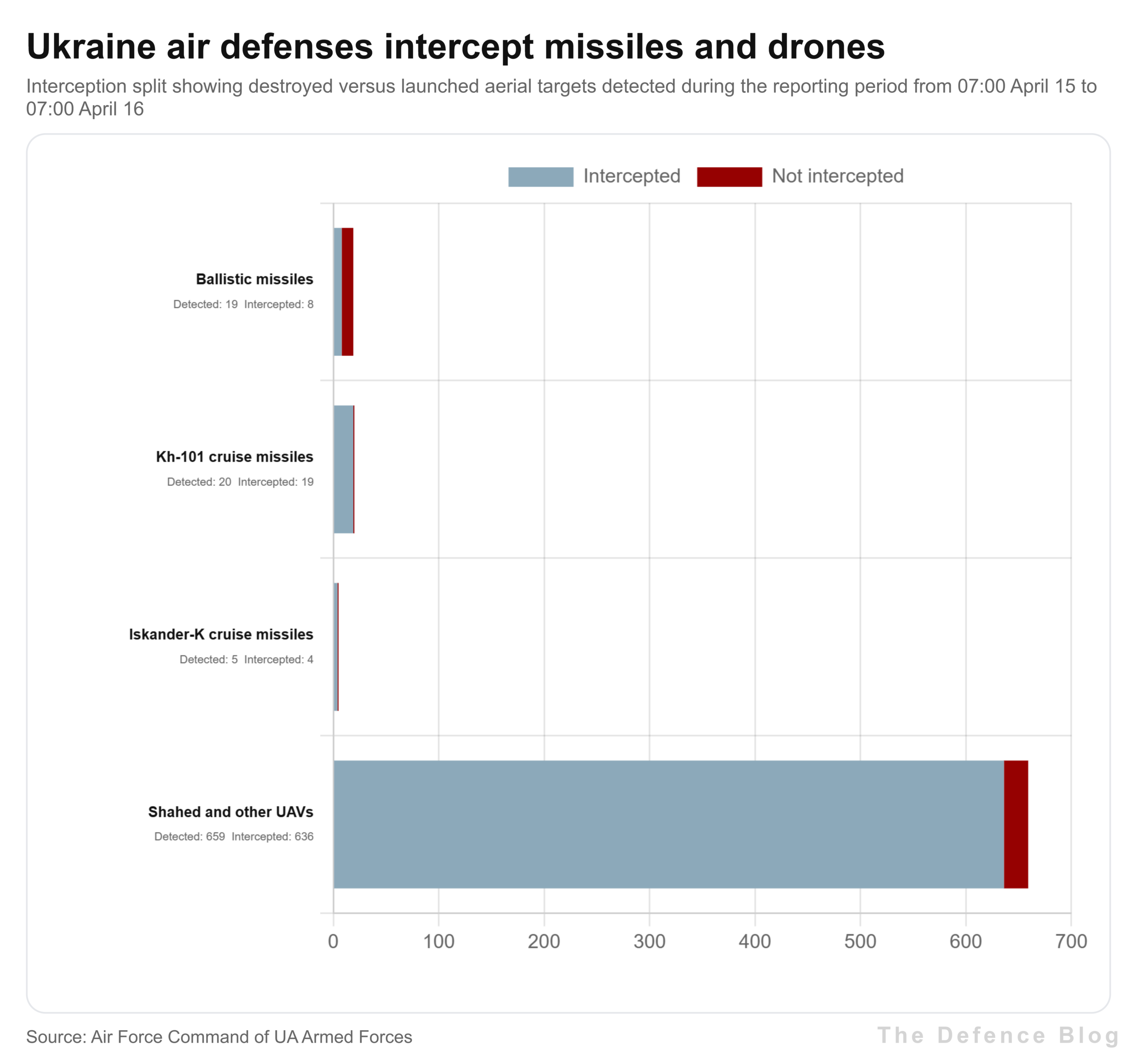
The British Ministry of Defence announced the delivery on November 17, 2026, during the 37th meeting of the Ukraine Defence Contact Group in Brussels. Deliveries are set to begin in mid-December. The missiles and launchers are primarily intended against the Iranian-developed Shahed drones used by Russia; the radars are meant to improve early warning and target assignment. The package is part of a British winter program of £500 million and is in addition to the long-term commitment of £10 billion for Ukraine.
The technical significance is therefore not insignificant, but it is precisely defined. Short-range systems can protect critical infrastructure and cities against part of the threat. They do not replace Patriot or SAMP/T capabilities against ballistic missiles nor an integrated sensor and command structure. More missiles increase the density of defense; however, they do not create strategic depth.
From national commitments to European capability
The Contact Group brings together nearly 50 states, yet its logic remains fundamentally coalition-like. London delivers, Paris and France? No: France and the United Kingdom are conducting parallel exercises for a potential Multinational Force Ukraine, Germany coordinates with London on the Contact Group, and Sweden signed a letter of intent with Ukraine regarding Gripen fighter jets. This is politically impressive, but institutionally a mosaic.
This is precisely where the problem of European defense integration lies. The individual contributions are real, but their priorities, timelines, and funding sources remain national. A radar without sufficient crew is not a capability gain; a missile lot without secured resupply is merely a temporary relief. The European Defence Agency can promote standards, but it has neither a common operational budget nor the authority to allocate national stockpiles according to a unified threat picture.
The €45 billion dilemma
Brussels is simultaneously proposing a new loan of €45 billion for Ukrainian defense. According to recent information from the Ukrainian Ministry of Defense, funds from the European loan could even enable the purchase of American weapons through the NATO initiative PURL. This reveals the structural contradiction: Europe is increasing its financial responsibility without automatically enhancing its industrial or operational autonomy.
This is not inherently wrong. If an American system promises the highest effectiveness in the short term, it would be irresponsible to forgo it for symbolic autonomy. But a loan is not yet production capacity. PURL can finance urgently needed Patriot missiles, but it does not answer the question of who will produce European interceptor missiles, radars, and spare parts in sufficient numbers in five years. Thus, the European response remains a financing answer to a production problem.
The political consequence for Germany
For Germany, this leads to a sober prioritization. Berlin should support the British delivery and the Contact Group while insisting on measurable European goals: joint procurement of short-range missiles, binding minimum stocks, interoperable command networks, and transparent delivery timelines. The debate must not end with the sum of the loan. What matters is how many operational interceptor systems are available when and at which border.
The British contribution shows that Europe can act when the political urgency is immediately visible. It also shows that Europe is still thinking in national packages. More money can narrow this gap, but only a common prioritization can close it. Europe's paradox is therefore: It increasingly finances the defense of Ukraine while continuing to outsource the ability to organize that defense independently.
Sources
- UK Ministry of Defence, “More than 1,000 air defence missiles for Ukraine as UK delivers £240 million in winter support”, November 17, 2026.
- NATO, Ukraine Defence Contact Group, meeting in Brussels, November 17, 2026.
- Ukrainian Ministry of Defense, information on the use of EU loan funds via NATO-PURL, November 2026.
- EU Today and other reports on the planned €45 billion financing, November 19, 2026.
The UK Ministry of Defence announced the delivery of 1,000 short-range air defense missiles and radars to Ukraine on November 17, 2026, during a meeting in Brussels. This support is part of a £500 million winter program aimed at enhancing Ukraine's defense against Russian drone attacks. However, the report highlights ongoing challenges in European defense integration, as national priorities and capabilities remain fragmented despite increased financial commitments.
- UK to deliver 1,000 short-range air defense missiles to Ukraine.
- Delivery announced on November 17, 2026, during a meeting in Brussels.
- The package includes over a dozen radars to improve early warning and target assignment.
- Part of a larger £500 million winter support program for Ukraine.
- European defense integration remains fragmented despite increased financial commitments.