

Summary and Key Points: The Royal Navy’s five Astute-class attack submarines are among the world’s most sophisticated, but Britain cannot keep them maintained with only two shipyards certified for nuclear submarines.
The AUKUS-SSN Challenge
The Royal Navy’s Astute-class nuclear-powered attack submarines are among the world’s most sophisticated.
It’s a shame the British Royal Navy can’t properly sustain them.
That’s not exactly the Royal Navy’s fault.
The submarines, while aging, are very good systems. Since the end of the Cold War, the Royal Navy has reduced its naval shipbuilding capacity.
Today, only two shipyards in Britain are certified to build nuclear submarines.
Between maintaining the five Astute-class submarines and keeping Britain’s Vanguard-class nuclear-powered ballistic missile subs operational, the Royal Navy cannot keep up.
The Royal Navy is now moving forward with plans for an entirely new attack submarine.
The nuclear-powered SSN-AUKUS attack submarine, of which the Royal Navy intends to have 12 units, will be ready by the next decade.
BAE Systems in Barrow-in-Furness is scheduled to cut steel for the first submarine next year.
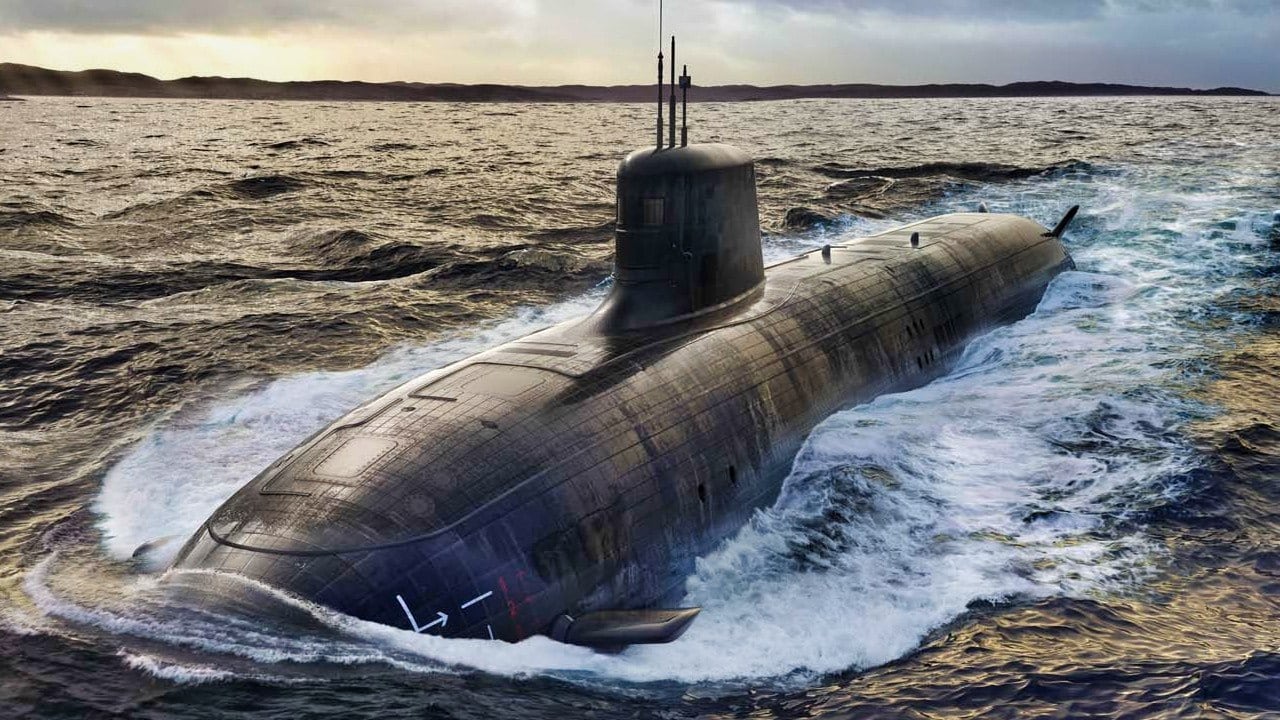
SSN-AUKUS Submarine. Image is Creative Commons Artist Rendering.
How is this even possible, given the severe bottlenecks at Britain’s shipyards and in the supply chain that sustains the British submarine force?
The AUKUS Agreement
Notice the name of the new class. The SSN-AUKUS. This submarine isn’t just for the British Royal Navy.
The British want 12 units for themselves, plus five for Australia, which desperately needs a new attack submarine to replace its aging Collins-class fleet.
Somehow, the British intend to produce one unit of this new submarine class for both its own needs and Australia’s every 18 months.
At the time of its signing, the Australia-United Kingdom-United States (AUKUS) agreement was hailed as a revolutionary act of naval partnership between the three Anglosphere states.
Indeed, the AUKUS agreement was a bit of a coup, as Washington and London usurped a pending deal between Canberra and Paris to have Australia acquire French diesel-electric attack submarines.
But the Americans and British wanted to enhance interoperability with the Australians and better empower Canberra to resist China’s rise in the Indo-Pacific.
Neither the United States nor, more blatantly, the British can accommodate the agreement under current conditions.
For instance, a British Parliamentary Defense Committee inquiry found that Britain’s sole submarine shipyard (the BAE Systems facility at Barrow-in-Furness) is over capacity.
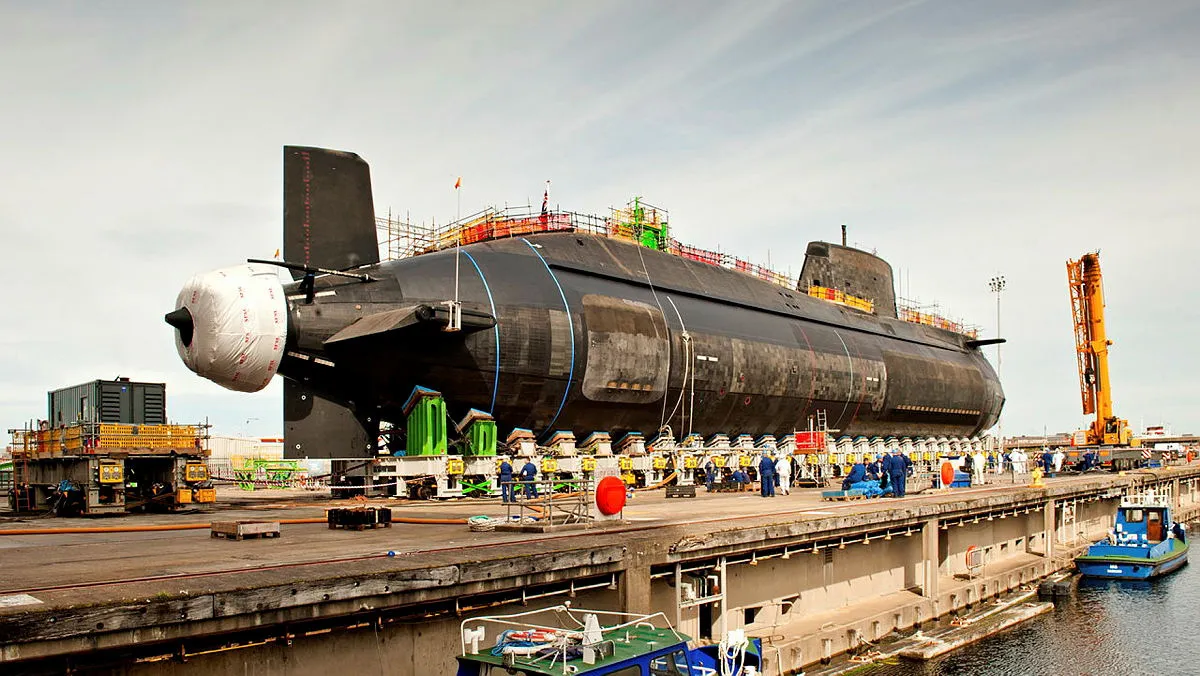
Royal Navy’s Astute-Class Submarines. BAE Systems.
Britain’s other two nuclear-powered submarine classes have consumed all the shipyard’s capacity and workers.
Overstretched and Overburdened
This has not only affected the British fleet, but it is also causing serious complications for Australia.
The British Royal Navy now has to fulfill its early AUKUS agreements by deploying whatever submarine it has available, such as HMS Anson, one of the few Astute-class submarines available at the time, to Western Australia.
While there, the Anson conducted the first-ever joint nuclear submarine maintenance and training period on Australian soil.
Nevertheless, that’s a stopgap.
Australia and Britain both need submarines.
They rely on the same broken shipyards to build and maintain them.
This is a major problem, especially as China is on a submarine-building spree.
Former Australian Prime Minister Malcolm Turnbull called the timeline a “pipe dream” because of Britain’s reality as a naval shipyard.
Officially, London and Canberra both claim the SSN-AUKUS submarines will be available by the late 2030s or early 2040s.
If the British build the new SSN-AUKUS attack submarines on time, they will be impressive engineering achievements.
They will feature Rolls-Royce PWR3+ nuclear reactors and integrate fully with advanced US combat systems and acoustic camouflage.
Of course, the bigger question is whether these systems are the best investment.
The SSN-AUKUS is still a manned, nuclear-powered submarine in an age when countries like China are developing innovative ways to detect even nuclear-powered attack submarines from afar.
Rival nations have developed comprehensive capabilities for deterring submarines from entering contested territories.
There’s also the drone issue.
And the fact that Chinese submarines outnumber Australian or British submarines–and will continue to do so if they keep producing submarines at the present rate (let alone an expanded one).
Fighting Yesterday’s Wars?
Yet, Britain is languishing on these turgid timelines.
The Astute-class has largely failed to live up to its promise because of maintenance issues.
Those issues affect the entire submarine force in England.
They will harm the development of the SSN-AUKUS, which will hurt not only the British but the Australians, too.
The Anglosphere as a whole needs to rethink what it’s trying to accomplish.
Rather than letting defense contractors scheme to extract the most wealth from their respective governments, platforms must be designed around a reliable, achievable strategy.
Why keep building advanced manned platforms when cheap, expendable drones will do?
About the Author: Brandon J. Weichert
Brandon J. Weichert is the Senior National Security Editor at 19FortyFive.com. He also manages The Weichert Brief on Substack. Weichert is the co-host for The Mario Nawfal Show on Twitter/X. He is the author of four bestselling national security books, most recently A Disaster of Our Own Making: How the West Lost Ukraine (Encounter Books). His next book, Fortress Americas: A New Monroe Doctrine (Tucker Carlson Books), is due out December 8. Follow him via Twitter/X @WeTheBrandon.