

Summary and Key Points: The war in Ukraine has shown that drone swarms and cheap anti-tank munitions have wrecked main battle tanks on both sides, 19FortyFive’s Brandon J. Weichert argues. Russia refuses to risk its T-14 Armata and uses older T-72s and T-90s as mobile artillery, and the Army’s M1E3 Abrams is too big and heavy for a drone-swarmed battlefield. His answer: cheaper, lighter tanks, Bradley-style IFVs, and unmanned ground vehicles that go in first.
Is the Tank Obsolete?
The war in Ukraine has shown that conventional platforms, notably the main battle tank (MBT), no longer pack the punch they once did.
New MBT tactics and concepts are needed to ensure powerful militaries don’t waste time and money developing systems that deliver diminishing returns.
The war in Ukraine has shown that MBTs are no longer the kings of battle they once were.
This is a major complication for Western militaries, which have made the MBT the centerpiece of their ground-attack capabilities.
It’s similar to what the Navy has done with the aircraft carrier.
In the previous century, this was a prudent move.
Size and mass were instrumental. Plus, rivals’ ability to counter these gargantuan systems was nothing like it is today.
But the United States’ enemies have gotten much better at stunting key capabilities of America’s military. These rivals have studied the American way of war.
They understand that defeating the United States isn’t about going larger.
It’s about going smaller and being nimbler.
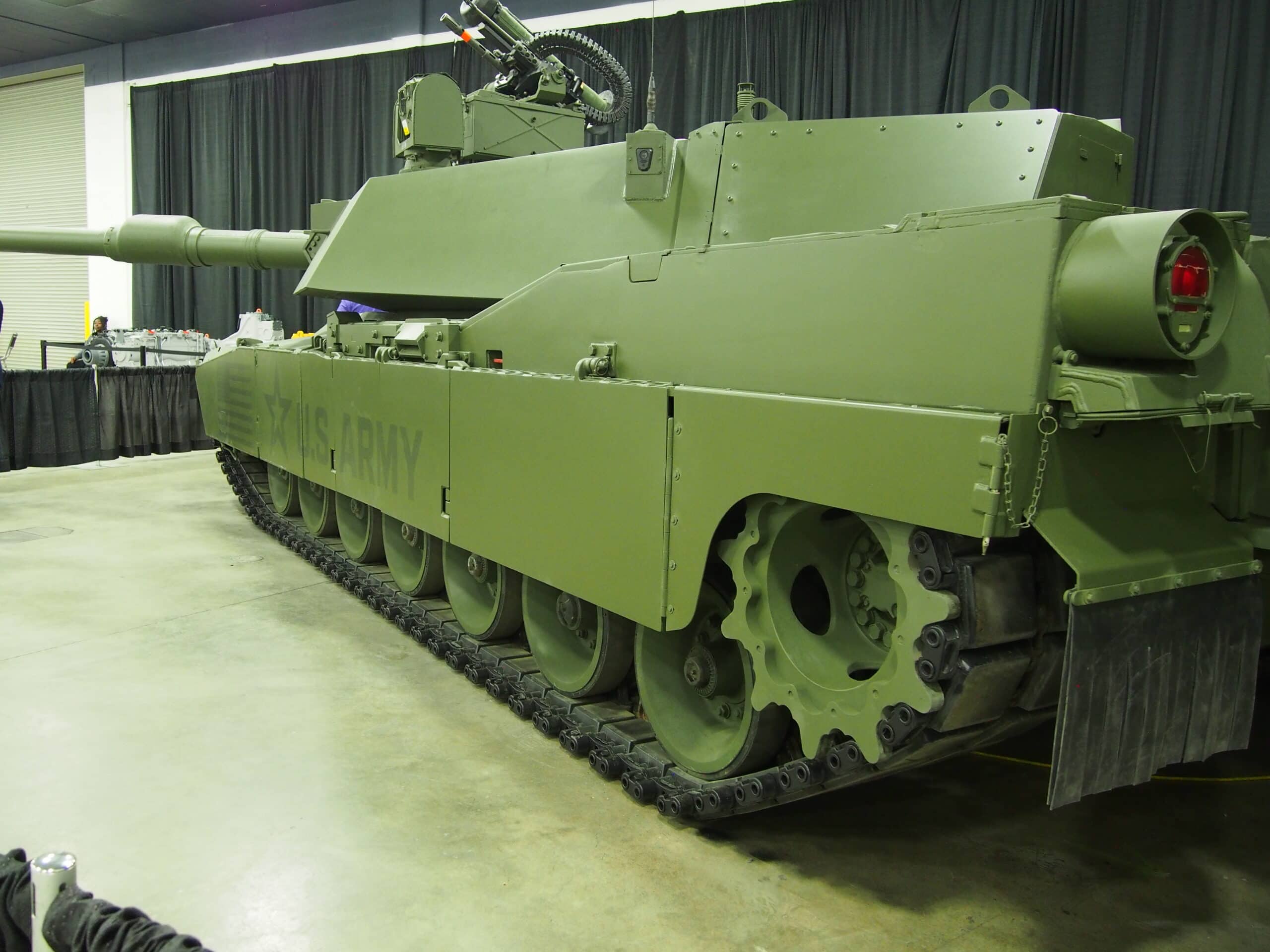
M1E3 Tank Photo from the Detroit Auto Show. 19FortyFive Photo.
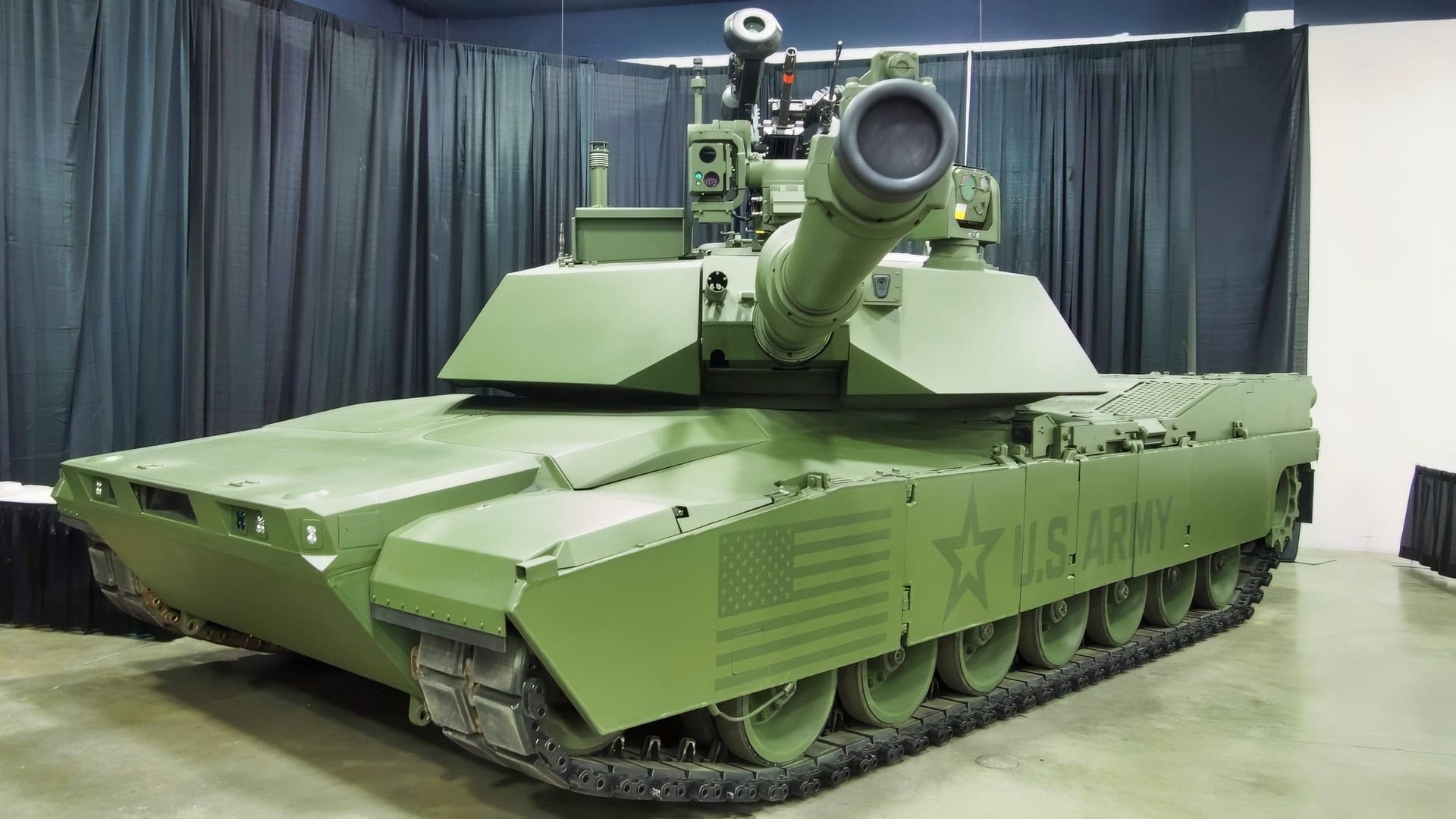
M1E3 Abrams Detroit Auto Show 19FortyFive Image
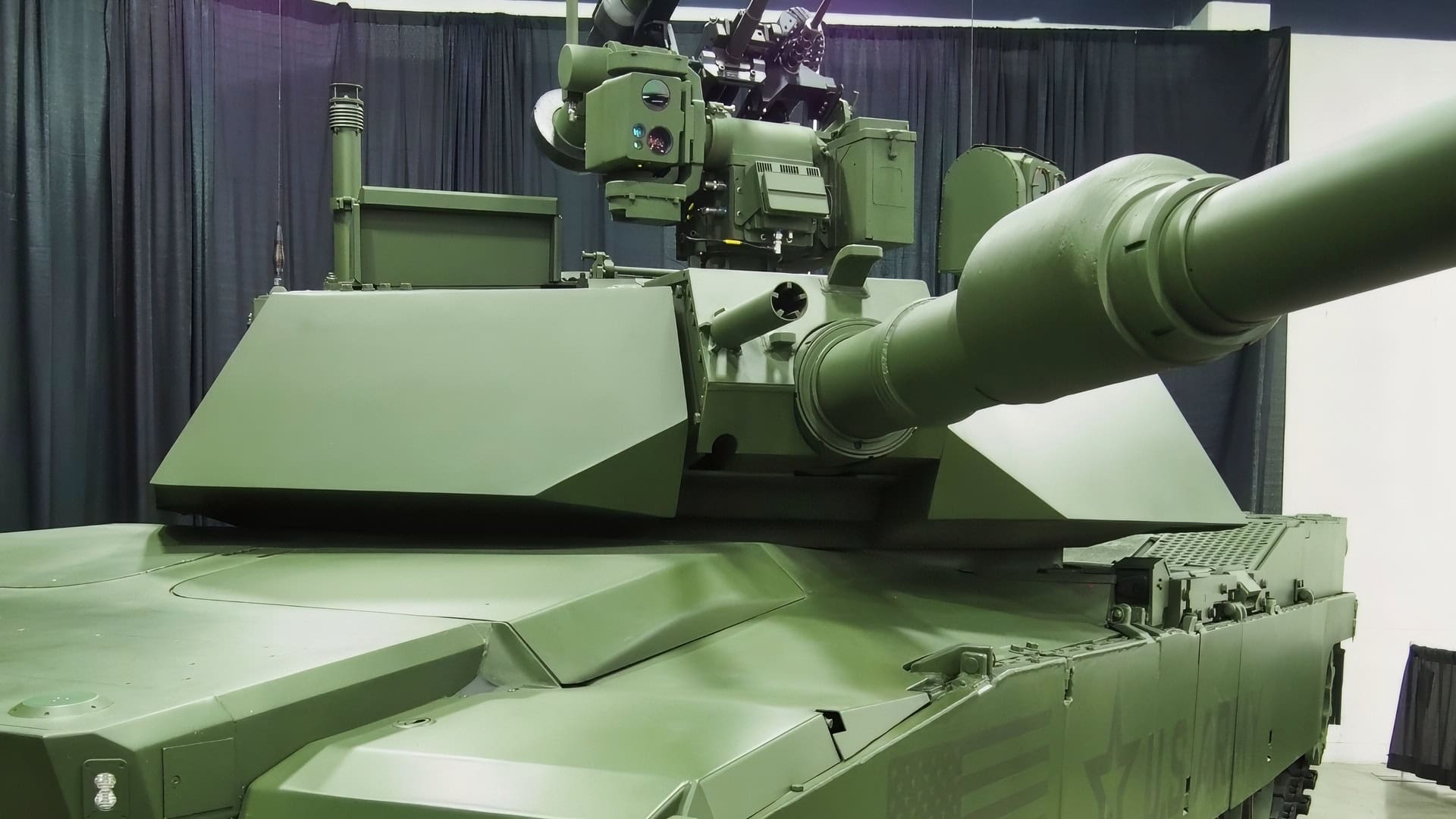
M1E3 Abrams Tank at the Detroit Auto Show. 19FortyFive.com Original Image.
Rivals defeat the modern U.S. military by overwhelming these big set pieces, like the MBT.
Not Learning the Right Lessons
As the Ukraine War has taught us, drone swarms coupled with cheap, expendable anti-tank munitions have wreaked havoc on the MBTs of both sides.
This is one reason why the blessed tanks that NATO gifted to the Ukrainians did not achieve the kinds of tactical successes NATO expected them to.
It is also why the Russians refuse to risk their T-14 Armata MBT, one of the most advanced in the world, and instead favor the cheaper, older, more expendable T-72s and T-90 Soviet-era MBTs.
In the war in Ukraine, they often stay on the battlefield’s periphery and are used as mobile artillery rather than as designed.
That’s because of fears about how enemy drone swarms will detect and attack the tank.
Still, armies worldwide understand that the MBT still has a useful mission.
They were designed to capture and occupy territory.
No existing drone or standoff munition can achieve this.
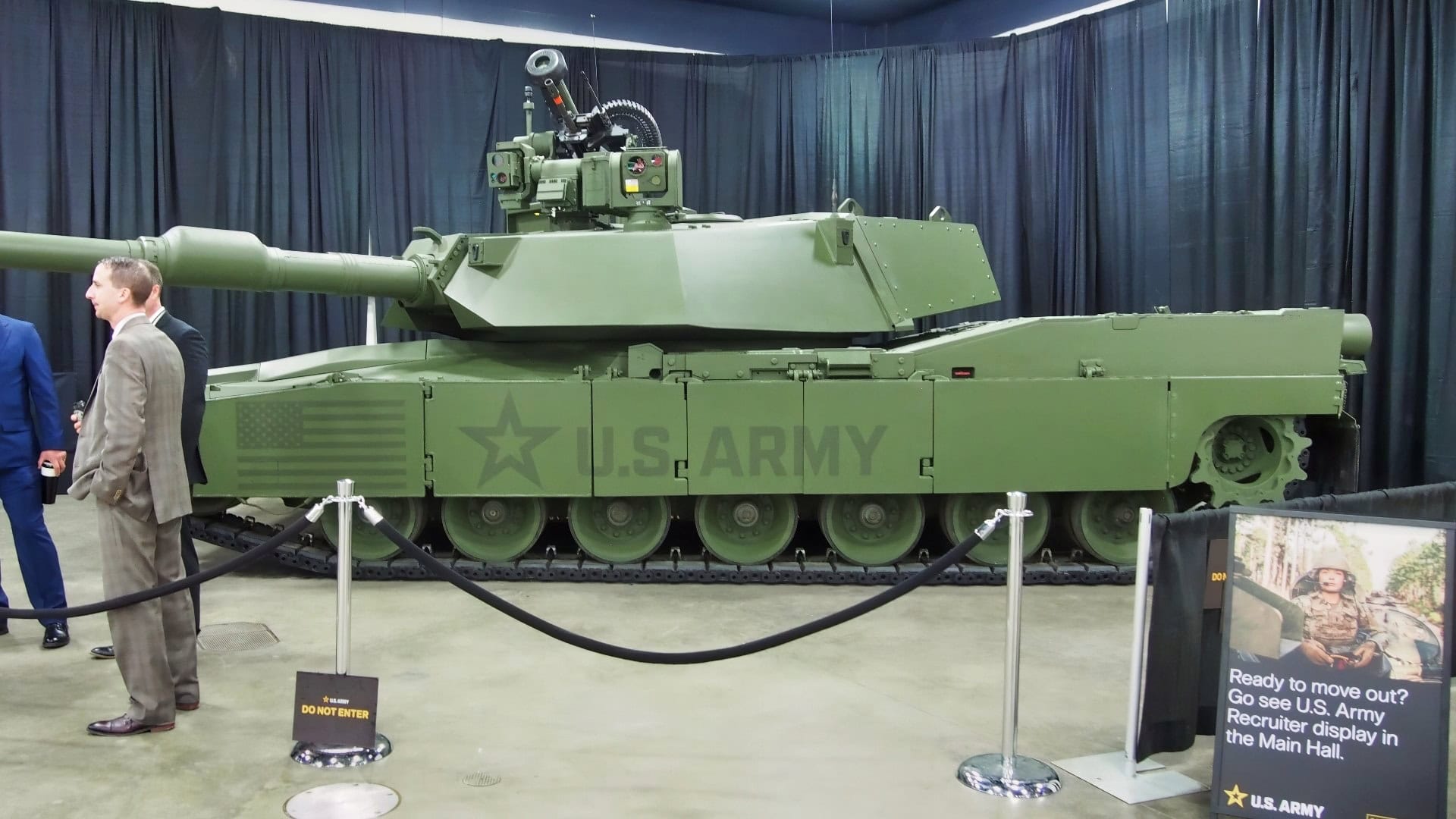
M1E3 Abrams Tank. Taken by 19FortyFive.com
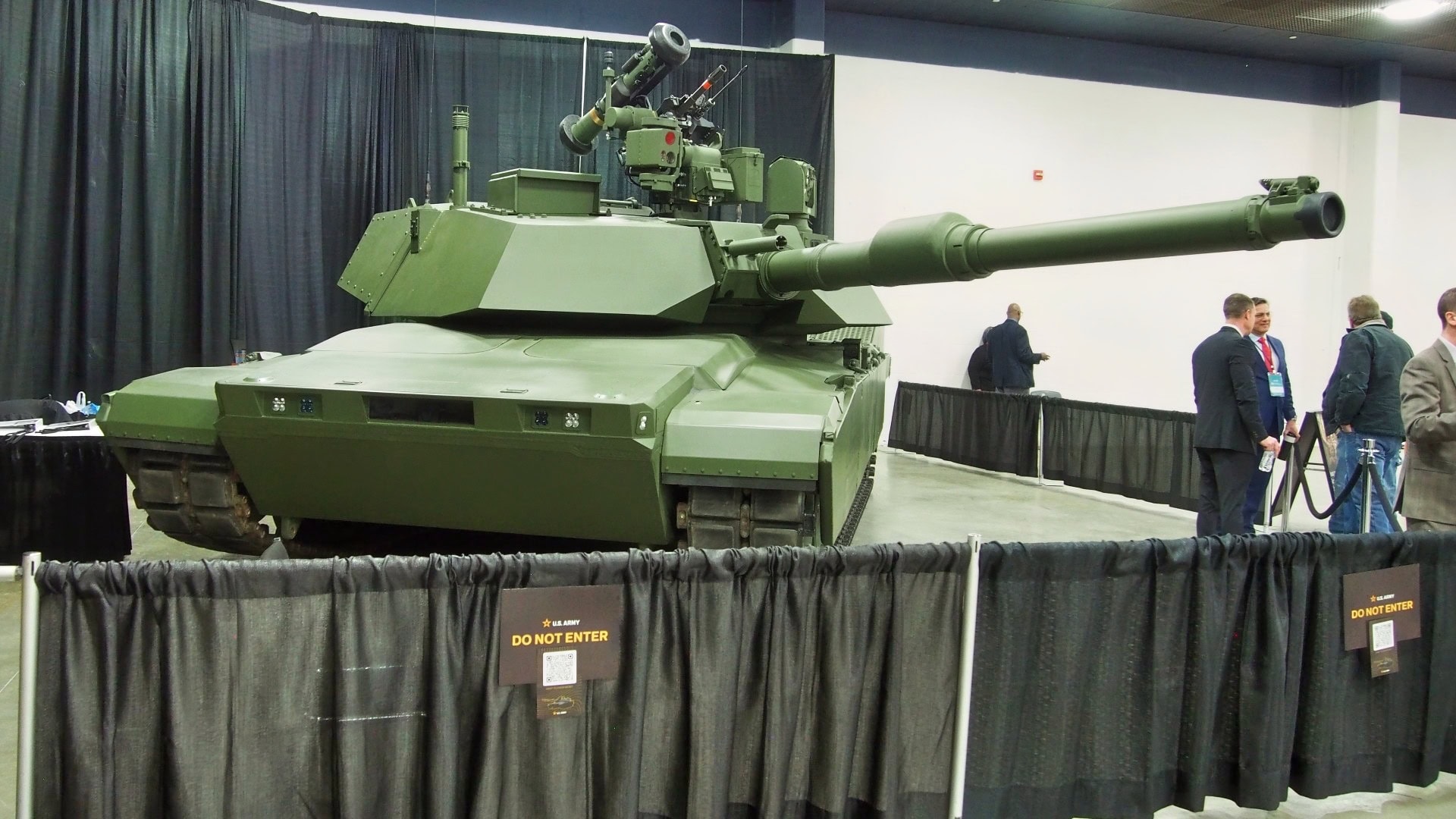
M1E3 Abrams Tank. Taken by 19FortyFive.com
Plus, MBTs have traditionally provided direct mobile fire support and physical armored shielding that infantry units needed to advance through fortified areas.
That’s why military planners and theorists have no real push to abandon the tank.
Nevertheless, there are real changes that the militaries of the West could embrace that would make them more useful in the era of drone swarms and missile barrages.
One such system that the United States Army might want to prioritize is the light MBT concept.
The M10 Booker was supposed to be that system.
It failed because of the Pentagon’s acquisitions bureaucracy.
But the idea is still interesting.
Modern combat requires tanks with a reduced logistical burden on the overall force.
Go Small and Light–And Automated
A smaller, lighter, nimber tank will achieve this.
Another interesting concept the Army is exploring for its heavier planned M1E3 Abrams MBT is hybrid power. This would make the tank more fuel-efficient and quieter on the battlefield.
Another advantage of lighter MBTs is their reduced weight, thanks to integrated active protection systems replacing heavy steel.
These concepts are also being explored in the M1E3.
The problem is that the M1E3 is too big and heavy for the modern drone-swarmed battlefield.
The Ukrainians have shown that lightly armored, highly mobile Infantry Fighting Vehicles (IFVs), such as the aging M2 Bradley, can outperform expectations because of the nature of the current warfare plaguing the world.
An IFV might be more relevant to today’s wars than even a glitzy MBT.
The IFV can maneuver better.
It can also be fitted with a large weapon that delivers rapid cannon fire.
What’s more, anti-tank guided missiles can be deployed from an IFV that can do severe damage to a conventional MBT.
One area that has only recently been explored is the Unmanned Ground Vehicle (UGV). These are essentially automated tanks and IFVs.
The United States Army has expressed interest in the concept. Multiple defense manufacturers are today competing to develop a coterie of UGVs for the Army to procure.
The current thinking is that these UGVs would be deployed alongside a manned MBT in a manned-unmanned teaming (MUMT) concept similar to what the Air Force and Navy are doing with their sixth-generation warplane programs.
Stop Doing Things The Way We’ve Been
Uncrewed aerial vehicles (UAVs) would also be deployed alongside these MUMT tank swarms. Essentially, the manned MBT would hang back in relative safety while the drones moved ahead of it on the battlefield.
These UGVs, along with their UAV cousins, conduct offensive operations, clearing the way for manned systems to maneuver safely once the main threat has been eliminated.
The MBT isn’t totally obsolete.
They must be layered as the nucleus of a force that combines existing manned systems with unmanned ones.
As for new tank models, investing in entirely new MBT lines is likely a grievous mistake.
Instead, the Army should invest in cheaper, lighter tanks that can leverage the enhanced protection and power-projection capabilities of drone swarms, both on the ground and in the air.
About the Author: Brandon J. Weichert
Brandon J. Weichert is the Senior National Security Editor at 19FortyFive.com. He also manages The Weichert Brief on Substack. Weichert is the co-host for The Mario Nawfal Show on Twitter/X. He is the author of four bestselling national security books, most recently A Disaster of Our Own Making: How the West Lost Ukraine (Encounter Books). His next book, Fortress Americas: A New Monroe Doctrine (Tucker Carlson Books), is due out December 8. Follow him via Twitter/X @WeTheBrandon.