
Britain's 150,000 Drones Change Ukraine's 2026 Air Defence Math
 Alexandra Reeves
Britain's 150,000 Drones Change Ukraine's 2026 Air Defence Math
Britain did not just announce another Ukraine aid package. It announced a production argument.
The UK Ministry of Defence said on 18 June that it will provide Ukraine with 150,000 Ukrainian-produced drones by the end of 2026, plus more than 350 air defence missiles and radar systems, in a package worth about £752 million. The money comes from Britain's £2.26 billion share of the G7 Extraordinary Revenue Acceleration loan, backed by proceeds from immobilised Russian sovereign assets. London is not only sending equipment from stockpiles. It is using Russian money to buy Ukrainian output and British air defence hardware for a war Russia expected to outlast.
That is the part Moscow should worry about.
The Package Is Built for Attrition
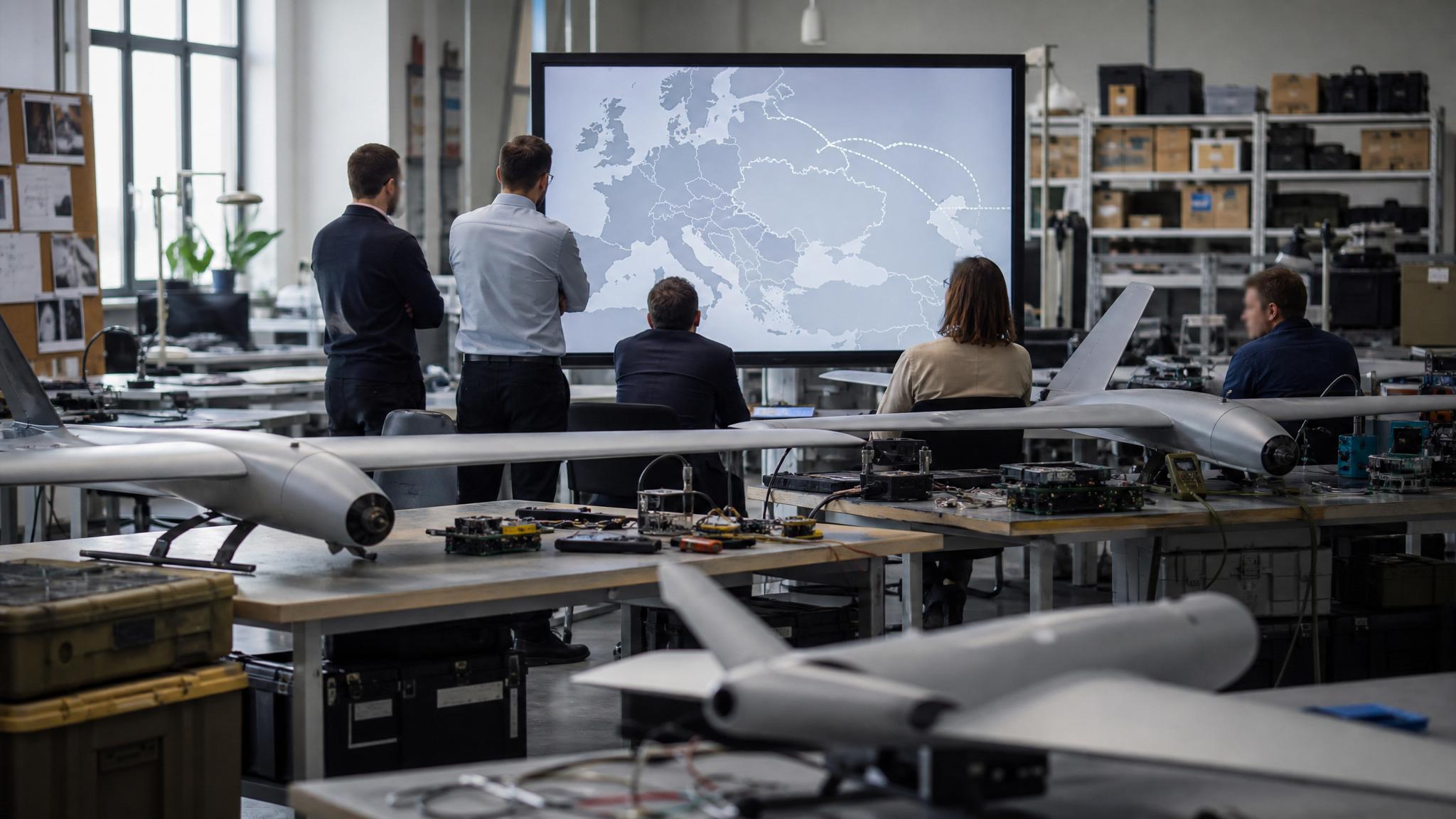
According to the UK announcement, the package includes 150,000 drones, more than 350 air defence missiles, and ground-based radars. The missile component includes Lightweight Multirole Missiles, or LMM, alongside radar systems intended to help Ukraine intercept Russia's continued missile and drone attacks.
LMM is not a Patriot interceptor. It is a short-range weapon, roughly 13 kilograms, with laser beam-riding guidance, a speed above Mach 1.5, and an operational range listed by Thales at more than 6 kilometres. Think of it as part of the lower tier of Ukraine's defensive stack: useful against drones, helicopters, and some close-range air threats, but not the answer to Iskander ballistic missiles or Kinzhal-class targets.
That limitation is the point. Ukraine's air defence problem is no longer just a shortage of premium interceptors. It is a layered consumption problem. Russia fires cheap Shahed-type attack drones, cruise missiles, ballistic missiles, glide bombs, decoys, and reconnaissance UAVs in combinations designed to make Ukraine spend the wrong interceptor on the wrong target. A Patriot round is valuable precisely because it can defeat threats lower-tier systems cannot. Wasting high-end rounds on cheap drones is the defensive equivalent of paying first-class airfare for a bus ride.
Russian Assets Are Becoming Ukrainian Firepower
The financing mechanism deserves more attention than it will get. The ERA loan uses proceeds from immobilised Russian sovereign assets. In practice, Britain is converting Russia's trapped capital into equipment for Ukraine's defence industry and air defence network.
That is not just clever accounting. It is a political signal. Western governments have spent four years arguing about escalation, budget fatigue, and how much of their own stockpiles they can spare. Using frozen Russian assets changes the argument from charity to liability. Moscow broke the system. Moscow pays part of the bill.
For Kyiv, the nuance matters less than the delivery schedule. The UK says the drones will arrive by the end of the year and the air defence missiles and radars by the end of 2026. That gives Ukraine a pipeline, not just a headline.
Ukraine Is Being Treated as a Factory
The most important word in the UK release may be "Ukrainian-produced." Western aid packages used to read like shopping lists from NATO warehouses. This one reads more like a procurement contract designed to expand Ukraine's own war economy.
That tracks with a broader shift. At the G7 meeting in Evian on 16 June, President Volodymyr Zelenskyy said Ukraine's priorities were more air defence missiles, licences to produce them, winter support, and pressure on Russia. The Ukrainian presidential office said Zelenskyy discussed with President Donald Trump the possibility of obtaining licences to produce relevant anti-ballistic systems and missiles. Earlier in June, Zelenskyy and NATO Secretary General Mark Rutte also discussed Ukraine's need for anti-ballistic capabilities and possible Patriot production in Ukraine or jointly with NATO partners.
Everyone in Washington and Brussels likes the phrase "defence industrial base" until it means actually making uncomfortable choices: longer contracts, more factory shifts, munitions lines that outlive the current news cycle, and licensing arrangements that move sensitive technology closer to a battlefield. Ukraine is forcing those choices because its battlefield has become the test range for the rest of Europe's assumptions.
The drones are the easier part politically because Ukraine has already shown it can scale unmanned systems quickly. The missile licensing question is harder. Patriot, SAMP/T, NASAMS, IRIS-T, and related interceptor families are not just pieces of hardware. They are supply chains, software, seekers, radars, export controls, and political risk. Still, the direction is clear. Kyiv wants fewer emergency shipments and more permanent production rights.
The NATO Angle Is Less Comfortable
The announcement landed during the NATO Defence Ministers' Meeting and the Ukraine Defence Contact Group in Brussels. Britain and Germany now co-chair the UDCG, a quiet but meaningful change from the early-war period when the United States was the obvious centre of gravity.
That is where this package connects to the larger alliance story. Europe says it wants to carry more of the Ukraine burden. This is what that looks like when stripped of conference language: one ally using frozen Russian asset proceeds, buying Ukrainian-made drones, sending short-range interceptors, and taking command roles in multinational support structures.
It is practical. It is also incomplete.
Ukraine still needs high-end ballistic missile defence. Zelenskyy's line from 3 June that ballistic missiles are Russia's "last remaining argument" was not rhetoric for its own sake. Russia has adapted its strike campaigns around the hardest threats to intercept. Short-range missiles and drones help preserve the wider network, but they do not solve the Patriot shortage or Europe's thin anti-ballistic inventory.
That means Britain's package should be judged as a useful layer, not a strategic fix. It buys time. It improves density. It supports Ukrainian production. It helps Ukraine avoid spending scarce high-end interceptors on lower-value targets. But if Europe mistakes that for solving the air defence problem, it will be making the same mistake NATO has made repeatedly since 2022: confusing a good announcement with adequate capacity.
What to Watch Next
The first thing to watch is delivery speed. A year-end promise for 150,000 drones is impressive only if Ukrainian units actually receive usable systems, spares, batteries, control links, and training at the tempo the front requires.
The second is the missile mix. If the 350-plus missiles are mostly short-range systems, they will help against drones and some aircraft threats but leave the ballistic layer under stress. If additional medium-range or high-end interceptors follow through PURL or bilateral deals, the package becomes part of a more serious defensive architecture.
The third is licensing. If the G7 and NATO allies move from discussing production rights to granting them, Ukraine's air defence future changes. If they do not, Kyiv remains dependent on allies that are still relearning how to manufacture at wartime speed.
Britain's package is a good move because it accepts the war as it is: industrial, repetitive, expensive, and measured in thousands of small systems as much as in a few exquisite ones. But it also exposes the uncomfortable truth. Ukraine is adapting faster than many of its backers. The question now is whether Europe can turn frozen Russian money and political promises into enough metal, software, and production rights before Russia's next winter strike campaign tests the system again.
The UK Ministry of Defence announced it will supply Ukraine with 150,000 drones and over 350 air defense missiles by the end of 2026, funded by immobilized Russian assets. This package aims to bolster Ukraine's air defense capabilities against Russian attacks. The initiative marks a shift towards enhancing Ukraine's own military production capabilities, reflecting a broader strategy in Western support for Ukraine.
- UK to provide 150,000 drones to Ukraine by 2026
- Package includes over 350 air defense missiles and radar systems
- Funding sourced from immobilized Russian assets
- Drones and missiles are part of a strategy to enhance Ukraine's air defense
- Ukraine is being treated as a factory for military production