
Britain’s cargo drone becomes a low-cost drone interceptor
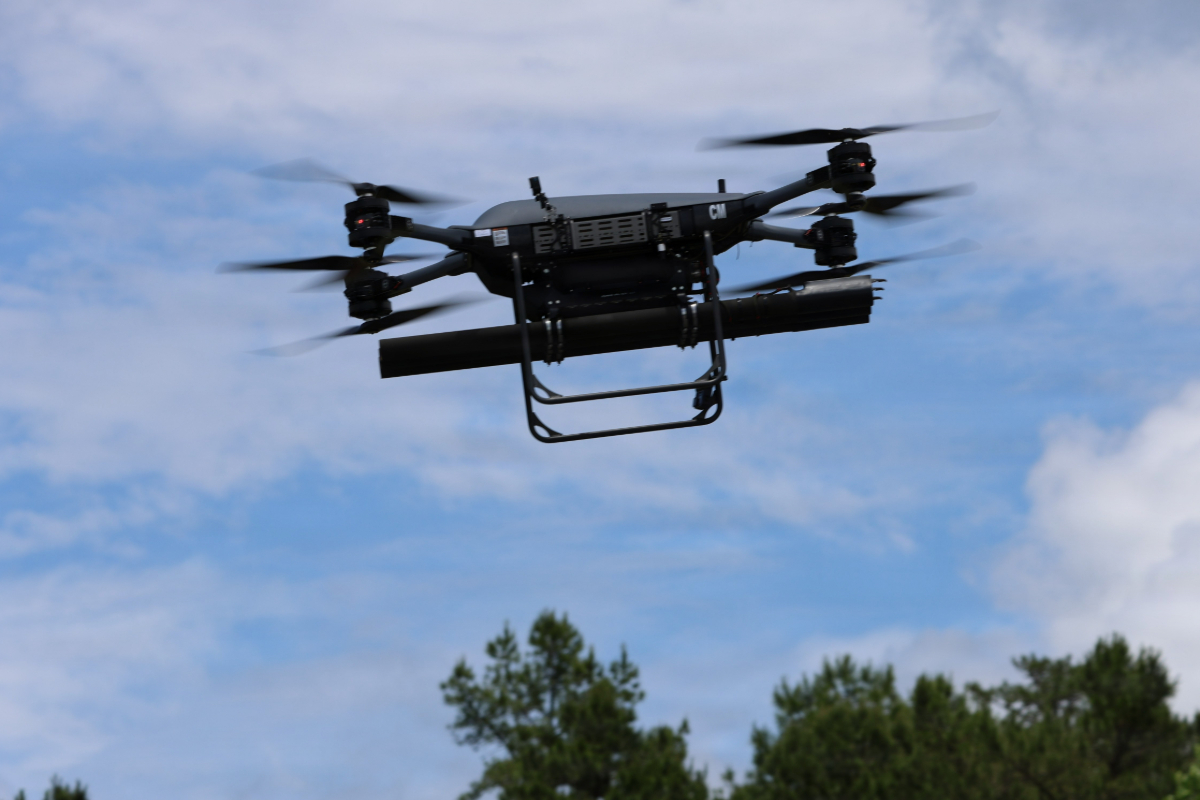
A heavy-lift cargo drone built by BAE Systems subsidiary Malloy Aeronautics has shot down several one-way attack drones with laser-guided rockets during a Pentagon experiment in Florida, firing one rocket after another without having to land and reload.
The modified aircraft, known as the TRV-150, carried a three-pod launcher loaded with BAE Systems’ APKWS rockets during the Joint Readiness Experimentation exercise run by the Office of the Under Secretary of War for Research and Engineering at Eglin Air Force Base from Sept. 21 to 25, BAE Systems said in a statement on Oct. 21.
The TRV-150 is a version of Malloy’s T-150 quadcopter, a British-built electric drone designed to carry cargo, which Maryland-based SURVICE Engineering adapted to meet U.S. Army requirements while BAE Systems’ FalconWorks division developed the APKWS kit and integrated it on the aircraft. BAE Systems says the trials show that low-cost precision weapons can be fitted to uncrewed platforms to counter drone threats on the battlefield, and the company now wants to take the same setup to sea to protect ships from similar attacks.
“Our customers are facing drone threats right now, so we’ve worked at pace with our partners to move from concept to a proven system, which can engage multiple targets in a single mission,” said Thomas Lancashire, head of UAS business development at BAE Systems FalconWorks.
APKWS, short for Advanced Precision Kill Weapon System, turns an ordinary unguided 70 mm (2.75-inch) Hydra rocket into a precision weapon by fitting a laser-guidance section between the warhead and the motor, which makes it far cheaper than the air-to-air missiles traditionally used to shoot down drones. The rocket has become one of the U.S. military’s main low-cost answers to cheap attack drones, and in May the U.S. Navy awarded L3Harris a contract worth up to $98.4 million for proximity fuzes that make APKWS more effective against drones, while BAE Systems test-fired the rocket from a Royal Air Force Typhoon in March as it adds counter-drone rockets to the fighter.
The Eglin trials build on the first firing of a precision munition from an adapted T-150 in July 2025, when the drone launched a single APKWS rocket, and this time the team used a production-ready three-pod launcher to engage targets in the air. The ability to fire several shots in one sortie matters against attack drones, which often arrive in groups and leave little time for a launcher to land, reload and take off again.
“Supporting the warfighter has been at the core of SURVICE’s mission since its founding over 45 years ago. Bringing the TRV-150 to the US warfighter and now adding APKWS as a proven, precise, and cost-effective capability to our TRV-150 UAS platform is exactly the type of innovation SURVICE was designed to deliver,” said Gregory Thompson, president of SURVICE Engineering.
BAE Systems bought Malloy Aeronautics in 2024, and the T-150 is already in service with British forces as a logistics drone. During the Royal Navy Carrier Strike Group’s eight-month deployment to the Indo-Pacific last year, the drone carried supplies between ships throughout the voyage, and SURVICE is one of several partners BAE Systems is working with around the world to turn the aircraft into a multi-role counter-drone system.
BAE Systems has not said when an armed TRV-150 could enter service, but the company’s next step is to adapt the rocket-armed version for maritime use, where it would help defend ships against the kind of drone attacks that have hit vessels in the Red Sea and the Black Sea.
Content preview only. Full article available at source. View Full Article
BAE Systems' TRV-150 cargo drone successfully shot down several one-way attack drones using laser-guided APKWS rockets during a Pentagon experiment at Eglin Air Force Base from September 21 to 25, 2025. The drone's ability to fire multiple rockets without landing showcases its potential as a low-cost solution to counter drone threats. BAE Systems plans to adapt this technology for maritime defense against similar attacks.
- BAE Systems' TRV-150 drone successfully shot down several attack drones during a Pentagon experiment.
- The experiment took place at Eglin Air Force Base from September 21 to 25, 2025.
- The TRV-150 is equipped with a three-pod launcher for APKWS rockets.
- The trials demonstrate the effectiveness of low-cost precision weapons against drone threats.
- BAE Systems aims to adapt the TRV-150 for maritime use to protect ships from drone attacks.