
Russia wants AI to help design its next aircraft
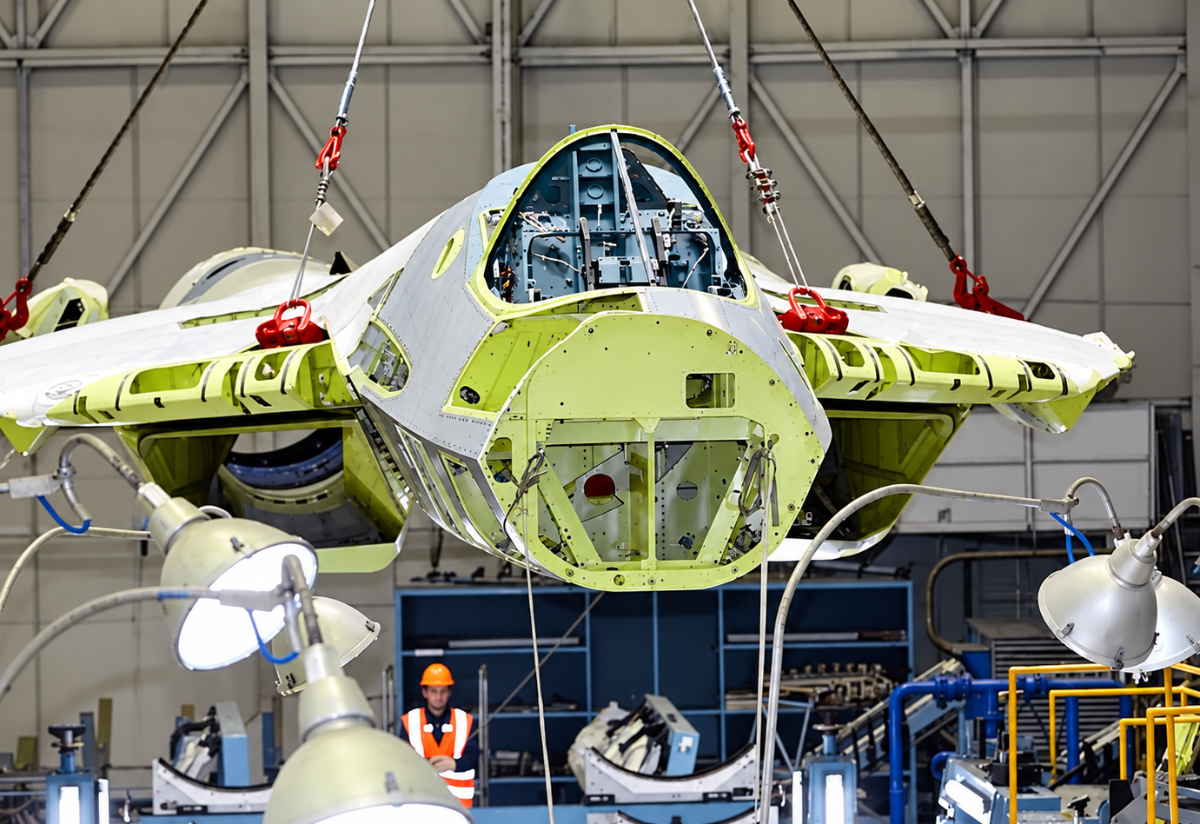
Russia’s United Aircraft Corporation is looking at artificial intelligence and other new software to speed up the design of future aircraft and cut the cost of developing new versions of existing ones, the state-owned planemaker said in a statement on its social media.
UAC, which builds nearly all of Russia’s military and civil aircraft, from Su-57 and Su-35 fighters to the MC-21 airliner, said its engineers are evaluating new software products, including AI technologies, as the company moves its design work onto digital models.
The company said digital models let its engineers analyze far larger volumes of data and test many more aircraft layouts before choosing the best one, which makes developing new modifications faster and cheaper over an aircraft’s life cycle. UAC added that it is taking a measured approach to AI and will only use the new tools where they make sense and help solve specific engineering problems.
“Digital technology makes it possible to take a larger sample and understand a problem more deeply. Over the life cycle, this will be faster and cheaper when creating the next modifications,” UAC specialists said.
The statement follows remarks by UAC general designer Sergey Korotkov, who said on Oct. 13 that there is no reason not to use AI in aircraft design as long as it helps with the task at hand and is applied thoughtfully. UAC has already been testing the idea, and in May its chief executive, Vadim Badekha, said the company was running a pilot project with Sberbank to use the bank’s GigaChat AI model for generative design of a new aircraft at the early design stage, with plans to extend it later to strength and aerodynamic calculations.
The shift to domestic digital tools has been driven largely by sanctions, since Western design software vendors such as Dassault Systèmes, Siemens and Autodesk pulled out of Russia after the 2022 invasion of Ukraine and left the country’s aerospace industry without the programs it had relied on for decades. UAC says it has since replaced software at its design bureaus with Russian products, equipping about 4,000 engineering workstations and swapping out nine key product lifecycle management modules, and on Oct. 16 it said digital design had cut some aircraft system calculations, such as cabin heat balance and hydraulic networks, from months to days.
Those efforts come as UAC struggles with delays on its most important civil programs, which have had to replace Western parts and systems with Russian-made equivalents. President Vladimir Putin said in June that the MC-21 had been set back by almost two years, partly because of problems with the wing, and First Deputy Prime Minister Denis Manturov said certification of the version built entirely with Russian components is now planned for the end of 2027.
Content preview only. Full article available at source. View Full Article
Russia's United Aircraft Corporation (UAC) is utilizing artificial intelligence to enhance the design of future aircraft and reduce development costs. The company is transitioning to domestic digital tools following sanctions that removed Western software. UAC has already begun testing AI technologies in collaboration with Sberbank for generative design, aiming to expedite the design process and improve efficiency.
- UAC is implementing AI technologies to improve aircraft design efficiency.
- The shift to domestic digital tools is driven by sanctions against Western software vendors.
- UAC has replaced Western software with Russian products in its design bureaus.
- The MC-21 aircraft program has faced delays due to the need for Russian components.