
Britain's SCALP Blueprints Give Ukraine Reach but Not Speed in 2026
 Alexandra Reeves
Britain's SCALP Blueprints Give Ukraine Reach but Not Speed in 2026
By Alexandra Reeves, NATO/Russia/Middle East Expert
Britain has handed Ukraine something more interesting than another press release and less immediately useful than another missile shipment. By authorising MBDA to release classified information on the British components inside the SCALP and Storm Shadow family, London has helped remove one of the legal and industrial barriers that kept Ukraine from building the weapon at home. That matters. It also does not mean Ukrainian factories are about to start turning out long range cruise missiles next month.
That gap between political symbolism and battlefield timing is the whole story here. Ukraine needs deep strike capacity fast. What Britain has just enabled is a longer game: a path toward sovereign production, a thicker European industrial partnership, and eventually a larger Ukrainian stockpile of one of the few Western missiles that can reliably threaten hardened Russian targets far behind the line.
What Britain Actually Unlocked
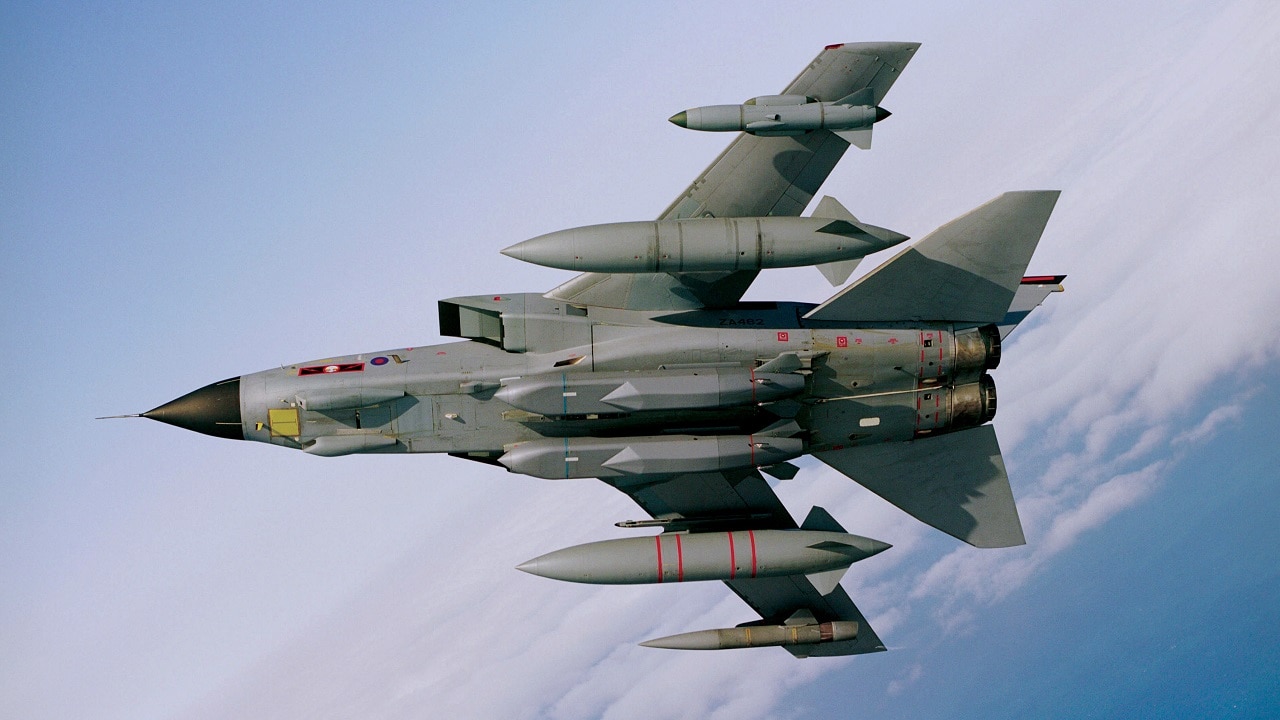
According to the British government, Prime Minister Andy Burnham used his Kyiv visit on 24 August to confirm that MBDA can release classified data on UK-made SCALP components so Ukraine and France can move ahead with local assembly lines. That is a narrow technical decision with big strategic implications. SCALP is the French produced version of Storm Shadow, but the missile depends on shared British and French technology, so Paris and Kyiv could not simply proceed without London signing off.
The weapon is worth the trouble. MBDA lists Storm Shadow and SCALP as a 1,300 kilogram, 5.1 metre air launched cruise missile built for long range strikes against fixed and hardened targets. It flies low to reduce detection, uses INS, GPS and terrain referencing for navigation, and matches the target image with an onboard infrared seeker in the terminal phase. In plain English, this is not another battlefield rocket. It is a serious deep strike tool for hitting command nodes, air bases, logistics hubs and infrastructure that Russia cannot easily replace.
Why This Helps Ukraine
The obvious benefit is stockpile depth. Ukraine has used imported SCALP and Storm Shadow missiles effectively, but imported missiles are always hostage to production bottlenecks, politics, and allied risk tolerance. A domestic assembly line, even a limited one, starts to shift that balance. It gives Kyiv a route to more predictable supply and tells Moscow that long range strike capacity will not disappear just because European inventories are tight.
There is also a platform story here. Douglas Barrie of the IISS told the Kyiv Independent that more sophisticated integration with Ukraine's Mirage 2000-5 fleet could let the missile use a broader set of its capabilities than the quicker and more basic integration achieved on the Su-24. That matters because Ukraine is not only trying to fire more deep strike missiles. It is trying to make Western aircraft, Western munitions and Ukrainian combat experience work as one system.
This is where the British move becomes more than a gesture of solidarity. It links technology transfer, industrial policy and operational adaptation. Europe talks constantly about helping Ukraine become a defense producer rather than a defense customer. This is one of the few cases where that phrase starts to mean something concrete.
Why It Will Not Change the War Overnight
Still, the hard part starts now. Defense News framed the core problem correctly: in theory Ukraine now has the permissions and intellectual property it needs, but theory is not production. Barrie warned that a normal timeline for this kind of work is measured in years rather than months. Ukraine may move faster than most countries because it has already shown an unusual ability to absorb new technologies under fire, but no serious analyst should pretend missile assembly in an active war zone is easy.
There are at least four obstacles. First, supply chains. A modern cruise missile is only as producible as its hardest to source component. Second, software and systems integration, which is often the real bottleneck in advanced weapons. Third, security. As the Kyiv Independent reported, the Kremlin is already signalling that potential production sites will become targets. Fourth, scale. A symbolic assembly line that produces small numbers is politically useful, but it does not by itself reshape the operational balance.
That is why this decision should be read as an industrial bet, not a quick battlefield fix. Britain has helped open the door. France will matter just as much in what happens next. So will the question of whether Western governments are prepared to share not only permissions, but the financing, supply discipline and protective infrastructure that real wartime production requires.
What This Says About Europe
There is a broader NATO lesson here, and it is not especially flattering. Europe has spent much of this war discovering that it likes the idea of strategic autonomy more than the practice of building it. The SCALP decision is notable precisely because it touches the part allies usually avoid: the release of sensitive know how that could make Ukraine less dependent on future emergency deliveries.
That is also why Moscow reacted so sharply. Extra missiles are a problem for Russia. A Ukrainian line that can eventually produce them with European backing is a bigger one. It suggests the war is pushing parts of the European defense base eastward, closer to the battlefield and harder to separate from Ukrainian operational needs.
The short answer, then, is that Britain has made a smart move. But smart is not the same as sufficient. If Europe wants this to matter, it has to treat SCALP production as the beginning of a deeper transfer model for air defense, strike weapons and maintenance chains. Otherwise this will become another headline about Western resolve that arrives long before industrial output does.
Ukraine has been asking for licenses, not just deliveries, because it understands something many European capitals still resist admitting: the side that can produce under pressure usually outlasts the side that can only donate under pressure. Britain has now accepted that logic for one of the most politically sensitive missile systems in Europe. The question to watch next is whether France and the rest of NATO are ready to follow the logic all the way through.
Britain authorized MBDA to release classified information on SCALP missile components to Ukraine, enabling local assembly lines for long-range cruise missiles. This decision, confirmed during Prime Minister Andy Burnham's visit to Kyiv on August 24, 2023, aims to enhance Ukraine's deep strike capabilities. However, the actual production timeline remains uncertain due to various logistical and security challenges.
- Britain authorized MBDA to release classified SCALP data to Ukraine.
- This decision allows Ukraine to potentially establish local assembly lines for SCALP missiles.
- The SCALP missile is designed for long-range strikes against fixed and hardened targets.
- Ukraine has effectively used imported SCALP missiles but faces supply chain challenges.
- The integration of SCALP with Ukraine's Mirage 2000-5 fleet could enhance its operational capabilities.