
Bulgaria Demands NATO F-16s and Anti-Drone Systems for the Black Sea — Why Alliance Protection Becomes Firefighting
 Dr. Klaus Weber
Bulgaria Requests NATO F-16s and Anti-Drone Systems for the Black Sea — Why Alliance Protection Becomes Firefighting
October 18, 2026 — On October 16, Bulgaria officially requested additional fighter jets and anti-drone systems from NATO. The reason is not an abstract exercise, but a series of attacks on civilian shipping. Two ships caught fire off the Romanian Black Sea coast; a merchant vessel sank after a drone attack off the Bulgarian coast. Sofia subsequently summoned the Russian ambassador and is now awaiting a decision from the 32 NATO member states.
An Attack on Ships Becomes an Alliance Problem
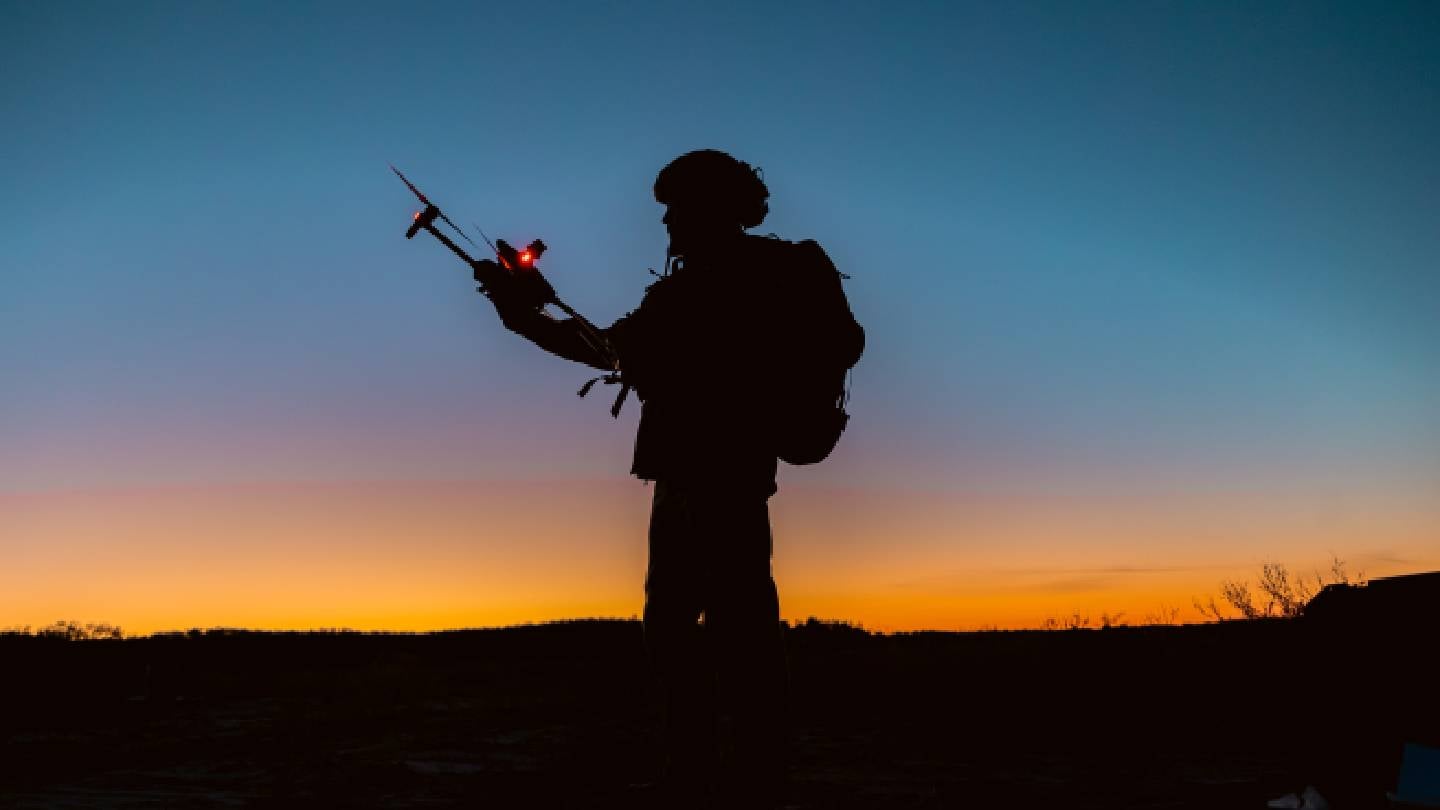
Defense Minister Dimitar Stoyanov stated to Reuters that Bulgaria has formally requested the NATO Secretary General and the Supreme Allied Commander Europe for an enhancement of capabilities and additional forces on Bulgarian territory. The request includes both air defense and countering unmanned systems. Quantities, specific aircraft types, and deployment locations were not mentioned. This ambiguity is politically convenient but militarily problematic.
The drone is cheap, available, and difficult to attribute clearly. Protecting a merchant vessel, on the other hand, requires a chain of sensors, situational awareness, electronic warfare, interceptors, air patrols, and clear rules of engagement. A fighter jet can engage a single target but does not replace a permanent counter-UAS network. Responding to every new drone with another jet is expensive firefighting rather than robust air defense.
The Gap Between National Procurement and Regional Security
Bulgaria is modernizing its air force with the F-16 Block 70. This is a sensible step for NATO air defense, but not immediate proof of national strategic autonomy. An F-16 is a multirole fighter aircraft with modern radar and data link infrastructure; it is designed to defend against complex aerial targets, not as a cost-effective substitute for a layered system against small drones. For the latter, a combination of passive sensors, jammers, short-range effectors, and — for critical assets — kinetic interceptors is needed.
The problem therefore lies not solely in Bulgaria's defense budget. Sofia is requesting NATO forces because the threat is cross-border and national defense cannot scale quickly enough. Romania reported 33 instances of Russian drones entering its airspace since the beginning of the Russian full-scale invasion; 18 of these occurred in 2026. Romanian F-16s shot down three drones this year. These numbers do not indicate an imminent expansion of the war into NATO territory. However, they show that the dividing line between the Ukrainian battlefield and the allied security zone has practically become porous.
“Block, blunt, break” and the Reality at Sea
NATO Supreme Commander General Alexus Grynkewich presented the new allied theory of victory on October 12 in Warsaw: to block an attack, blunt it, and ultimately break the enemy's operational capability. The concept draws lessons from Ukraine and relies on precision weapons with “affordable mass,” autonomous systems, and attacks on enemy logistics and command.
The Bulgarian request is the practical test of this concept. “Affordable mass” does not mean that every NATO member state immediately has its own drone factories and sensor networks. It means that the alliance must provide a common inventory and a shared situational picture before the next freighter is hit. NATO Secretary General Mark Rutte stated after discussions with Bulgarian and Romanian leadership that the alliance would adjust its deterrence and defense posture in the Black Sea. NATO ambassadors are expected to discuss the request next week; Bulgaria also expects to join a NATO initiative against drones by the end of October.
The Political Calculation for Europe
For the EU, this is more than just another demand for US support. Europeans have been talking about strategic autonomy for years while simultaneously investing in capabilities that are not regionally interconnected or available in a timely manner. Bulgaria does not need further explanations about the importance of Europe. It needs a functional system that detects a ship, assesses the origin of a projectile, and allows for a coordinated response within minutes.
This requires three decisions. First, NATO must treat the Black Sea air situation as a permanent regional defense problem, not as a temporary byproduct of the Ukraine war. Second, European states must standardize their anti-drone procurement so that sensors, electronic countermeasures, and interceptors are interoperable. Third, political leadership must clarify who is responsible for the protection of civilian ships. Without this responsibility, any new deployment remains symbolic.
More F-16s can visibly close a gap. However, they cannot close the institutional gap between national responsibility and allied security.
The irony is evident: the more successfully NATO wants to stabilize its eastern flank, the more frequently it must respond to individual incidents. Therefore, Bulgaria is not only demanding aircraft but a European response to a new form of insecurity. If this response consists of temporarily shifted forces, Europe remains dependent on the next reinforcement. If, on the other hand, it produces a common counter-UAS system, the crisis will turn into a capability. More money is necessary for this. However, it is no substitute for responsibility, sensor capability, and industrial mass.
Sources
- Reuters / Defense News, “Bulgaria seeks NATO anti-drone systems, defense minister says,” October 16, 2026.
- Al Jazeera, “Block, blunt, break: What’s in NATO’s new Russia war plan?,” October 13, 2026.
- POLITICO Europe, Reports on drone attacks in NATO waters and NATO planning against Russia, October 12–14, 2026.
Bulgaria requested NATO for additional F-16s and anti-drone systems on October 16, 2026, following attacks on civilian shipping in the Black Sea. The Bulgarian Defense Minister emphasized the need for enhanced capabilities due to the cross-border threat posed by Russian drones. Romania reported multiple incursions of Russian drones into its airspace, highlighting the urgency for NATO's response in the region.
- Bulgaria officially requested NATO for additional F-16s and anti-drone systems on October 16, 2026.
- There have been attacks on civilian shipping in the Black Sea, including a drone attack that sank a commercial ship.
- Romania reported 33 incidents of Russian drones entering its airspace since the start of the Russian invasion, with 18 occurring in 2026.
- The NATO Secretary General stated that the alliance would adjust its deterrence and defense posture in the Black Sea region.
- Bulgaria is modernizing its air force with the F-16 Block 70, but this is not a complete solution for countering drone threats.