
Burkina Faso suspends 1,174 organizations — Traoré weakens his anti-JNIM intelligence
 Marie Dubois
Burkina Faso suspends 1,174 organizations — Traoré weakens his anti-JNIM intelligence
Ouagadougou, on August 3, did not announce a new battle. It announced something quieter, but almost as serious for an army that claims to be reclaiming its territory: Burkina Faso has just been placed on the 2026 watchlist of Civicus after the suspension or dissolution of approximately 1,174 civil society organizations.
This number does not smell of gunpowder. Yet, in an operational theater like northern and eastern Burkina Faso, it directly impacts the war against the Group for the Support of Islam and Muslims (JNIM), the coalition affiliated with Al-Qaeda. A local association, a student union, a community radio station, or a critical imam are not just political actors. They are sometimes the last human sensors between a military post and a village where armed groups recruit, tax, and move.
An administrative crackdown at a military pace
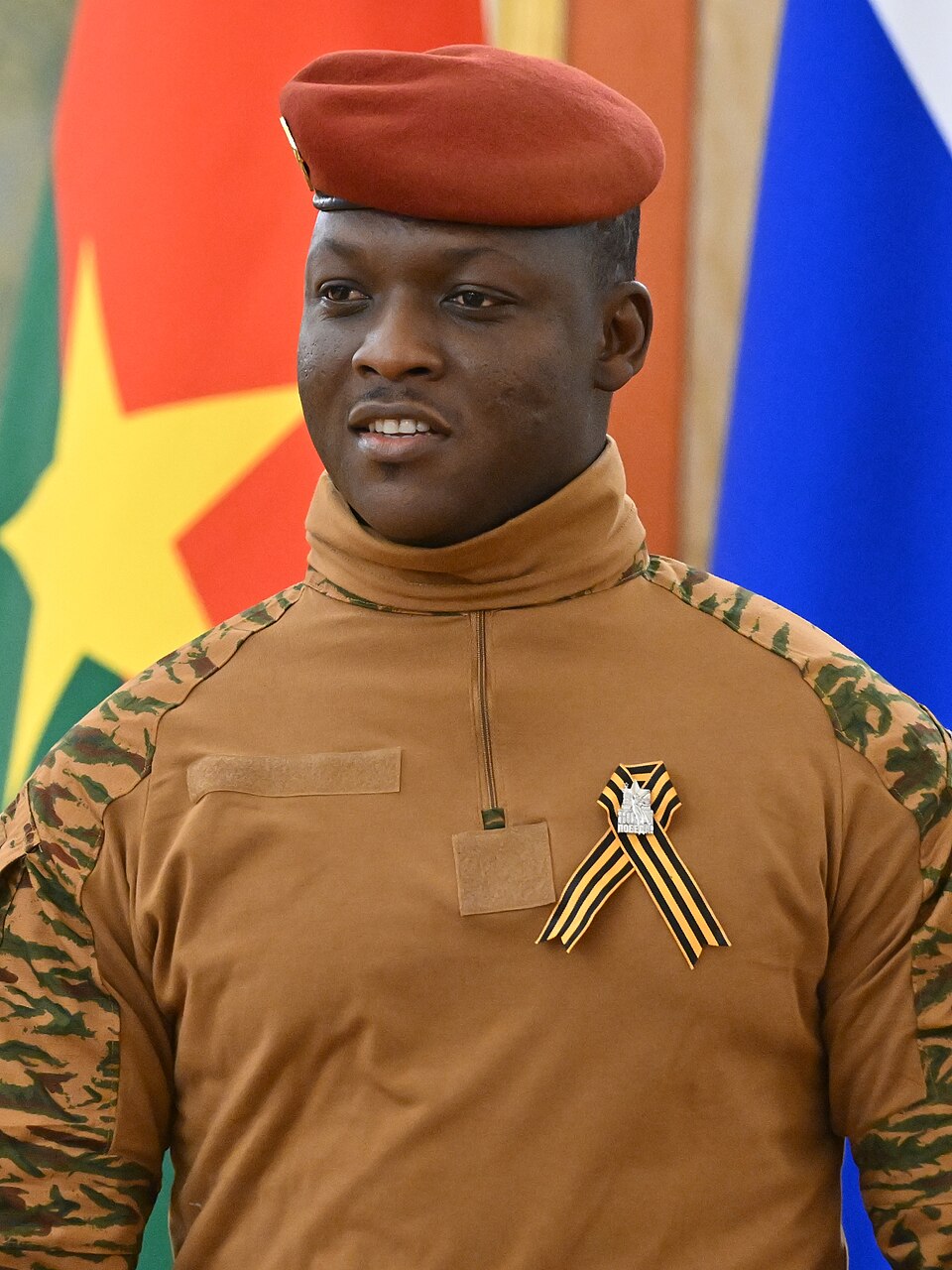
According to the account reported by AllAfrica from RFI, the military authorities dissolved 118 organizations on April 15, suspended 564 others between April and May, and then another 245 on June 11. The July 2025 law on freedom of association now serves as an administrative tool. In the same movement, political parties were dissolved in January, foreign or local media were suspended, and religious or student voices were arrested or silenced.
One must look at the map from the road, not from Ouagadougou. Djibo, Kongoussi, Titao, Kantchari, Tanwalbougou, Fada N'Gourma: these names are not abstractions. They are transit points, besieged pockets, markets cut off from their hinterlands, places where a military convoy can determine the survival of a family. In these areas, useful intelligence does not primarily come from a drone. It comes from the person who knows which well has been taken, which path has been mined, which village chief has changed sides.
This is where civil repression becomes a tactical error.
The double blockade and loss of trust
The New Humanitarian described in July what several residents are already calling a double blockade: on one side, jihadists encircle the localities, on the other, military personnel or Volunteers for the Defense of the Homeland prevent some civilians from leaving the besieged cities. The authorities have not confirmed these accusations. Testimonies remain difficult to verify, and in this type of war, one must be wary of overly clear narratives. But the accumulation of reports from Djibo to Kantchari indicates at least a breakdown of trust.
On the ground, trust is not a humanitarian luxury. It is ammunition.
An army that systematically suspects the inhabitants of contested areas ends up losing the ability to distinguish three essential categories: the jihadist sympathizer, the terrified civilian who pays to survive, and the potential informant who will never speak if their name circulates in a barracks. I have seen this mechanism elsewhere in the Sahel during Barkhane. When the local intermediary disappears, the patrol becomes deaf. It compensates with force, and then this force produces even more silence.
The paradox of the Traoré junta is therefore brutal. It claims to be waging a national liberation war, but it reduces the social channels that precisely allow for holding territory after an operation. The capture of a village by a motorized column is worth little if, two weeks later, no one dares to report the return of a katiba five kilometers away, near a lowland or a supply route.
The JNIM exploits the silences
Regional data reinforces this diagnosis. The analysis relayed by AllAfrica and the Africa Center for Strategic Studies estimates that the Sahel has concentrated nearly 9,800 deaths related to militant Islamist groups over the past year, accounting for 41% of such deaths in Africa. The JNIM now operates over an area of more than 1,200 kilometers, with coordinated attacks in Mali and persistent pressure in Burkina Faso, where insurgents threaten roads, urban centers, and economic infrastructure.
In this context, dissolving civil organizations is not just an authoritarian consolidation. It is a voluntary reduction of the state's listening surface. The juntas in the Sahel justify their power by the security failures of civilian governments. However, their current response resembles less a military adaptation than a reputation management: fewer witnesses, fewer journalists, fewer associations, thus fewer competing narratives.
This logic may work for a few weeks in press releases. It rarely works on a road between Djibo and Kongoussi.
The JNIM, on the other hand, understands local social networks very well. It recruits from grievances, exploits abuses, sometimes allows a merchant to pass when the army stops them, and then uses this comparison to sell its own order. This does not mean that the jihadists protect civilians. They tax them, punish them, displace them, and kill them. But in a control war, comparative image matters: who lets pass, who humiliates, who listens, who confiscates?
The next weak point
The closure of civic space gives the JNIM a ready-made argument. It also weakens potential regional partners. Côte d'Ivoire, Ghana, or Togo cannot secure their northern borders if their nearby Burkinabè interlocutors are criminalized or terrorized. An alert from a border village is worth more than a ministerial conference, but someone must dare to pick up the phone.
The next alert to watch is therefore not just a spectacular attack against Ouagadougou. It will likely play out in a secondary locality in the Center-North or East, on a convoy route, when information comes too late because civil relays have learned to remain silent. An army can lose a battle due to a lack of ammunition. In Burkina Faso, it risks losing several due to a lack of ears.
Sources consulted
- AllAfrica/RFI, August 3, 2026, on Burkina Faso's inclusion on the Civicus 2026 watchlist.
- AllAfrica/ACSS, July 14, 2026, on the security deterioration in the Sahel and the 9,800 deaths related to militant Islamist groups.
- The New Humanitarian, July 6, 2026, on accusations of double blockade in besieged Burkinabè cities.
Burkinabé military authorities suspended or dissolved 1,174 civil society organizations as of August 3, 2026. This action is seen as a tactical error, weakening local intelligence crucial for countering the JNIM, which operates extensively in the region. The military's actions have led to a loss of trust among local populations, complicating efforts to gather vital information against jihadist threats.
- Burkina Faso suspended or dissolved 1,174 civil society organizations.
- The military authorities dissolved 118 organizations on April 15, suspended 564 others between April and May, and dissolved 245 more on June 11.
- The JNIM operates in a space of over 1,200 kilometers, threatening routes and urban centers in Burkina Faso.
- The report indicates a loss of trust between the military and local populations, impacting intelligence gathering.