
Canada A-OTHR Radar Targets 2029 But NORAD Needs Five Sites
 Marcus Chen
Canada A-OTHR Radar Targets 2029 But NORAD Needs Five Sites
US$1.75 billion buys Canada an Australian radar architecture, not a sealed northern shield. That is the first thing to understand about Ottawa signing four June agreements for Arctic Over-The-Horizon Radar technology and pushing the program toward initial operational capability by December 2029.
The deal matters because NORAD has a real hole. Defense News reported July 13 that Canada and the United States still rely heavily on the North Warning System, a chain of fixed microwave radars across the Canadian north. Gordon Frazer, a former engineer on Australia Jindalee Operational Radar Network, put the problem bluntly: low-flying aircraft can route between known sites, and over-the-horizon radar is meant to look past the curvature of the Earth by bouncing high-frequency energy off the ionosphere.
That is not a niche sensor upgrade. It is the difference between seeing the opening move of an air and missile campaign and discovering it after the track has already crossed the line of engagement.
The Coverage Problem Is Geography, Not Procurement
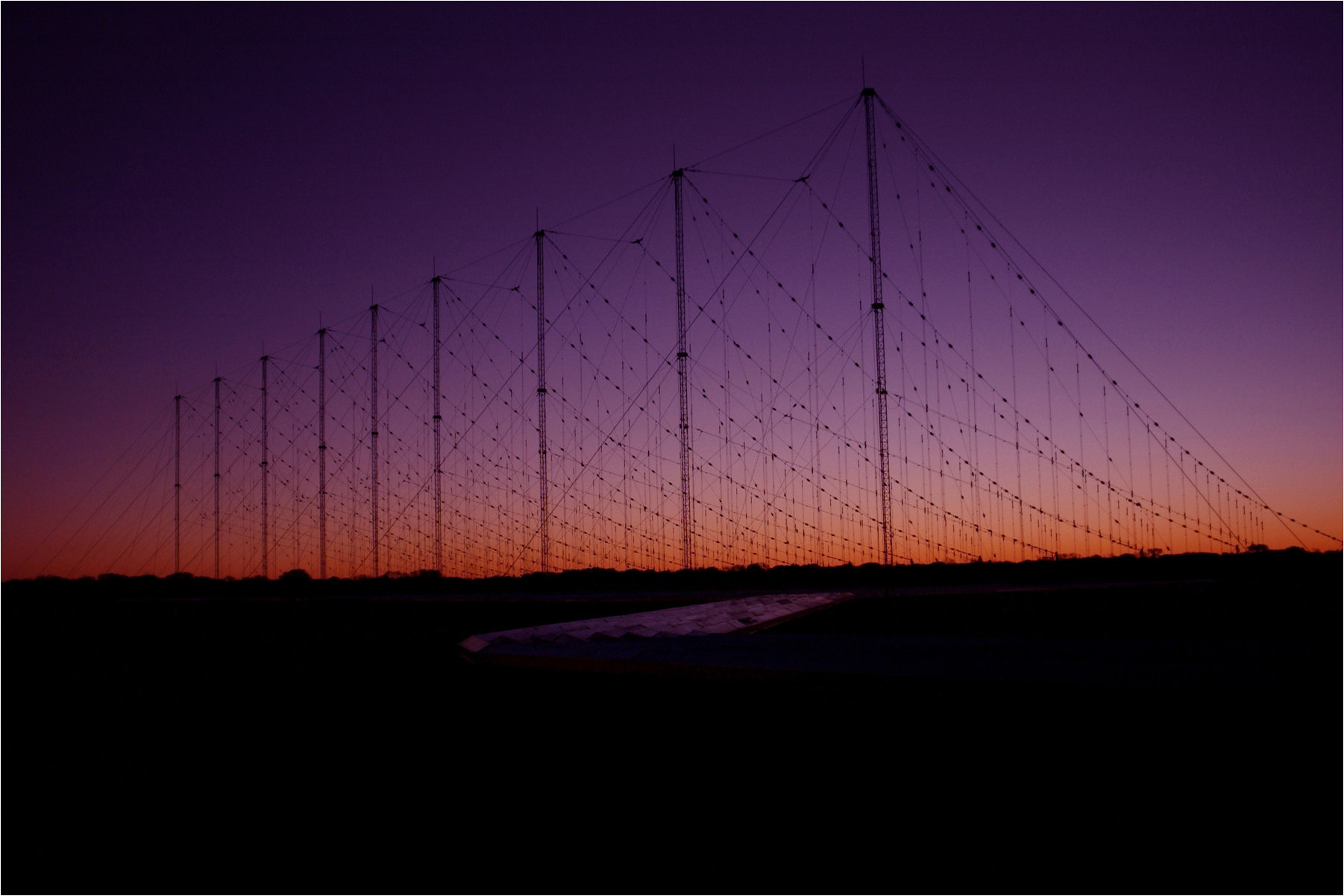
Australia says JORN can detect targets at roughly 3,000 kilometers, or 1,700 miles. That number explains why Canada wants the technology. Traditional line-of-sight radars lose the fight against the horizon; high-frequency over-the-horizon systems can see deeper and earlier, at least when the ionosphere cooperates.
But the map is unforgiving. Canada has about 40 percent of its territory above the Arctic Circle. The very region that makes A-OTHR valuable also makes it hard to operate. Polar and high-latitude ionospheric conditions create clutter, distortion, and seasonal performance swings. Frazer told Defense News that Canada is really buying a high-latitude system despite the Arctic label, and that sites may have to be built farther south than a casual reader would expect, so signals can bounce before they hit the worst polar effects.
That means the program is not just a radar purchase. It is a siting, calibration, staffing, and command-and-control problem stretched across a continent.
Five Eyes Gets A Sensor Export With Operational Weight
BAE Systems Australia will transfer technology and expertise so Canada can build its own A-OTHR sites. Ottawa described the signing as moving the program from planning into delivery. Craig Lockhart, BAE Systems Australia chief executive, said the acquisition would strengthen Five Eyes situational awareness through better detection and tracking of threats to North America.
That part is easy to understate. Australia spent decades making JORN work because it had no other way to monitor huge approaches across the continent maritime and air flanks. Canada is now trying to adapt that experience for the North American defense mission. If it works, Canberra is no longer just a southern partner in alliance exercises. It becomes an exporter of one of the sensor layers that NORAD needs to modernize.
For Washington, that is useful but also revealing. The United States talks about integrated deterrence, but the most urgent North American air surveillance upgrade is leaning on Australian expertise because the legacy architecture is behind the threat. Russian Tu-95 bombers are the obvious example. Long-range cruise missiles, uncrewed systems, and eventually hypersonic glide vehicles make the warning timeline even less forgiving.
The Five-Site Math Still Does Not Close
Frazer estimated that 360-degree NORAD coverage would likely require five or six radar installations: a Canadian Atlantic-facing layer, an American Pacific-facing layer, a northern layer, and additional coverage to close gaps. Canada has not said how many A-OTHR sites it will build. That omission matters more than the contract value.
One site can demonstrate a capability. Two sites can improve warning in selected approaches. Five or six sites begin to look like a continental architecture. Until Ottawa and Washington state the intended network size, the 2029 IOC date should be read as the start of a sensor field, not the arrival of a finished shield.
Anyone who has stood watch on a ship understands the difference between a contact report and a fire-control-quality picture. A-OTHR can cue the system earlier, but it will not solve identification, tracking continuity, weapons assignment, or engagement authority by itself. Those pieces require airborne early warning, space-based sensors, fighters, tankers, surface radars, and command posts that can move data faster than a bomber can launch standoff weapons.
GlobalEye Is The Necessary Patch, Not A Substitute
Canada also selected Saab GlobalEye as its preferred airborne early warning and control platform in May, according to Breaking Defense reporting stored in HiWars source records. Saab offered to build, maintain, and upgrade the aircraft with Canadian partners, using the Bombardier Global 6500 airframe and an extended-range radar and sensor suite.
That complements A-OTHR in a practical way. Over-the-horizon radar can look deep but varies with solar and atmospheric conditions. Airborne early warning can reposition, classify, and help manage intercepts. It also costs flight hours, crews, tanking support, and maintenance capacity. The clean briefing slide says layered surveillance. The operational version says Canada must fund a radar network, aircraft fleet, trained operators, and data links at the same time.
The December 2029 IOC target is therefore less comfortable than it sounds. It gives Canada three and a half years to turn Australian know-how into North American infrastructure. That is quick for a bespoke national radar system built once in a generation.
The Bottom Line
The A-OTHR deal is a serious move because it attacks a real warning gap with proven technology. It also exposes the scale of the problem. North America is trying to defend air approaches measured in thousands of kilometers with legacy fixed radars, a future airborne fleet, and a radar architecture whose site count remains unstated.
The math is simple. If NORAD needs five or six installations for 360-degree coverage, a 2029 initial operating capability is not the finish line. It is the first range ring on a map that still has open water around it.
Canada is acquiring A-OTHR radar technology from Australia to enhance NORAD's capabilities, targeting initial operational capability by December 2029. The acquisition aims to address a significant warning gap in North American air defense, requiring five or six radar installations for comprehensive coverage. Additionally, Saab GlobalEye has been chosen as the preferred airborne early warning platform to complement the new radar system.
- Canada is acquiring A-OTHR radar technology from Australia for NORAD.
- The initial operational capability is targeted for December 2029.
- Five or six radar installations are estimated to be needed for full coverage.
- The technology aims to improve detection of low-flying aircraft and missile threats.
- Saab GlobalEye has been selected as the preferred airborne early warning platform.