
Canada finances 270 million dollars for Patriot and FREYJA 2026 — Europe's air defense remains American
 S.W
S.WCanada finances 270 million dollars for Patriot and FREYJA 2026 — Europe's air defense remains American
Berlin, September 11, 2026. Canada plans to provide Ukraine with interceptor missiles worth approximately 350 million Canadian dollars, or about 253 to 270 million US dollars. At the same time, President Volodymyr Zelensky stated that Ottawa is ready to participate in the European FREYJA program for the defense against ballistic missiles. The news sounds like a European response to Russia's missile war. However, upon closer inspection, it reveals an uncomfortable finding: Europe is organizing more air defense but still lacks the industrial and technological sovereignty necessary for it.
A Canadian package with two different time horizons
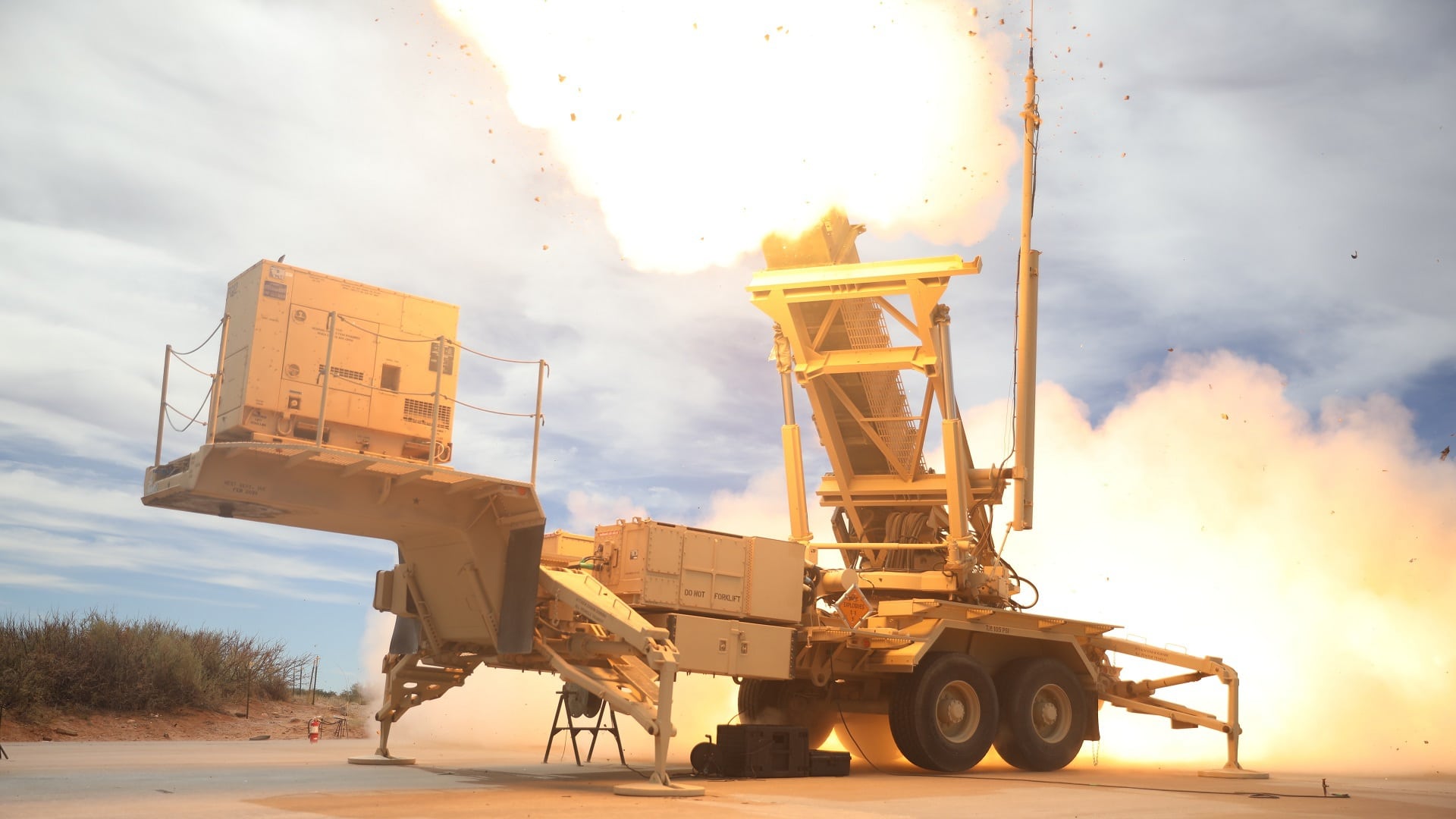
The acute element is the purchase of American interceptor missiles. According to available reports, this is not the delivery of a complete new Patriot battery, but rather ammunition for Ukrainian air defense. This distinction is strategically crucial. A Patriot unit consists of radar, fire control center, launchers, personnel, and a continuously available supply chain of ammunition. More interceptor missiles increase its operational duration but do not replace missing sensors or depleted stocks.
The Patriot PAC-3 MSE is designed to defend against tactical ballistic missiles and other highly threatening targets. Its hit-to-kill principle destroys the target through direct collision rather than through a large warhead. This makes the missile militarily valuable but expensive and dependent on American production lines. Therefore, for Ukraine, every additional interceptor is immediately relevant. For Europe, it remains proof that the most pressing capability must be procured outside of Europe in the short term.
Canada links this immediate assistance to a long-term political commitment. The announced accession to FREYJA is intended to advance the development of a European system capable of combating ballistic missiles at a higher interception layer. Kyiv cites the first operational step by the end of 2026; other reports refer to a prototype by mid-2027. These timelines are yet to be confirmed. What is certain is the political purpose: Ukraine should not merely remain a recipient of Western systems but be involved in their development and production.
The Patriot exception exposes Europe's procurement problem
At the same time, the European Union has enabled an exception for Ukrainian procurements in the Patriot area. Defence Industry Europe estimates the funds released on September 9 at 3.2 billion euros and already mentions 8.4 billion euros in previously released funds. This relieves Ukraine from the strict Buy-European requirements of the European financing framework. Politically, this is reasonable because European domestic production cannot close the current missile gap quickly enough. Institutionally, it is an admission of failure.
The EU aims to create European production capacities with SAFE and similar instruments. However, as soon as a Ukrainian air defense requirement becomes truly urgent, Brussels must relax the European preference to allow the purchase of American Patriot components. This is not a minor exception but the core of the problem. A regulatory framework that promises European autonomy but relies on an American supply chain for the most critical short-term capability produces political rhetoric and military improvisation simultaneously.
The numbers illustrate the conflicting objectives. Canada is taking on about 350 million Canadian dollars for interceptors, while the EU is providing 3.2 billion euros for Patriot-related procurement. These are substantial sums. However, they primarily buy time. They do not immediately finance new European radar factories or a second PAC-3 production line in Europe. Money is necessary, but money alone does not build an interceptor missile.
FREYJA is politically larger than its current capability value
Nevertheless, FREYJA has a significance that goes beyond its current operational readiness. A European defense program with Ukrainian participation could bring together three previously separate areas. First, Ukraine provides operational experience against combined drone and missile attacks. Second, Europe gains real data on target profiles, electronic disruption, and consumption rates. Third, the development would not only take place in national laboratories but would be tested in a war theater that daily exposes the weaknesses of existing systems.
But a development program is not yet a capability. It requires a common system architecture, binding financing commitments, industrial division of labor, and a user who guarantees orders over many years. European projects regularly fail precisely on this point. FCAS has shown that a common logo does not replace common governance. FREYJA will take the same path if France, Germany, Italy, the Nordic countries, Canada, and Ukraine make political statements but retain national vetoes over key technologies and work packages.
The industrial question is also unresolved. In a recent interview with Euractiv, a Ukrainian defense manager warned that Europe's defense companies are too focused on returns and too little on rapid capacity expansion. This explains why European states are willing to spend billions on American Patriot missiles today while simultaneously demanding European autonomy. Companies only invest in production lines when governments offer purchase guarantees, long-term budgets, and political risk-sharing. This institutional commitment is precisely what is lacking.
The transatlantic division of labor remains
Canada's decision is also geostrategically significant. Ottawa is not an EU member but a NATO partner with its own Ukraine policy. Its potential accession to FREYJA expands the European defense initiative beyond the EU and confirms that a credible European pillar of NATO cannot be equated with a closed EU defense industry. The UK, Canada, Norway, and Ukraine can contribute capabilities and combat experience, even though they do not all fall under EU financing rules.
The paradoxical conclusion is therefore: Europe is becoming strategically more active while operationally purchasing American systems. In the short term, this is not a contradiction but a necessity. It only becomes a contradiction when the transition to its own capability fails to materialize. Patriot interceptor missiles can carry Ukraine through the next winter. FREYJA can shape Europe's defense architecture over the next decade. However, the crucial political question in between is whether European states want not only to pay but also to decide, produce, and share risks together.
More European air defense begins today with American interceptors. Europe's strategic autonomy only begins where it not only finances the next generation but also masters it itself.
Sources
- Anadolu Agency, September 10, 2026, on Canada's possible participation in FREYJA and the interceptor missile package.
- Euractiv, September 10, 2026, on European defense production and investment logic.
- Defence Industry Europe, September 9, 2026, on EU funds for Patriot interceptor missiles.
- CBC News, September 10, 2026, on Canadian-Ukrainian defense and drone cooperation.
Canada is providing interceptors worth approximately 350 million Canadian dollars to Ukraine and is set to join the European FREYJA program for ballistic missile defense. This initiative aims to enhance Ukraine's air defense capabilities amid ongoing threats. The European Union has also allocated 3.2 billion euros for related procurement, indicating a reliance on American systems despite efforts for European defense autonomy.
- Canada is providing interceptors worth approximately 350 million Canadian dollars to Ukraine.
- The aid includes ammunition for the Ukrainian air defense system, not a complete Patriot battery.
- Canada is joining the European FREYJA program for ballistic missile defense.
- The EU has allocated 3.2 billion euros for Patriot-related procurement for Ukraine.
- The report highlights Europe's reliance on American defense systems despite efforts for autonomy.