
Canada spends $1.15B to upgrade Hercules fleet
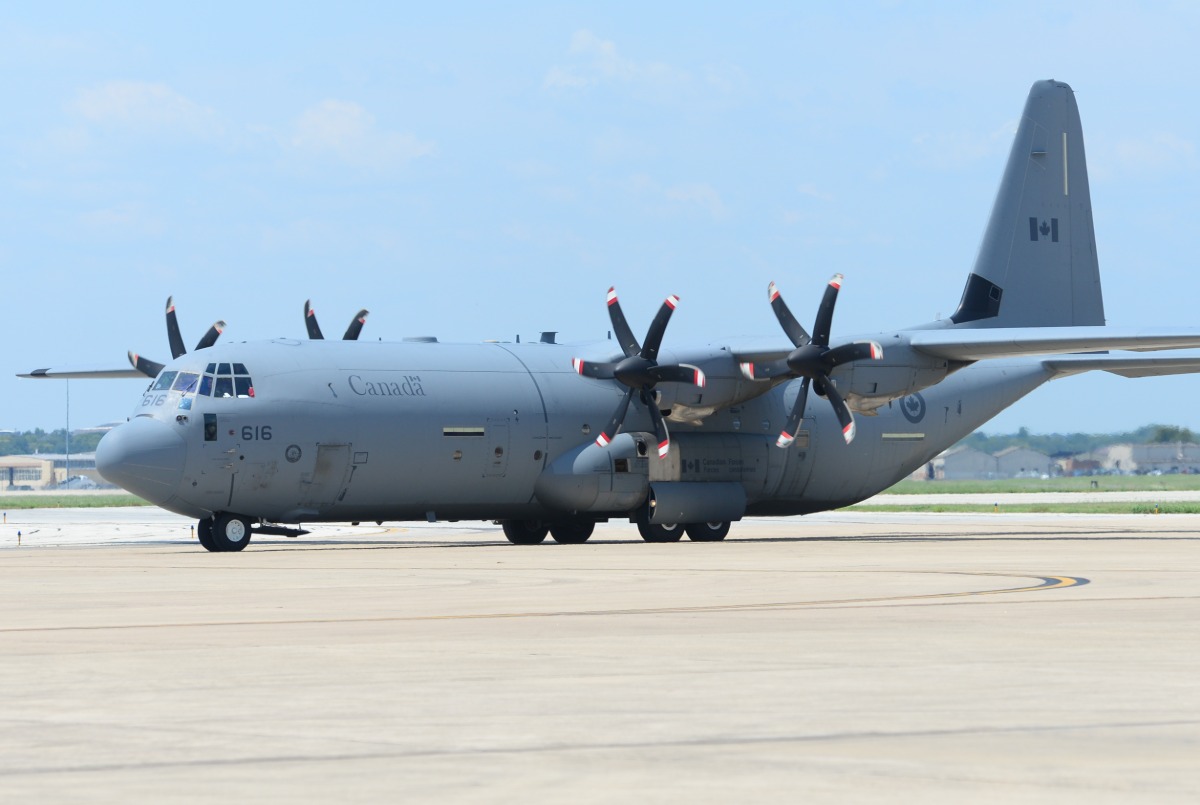
Canada signed two contract amendments with Lockheed Martin on May 15, committing a combined $1.15 billion to keep its CC-130J Hercules tactical transport fleet flying and modernized through the end of the decade.
The first amendment, valued at $462 million, extends the current maintenance and support contract through June 2029. The second, estimated at $684 million, funds a comprehensive avionics and systems upgrade package across the entire fleet known as RCAF 105.
The CC-130J Hercules is the workhorse of the Royal Canadian Air Force’s transport capability, the aircraft that moves troops, supplies, and equipment across Canada and around the world in every operational context the Canadian Armed Forces faces. Canada operates 17 of them, purchased in a $1.44 billion contract awarded to Lockheed Martin in December 2007 to replace an aging fleet of older Hercules variants. The J-model is the most advanced version of the C-130 family, featuring advanced turboprop engines, a glass cockpit, and digital avionics that give it substantially greater range, payload, and reliability than earlier variants. The aircraft has been central to Canadian missions ranging from domestic disaster response and Arctic resupply operations to international deployments in support of NATO allies and United Nations commitments.
The $462 million support extension is primarily about keeping the existing fleet mission-ready by ensuring a continuous supply of maintenance expertise, spare parts, and technical support. Work will be spread across multiple facilities in Canada and the United States, with significant activity at Canadian Forces Base Trenton in Ontario, which serves as the primary hub for Canadian air transport operations, as well as at Cascade Aerospace in Abbotsford, British Columbia, and Standard Aero in Winnipeg, Manitoba. The government estimates this maintenance work contributes $85 million annually to Canada’s GDP and supports 620 jobs in the Canadian aerospace sector.
The RCAF 105 upgrade package is the more technically significant of the two amendments. Air traffic management and avionics standards are not static, they evolve continuously as civilian airspace authorities and military planners update their requirements for navigation accuracy, communication protocols, and flight management systems. An aircraft that cannot meet current standards for operating in both civil and military airspace loses the operational flexibility that makes a transport fleet genuinely useful. The RCAF 105 upgrades will bring Canada’s entire CC-130J fleet into compliance with current and near-future requirements across navigation, communication, flight management, and avionics systems, ensuring that Canadian Hercules aircraft can fly into the airspace of allied nations and conduct operations alongside partner forces without restriction. Lockheed Martin will ensure Canadian industry plays a central role in installing the upgrades on Canadian soil, supporting an additional 525 jobs and contributing an estimated $70 million annually to GDP.
Secretary of State for Defence Procurement Stephen Fuhr described the amendments as ensuring “our members have the advanced equipment they need to do their jobs and keep Canadians safe, while maintaining highly skilled jobs here in Canada.” Minister of National Defence David McGuinty framed it around operational readiness, saying the amendments “will help ensure the aircraft remains operational and mission-ready for years to come.” Those are the standard political formulations that accompany procurement announcements, but they reflect a genuine operational reality: a transport fleet that cannot be maintained and kept current is not a transport fleet, it is a collection of increasingly expensive problems.
The announcement also comes as Canada faces sustained scrutiny from allies over its defense spending commitments. Canada has been one of the NATO members that has consistently fallen short of the alliance’s two-percent-of-GDP spending target, a gap that has generated pointed commentary from American officials in recent years. Major procurement investments like this one, with price tags measured in the hundreds of millions and visible industrial benefits for Canadian workers, serve double duty as both genuine capability investments and political signals to alliance partners that Canada is taking its defense obligations seriously. The $1.15 billion combined value of these amendments is real money, and the industrial footprint across Trenton, Abbotsford, and Winnipeg gives the announcement a geographic spread that ensures it resonates in multiple political constituencies simultaneously.
Content preview only. Full article available at source. View Full Article
Canada signed two contract amendments on May 15, 2023, committing $1.15 billion to upgrade and maintain its CC-130J Hercules fleet. The amendments include a $462 million extension of the maintenance contract and a $684 million avionics upgrade, ensuring the aircraft remain operational and compliant with current standards. This investment supports 620 jobs and contributes significantly to Canada's GDP.
- Canada committed $1.15 billion to upgrade its CC-130J Hercules fleet.
- The upgrades include a $462 million maintenance contract and a $684 million avionics upgrade.
- The CC-130J Hercules is crucial for Canadian transport operations.
- The upgrades will ensure compliance with current airspace standards.
- The maintenance work supports 620 jobs in the Canadian aerospace sector.