
Canada's 12 Type-212CD Submarines Turn Germany's Shipyards into NATO's Arctic Suppliers
 Dr. Klaus Weber
Canada's 12 Type-212CD Submarines Turn German Shipyards into NATO Arctic Suppliers
Twelve submarines, a potential lifecycle cost of up to 100 billion Canadian dollars, and an initial delivery not expected until 2033: Canada’s decision for TKMS is not a typical export success for the German naval industry. It is a test of whether the European defense industry can be more than just a domestic market project with nice terms. Mark Carney announced on July 6 that Canada will negotiate with TKMS for the acquisition of twelve boats based on the HDW Class 212CD. The South Korean competitor Hanwha Ocean with its KSS-III offer has thus been temporarily defeated. According to Canadian sources, the contract is expected to be finalized by the end of the year.
For Berlin, this decision is politically more convenient than it appears at first glance. In the areas of battle tanks, air defense, and combat aircraft, Germany has been talking about industrial sovereignty for years, yet quickly runs into American technology, licensing, or capacity limits. In non-nuclear submarine construction, however, Europe still possesses a genuine industrial offering: design, construction, sensor integration, training, and long-term maintenance do not necessarily lie in American hands. This is precisely why the Canadian decision is strategically more important than many of the currently louder debates about percentage targets.
Why the Canadian Choice is More than an Export Contract
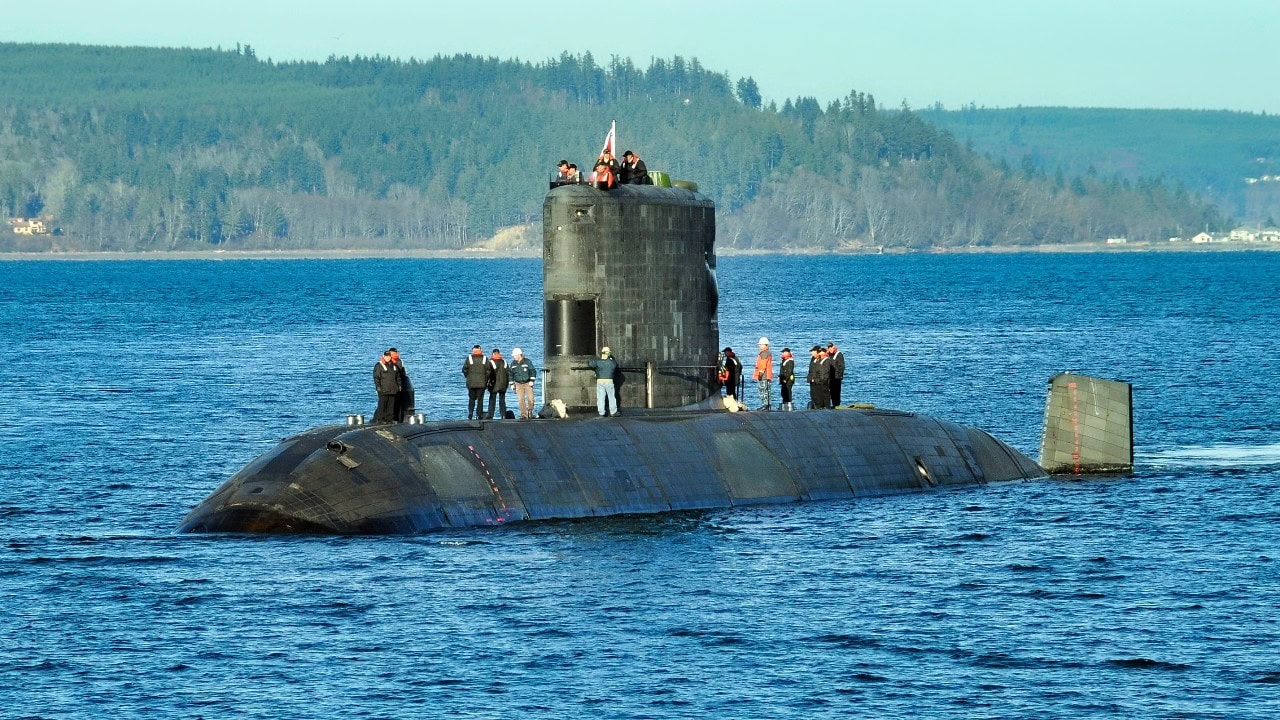
Canada is replacing its aging Victoria-class boats with this program. This fleet is small, maintenance-intensive, and only limitedly credible for Canada’s Arctic and Pacific role. Therefore, Ottawa is not just purchasing platforms but is also trying to close a political gap: those who want to be taken seriously as security actors in the North Atlantic, Arctic, and Indo-Pacific need underwater presence. Satellite imagery, frigates, and maritime patrol aircraft cannot replace a permanently available submarine capability.
The numbers explain the gravity of the decision. Defense News reports on twelve boats, with the first expected in 2033 and three more possibly in 2034. The total project value, including maintenance, infrastructure, weapons, and lifecycle costs, could reach up to 70 billion US dollars or around 100 billion Canadian dollars. In European terms, this means: Canada is committing itself for decades to an industrial ecosystem, not to a single shipyard invoice.
Carney's wording was therefore noteworthy. The boats are intended to strengthen Canada’s industrial base, deepen partnerships with reliable allies, and open Canadian companies to European supply chains. This is not a classic procurement argument. It is industrial policy in NATO garb. The crucial difference from some European programs is that the industrial logic here is linked to a concrete capability gap.
The 212CD as a European Counterproposal to the Paper Consortium
The HDW Class 212CD is being developed jointly by Germany and Norway. TKMS describes it as a common-design boat based on the proven 212A, with a larger hull, characteristic diamond shape for signature reduction, and a combination of diesel engines and hydrogen-based fuel cell AIP technology. This sounds technical, but it is institutionally more important: Germany and Norway have created a common design that is now attractive enough for a third NATO state to beat a South Korean offer.
Here lies the difference from FCAS. In the future combat aircraft program, France, Germany, and Spain are still arguing about who is the system leader, who gets which work packages, and what industrial sovereignty will remain in the end. With the 212CD, there exists a concrete product, a concrete operator group, and a concrete export path. This is not perfect European defense integration. But it is the kind of integration that matters militarily: common platform, common training perspective, common spare parts and modernization logic.
Of course, one should not overstate the success. Canada is not an EU member, and the order will not automatically lead to European strategic autonomy. On the contrary: it shows that Europe’s strongest industrial offerings often arise where they are organized pragmatically and outside the cumbersome EU rhetoric. Germany and Norway did not need a grand sovereignty manifesto. They built a boat that a country with three oceans and Arctic commitments wants to buy.
The Arctic NATO Space Shifts the Procurement Logic
Canada's decision comes not coincidentally just before a NATO summit in Turkey. The North Atlantic is again an operational area, not just a transit area. Russian underwater activity, the vulnerability of sea cables, energy infrastructure, and Arctic access routes have re-posed the old Canadian question: How much military presence can a country claim when it is hardly reliably present underwater?
For Europe, this is an uncomfortable but useful reminder. The debate about NATO burden-sharing is almost always conducted in terms of land brigades, air defense, and munitions stocks. The maritime north remains analytically underexposed, even though it is central to reinforcing Europe in times of crisis. Canada is not buying German submarines because Berlin is giving particularly convincing speeches about a turning point, but because a European product promises utility in a real operational area.
The victory over Hanwha is also instructive in this context. South Korea is no longer a theoretical outsider but one of the most aggressive and credible arms exporters in the world. That TKMS wins this competition shows that Europe is not falling behind industrially everywhere. But it also shows how high the pressure has become. European suppliers will win in the future not because of political proximity, but only if they can bring together speed, price, industrial participation, and operational credibility.
Germany's Opportunity and Germany's Risk
For Germany, the order is an opportunity to take the maritime dimension of the turning point seriously. Berlin likes to talk about leadership responsibility in the Baltic and about air defense over Europe. Less visible is the question of whether German shipyards, suppliers, and naval planners can sustain a permanent export and operator network in the North Atlantic. Twelve Canadian boats in addition to German and Norwegian requirements mean not only prestige. They mean capacity pressure, personnel needs, supplier dependencies, and decades-long maintenance obligations.
This is precisely where it will be decided whether the Canadian decision is an industrial breakthrough or just another overloaded success report. Europe has too many programs that shine at the signing of contracts and age by the time of delivery. When the first Canadian delivery arrives in 2033, there will be almost a decade between political announcement and military effect. During this time, Russian submarine tactics, unmanned underwater systems, and Arctic surveillance technologies will continue to evolve. A good design alone does not guarantee relevant capability.
The order thus reveals a paradox. Europe demands more consideration from America for European industries and more strategic autonomy from itself. At the same time, it proves its strength most convincingly when a non-EU NATO state buys a German-Norwegian product because it operationally fits. Perhaps this is the most sober lesson of the day: European defense capability does not arise from grand words, but from repeatable industrial decisions. Canada has just made such a decision. Now Germany must show that it can deliver.
Source basis: Defense News reported on July 7, 2026, about Canada’s selection of TKMS, twelve planned submarines, the potential lifecycle value of up to 100 billion Canadian dollars, and the expected first delivery starting in 2033. TKMS describes the HDW Class 212CD as a German-Norwegian common-design submarine with a larger, signature-reduced hull and fuel cell AIP propulsion.
Canada has decided to acquire 12 Type-212CD submarines from TKMS, with the first expected delivery in 2033. This procurement, valued at up to 100 billion Canadian dollars, aims to enhance Canada's military capabilities in the Arctic and North Atlantic. The decision reflects a strategic shift in defense policy, emphasizing the importance of underwater presence in regional security.
- Canada is negotiating to acquire 12 Type-212CD submarines from TKMS.
- The total lifecycle cost could reach up to 100 billion Canadian dollars.
- The first submarine is expected to be delivered in 2033.
- This decision is seen as a strategic move to enhance Canada's underwater military presence.
- The submarines are part of a joint design developed by Germany and Norway.