

Over four years ago, Canada said it would replace its older fighter jets with the F-35. Nowadays, it is well on its way to considering other options. Saab, a Swedish company, has said it would create Canadian jobs by building its Gripen fighters on its territory.
The United Kingdom is now helping fund the delivery of 16 of these jets to Ukraine.
Brazil is also building Gripen jets with Saab.
Stockholm itself has also poured a whopping $303 million into Saab’s future planning beyond the flagship Gripen model.
Canada’s Mood Shift
David Olive, a columnist for the Toronto Star, wrote last week that Washington is trying to “bully Canada into purchasing all the 88 U.S.-made F-35 fighter jets it ordered in the Trudeau years.”
While Ottawa has yet to say whether it feels this is the case, the F-35 review itself speaks volumes.
It came in the wake of renewed trade tensions between Washington and Ottawa, with U.S. President Donald Trump threatening to slap major tariffs on his northern neighbor and joking about annexing it.
Canada is still due to receive its first 16 F-35As.
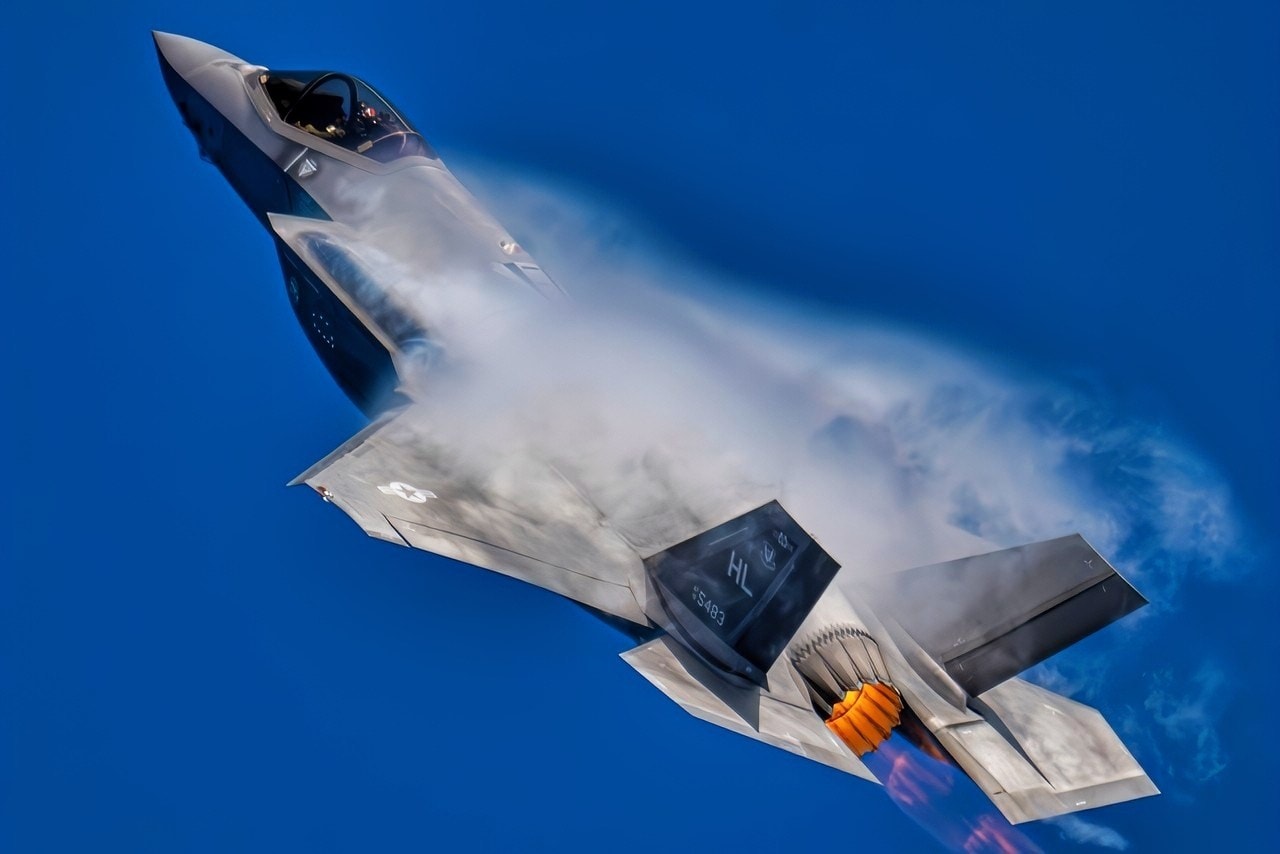
U.S. Air Force Maj. Melanie “Mach” Kluesner, pilot for the F-35A Demonstration Team, preforms high-speed aerial maneuvers during a practice demonstration at Hill Air Force Base, Utah, Jan. 6, 2026. The team practices during their off-season to ensure that they are always sharp and ready to demonstrate the capabilities of the F-35A and the U.S. Air Force. (U.S. Air Force photo by Staff Sgt. Nicholas Rupiper)
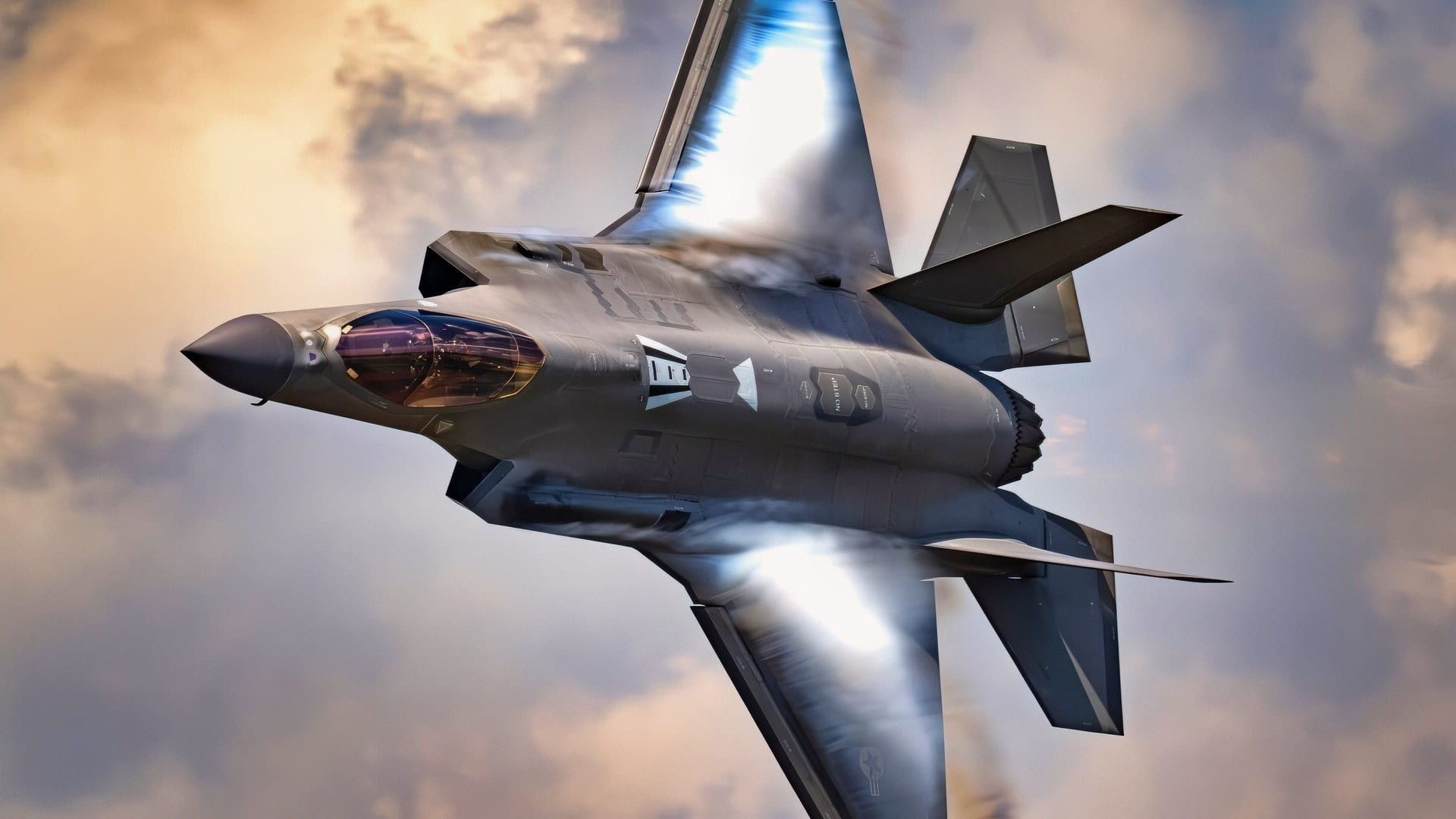
A U.S. Air Force F-35A Lightning II, assigned to the F-35A Lightning II Demonstration Team, piloted by Maj. Melanie ‘MACH’ Kluesner, performs during the 2025 Battle Creek Field of Flight Air Show over Battle Creek, Michigan, July 5, 2025. The F-35A Demonstration Team showcases the jet’s unique maneuverability and advanced capabilities at air shows across the nation. (U.S. Air Force photo by Staff Sgt Zachary Rufus)
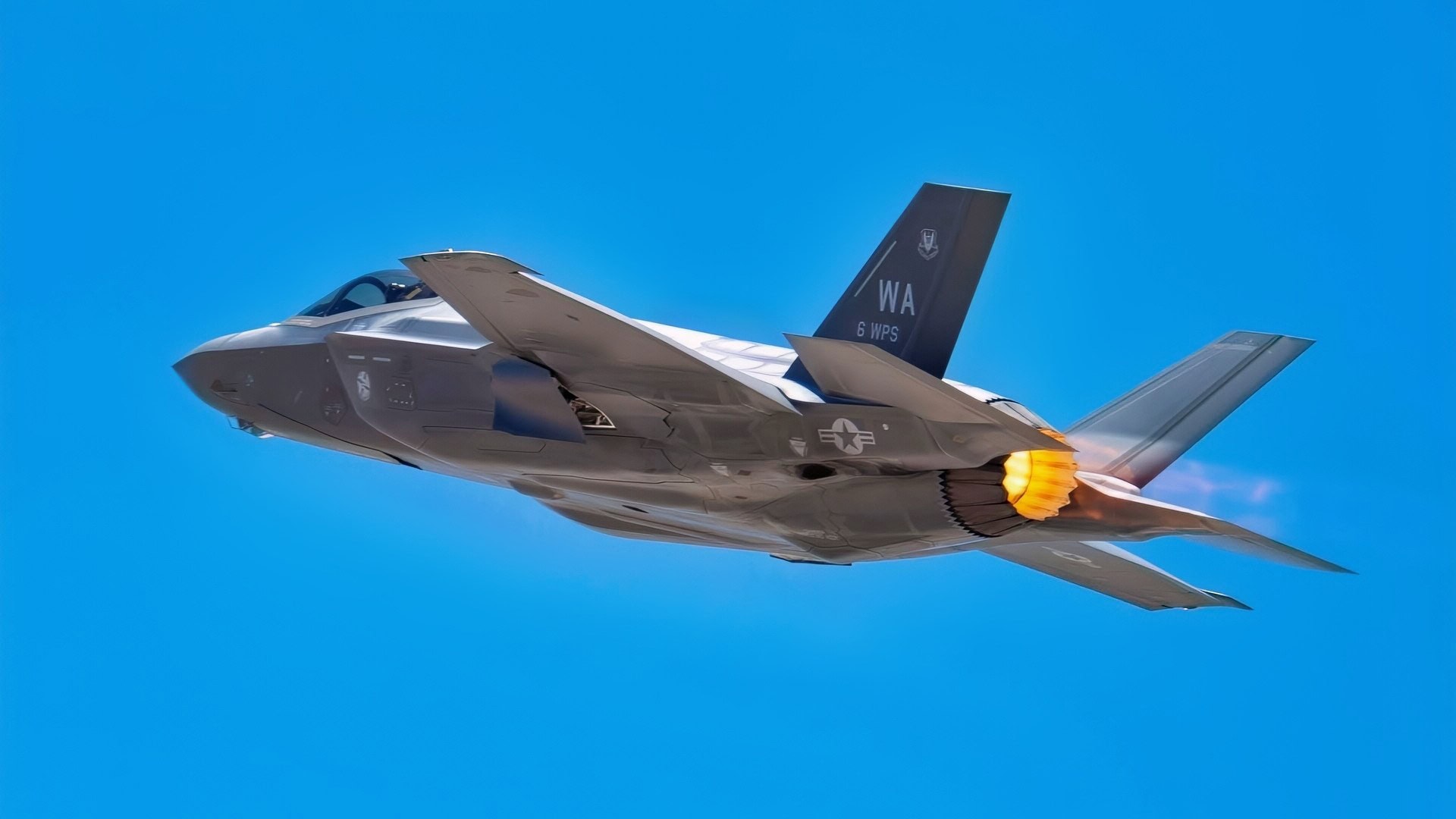
An F-35A Lightning II fighter jet, 6th Weapons Squadron (WPS), takes off from Nellis Air Force Base, Nev., July 18, 2019. The 6th WPS is the only squadron under the U.S. Air Force Weapons School exclusively training on the F-35A. (U.S. Air Force photo by Airman 1st Class Bryan Guthrie)
Prime Minister Mark Carney launched the review in 2025, but his government is still weighing options, including the use of two different fighter jets in the same fleet.
The first eight Canadian F-35s will be delivered to Luke Air Force Base in Arizona later this year, where Canadian pilots will be trained on them.
The full batch will be transported to Canada by 2028.
Naturally, Saab CEO Micael Johansson has been making the case for the Gripen-E.
Last month, the Swedish businessman told a public briefing that the firm had already offered Ottawa a detailed plan to launch a Gripen E manufacturing line on Canadian soil.
AeroTime said it now foresaw a “high-low mix” of F-35s and Gripens, pairing the F-35’s specialized capabilities with an aircraft that has a more compact logistical footprint and can operate from more bases.
But since Canada’s fighter competition prior to the 2023 decision, the context has shifted drastically.
Ukraine to Get Swedish Jets
Over the summer, Saab signed a SEK24.6 billion deal with the Swedish Defence Materiel Administration for 16 Gripen E’s set to be sent to Ukraine. The initial deliveries are set for 2029, then 2030.
Two weeks after this landmark event, the United Kingdom also said it would pour €300 million into the plans to offer Ukraine “advanced” jets in its war against Russia.
Gripen said these plans had helped contribute to some 5,000 jobs across 50-plus British companies, surely a tempting economic pitch.
The Brazilian Case
Back in May, Ottawa announced that Saab’s GlobalEye was now its preferred supplier for airborne early-warning aircraft, not the U.S.-made Boeing E-7 Wedgetail.
Canada also made history in July by becoming the inaugural observer country in the British, Japanese and Italian Global Combat Air Programme (GCAP) initiative to develop a sixth-generation fighter jet.
Last week, the Dutch government signed its own letter of intent with Sweden to buy GlobalEye.
Former submarine officer Hush Kit has argued that: “The Gripen vs F‑35 debate isn’t about hardware or software. It’s about whether Canada has the self-respect to say, “We call the shots.”
And if Ottawa wants to be taken seriously — not as a junior partner but as a sovereign state — it should choose accordingly.”
The F-35 Case
Obviously, there remain arguments for buying all 88 F-35s.
Over C$5.2 billion in deals related to these contracts has already been awarded to more than 110 Canadian firms. Meanwhile, the RCAF has spent years preparing to take on this aircraft.
Canada’s CF-18 fleet is scheduled for retirement by 2032.
The first Canadian F-35s are expected to be delivered to Luke Air Force Base in Arizona for training in 2026 and 2027, before the first aircraft arrive on Canadian soil in 2028. Ottawa currently expects full operational capability in 2033.
Canada is not just pitting the F-35’s technology against Saab’s pre-2022 pitch.
The world has changed a lot since then, with the re-election of Donald Trump and the Russian invasion of Ukraine, to say the least.
A full sixteen Canadian F-35s are already on their way; it’s just unclear whether the rest will follow.
About the Author: Georgia Gilholy
Georgia Gilholy is a journalist based in the United Kingdom who has been published in Newsweek, The Times of Israel, and the Spectator. Gilholy writes about international politics, culture, and education.