
Ceasefire a Mere Formality: Israeli Military Expands Operations in Lebanon, Aiming for "Scorched Earth" for Security
With the Israeli military recently crossing the Litani River to launch an offensive, the temporary ceasefire that began on April 17 between Israel and Lebanon has effectively become meaningless. Israeli Prime Minister Netanyahu ordered on May 31 to expand military operations in Lebanon while seeking U.S. support to strike Beirut and other areas, and has communicated with the U.S. on this matter.
Experts point out that Israel is using the negotiation deadlock to create a buffer zone through a "scorched earth policy" to seek greater security benefits.
Israel expands military operations in Lebanon
and attempts to persuade the U.S. to support its position
The Israeli military claims to have seized the strategic stronghold of Bofort Castle in southern Lebanon
On May 31 local time, the Israel Defense Forces' ground troops launched military operations in the Bofort Ridge and Saluki River areas in southern Lebanon. The Israeli military claims to have seized the strategic stronghold of Bofort Castle in southern Lebanon.
Data shows that Bofort Castle is an important strategic location in southern Lebanon, with altitude and terrain advantages that facilitate monitoring of developments in southern Lebanon.
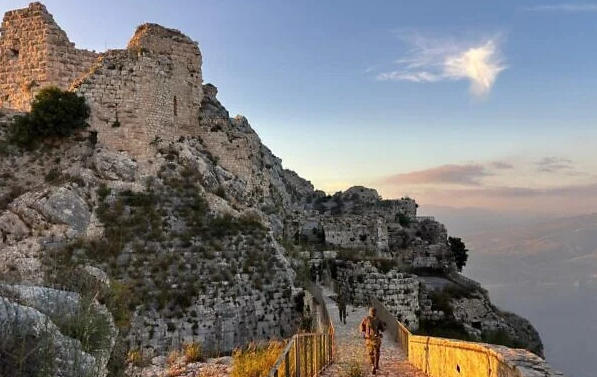
△ On May 31, the Israeli military released images of soldiers patrolling Bofort Castle (Source: The Times of Israel)
Photos released by the Israeli military on the same day show soldiers entering Bofort Castle and conducting patrols. The Israeli military stated that the operation has been ongoing for several days, with a large number of ground troops launching offensive actions in the aforementioned areas, aiming to expand the "forward defense line."
Netanyahu states he has instructed the military to expand operations in Lebanon
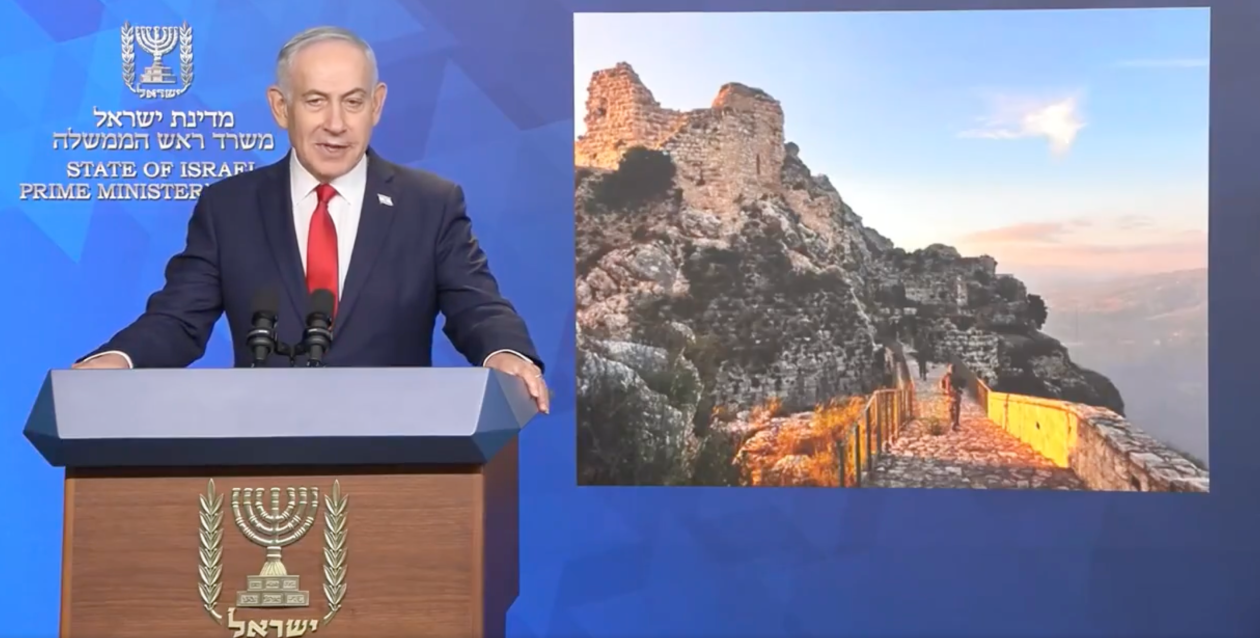
Israeli Prime Minister Netanyahu stated on May 31 local time that he has instructed the Israeli military to expand operations in Lebanon.
Netanyahu said that Israeli forces have crossed the Litani River, controlling key areas and occupying Bofort Ridge. His current directive is to deepen and expand the military's control over areas that were previously under Hezbollah's control.
On the 29th, a military delegation from Lebanon and Israel failed to reach an agreement on a ceasefire during negotiations held in Washington, D.C. Under U.S. mediation, the talks took place in a trilateral format involving Lebanon, Israel, and the U.S., lasting over nine hours. The Lebanese side insisted on achieving a ceasefire during the negotiations but was repeatedly rejected by the Israeli side. The Israeli side also refused to withdraw from occupied Lebanese territory and insisted on the disarmament of Hezbollah.
After the U.S. and Israel launched a large-scale military operation against Iran on February 28 this year, hostilities between Lebanon and Israel reignited. A temporary ceasefire lasting ten days was implemented on April 17, which was extended multiple times. However, with the Israeli military recently crossing the Litani River to launch an offensive, the ceasefire has now effectively become meaningless.
Israel seeks U.S. support to expand strikes against Hezbollah
According to Israeli sources on May 31, Israel is seeking U.S. support to expand its strikes against Hezbollah in Lebanon, including airstrikes on the Lebanese capital, Beirut.
Reports indicate that Israel is considering a shift in strategy, moving from primarily controlling southern Lebanon to conducting airstrikes over a broader area. Prime Minister Netanyahu recently spoke with U.S. Secretary of State Rubio, attempting to persuade the U.S. to support its position.
It was also reported that the Israeli military recently submitted multiple operational plans to Israeli leadership, some of which involve conducting military operations in Beirut. An Israeli official stated that the U.S. has shown a "more open attitude" towards the relevant actions, but "has not yet given final approval."
Israeli airstrikes on a hospital in southern Lebanon injure multiple people
Multiple countries condemn Israeli military actions in Lebanon
Israeli airstrikes on a hospital in southern Lebanon injure 13 people
The Lebanese Ministry of Public Health issued a statement on May 31 stating that Israel launched airstrikes on an area near a hospital in the southern city of Tyre, injuring 13 hospital staff and causing severe damage to hospital facilities.
The statement noted that this hospital had previously been damaged in an Israeli attack, and this latest strike again caused significant damage to the hospital's facilities.
The statement called on the international community to stop Israel's ongoing escalation and expansion of attacks, stating that such actions disregard international humanitarian law and international resolutions.
Lebanese Prime Minister accuses Israel of implementing a "scorched earth policy"
Lebanese Prime Minister Salam delivered a nationwide televised address on the 30th, accusing Israel of implementing a "scorched earth policy" in southern Lebanon. He also stated that Lebanon will persist in diplomatic negotiations to strive for a new ceasefire agreement.
According to the Lebanese National News Agency, Salam accused Israel of dangerously and unprecedentedly escalating military actions in southern Lebanon, stating that its actions are no longer limited to specific targets but are aimed at completely destroying towns, villages, and civilian infrastructure, resulting in mass displacement of civilians, equivalent to "collective punishment" of innocent people.
Salam stated that the Israeli military is attempting to "eradicate the memory of Lebanon and erase the history of the Lebanese people." However, this "scorched earth policy" cannot bring security to Israel.
Salam emphasized that as Israeli attacks continue to escalate, Lebanon is at a critical juncture and needs to intensify political and diplomatic efforts. Lebanon remains committed to promoting a lasting ceasefire, achieving the complete withdrawal of Israeli forces, the release of detained Lebanese individuals, the return of displaced persons, and advancing the reconstruction of homes.
He stated that negotiating with Israel, although it cannot guarantee results, is the "least costly path" for Lebanon and does not mean surrender.
Macron: The escalation in southern Lebanon is "without justification"
French President Macron stated on May 31 on social media that the current situation in southern Lebanon continues to escalate "without justification," and the urgent task is for the U.S. and Iran to reach an agreement as soon as possible.
According to French sources, at France's request, the United Nations Security Council is scheduled to hold an emergency meeting on June 1 at 1:00 PM Eastern Time regarding Israel's expansion of military operations in Lebanon.
Macron stated on social media that stability in the Middle East should begin with Lebanon. He called on all parties to cease fire and stated that France will continue to support Lebanon's efforts to restore national sovereignty and territorial integrity.
Egypt strongly condemns Israel's escalation of military actions in Lebanon
The Egyptian Ministry of Foreign Affairs issued a statement on May 31, strongly condemning Israel's escalation of military actions in Lebanon.
The statement said that this "blatant aggression" exposes Israel's intention to deliberately establish a new military reality in Lebanon, openly violating international law, international norms, and the United Nations Charter. Egypt reiterated its firm opposition to any infringement of Lebanese territory and expressed its support for Lebanon's national unity, state institutions, and territorial integrity.
The statement warned that Israel's continued expansion of military actions will lead to further escalation of the situation, and the United Nations Security Council and influential international parties must urgently and decisively fulfill their responsibilities to stop this aggression.
Experts say Israel is exploiting the negotiation deadlock
to seek greater benefits
On May 31 local time, the Israeli military announced the launch of a "large-scale operation" in southern Lebanon. Tian Wenlin, director of the Middle East Research Institute at Renmin University of China, stated that Israel's actions aim to deliver a "fatal blow" to Hezbollah and create a "no-man's land," which will provoke stronger resistance from Hezbollah.
Tian Wenlin believes that Israel's scorched earth policy in southern Lebanon primarily aims to cut off Hezbollah's logistical supplies and deliver a fatal blow to Hezbollah. At the same time, by attacking local civilian facilities, it aims to intimidate the local population, making them afraid to continue supporting Hezbollah.
The second objective is to create a "buffer zone." If southern Lebanon becomes an uninhabited area, the security threat it poses to Israel will be significantly reduced. Therefore, Israel hopes to use the scorched earth policy to create a "no-man's land" in exchange for its own "security."
The crux of the Lebanon-Israel negotiations mainly revolves around two aspects: from Israel's perspective, it believes that for a ceasefire to occur, the Lebanese government must disarm Hezbollah. For the Lebanese government, it believes that the urgent priority is for Israel to first achieve a ceasefire and withdraw from Lebanese territory. The positions of both sides are actually diametrically opposed, resulting in the negotiations remaining in a deadlock.
This deadlock is largely being consciously exploited by Israel—precisely because both sides find it difficult to reach an agreement on the ceasefire issue, Israel is using its relatively strong position to continue launching strikes in southern Lebanon, creating a more favorable regional security environment for itself when a ceasefire is eventually reached.
Israeli Defense Forces expanded military operations in southern Lebanon on May 31, 2023, following the crossing of the Litani River. The operations include airstrikes and ground assaults, particularly around Bofort Castle and Tyre, resulting in injuries to civilians. Negotiations for a ceasefire have stalled, with Israel seeking U.S. support for further actions against Hezbollah.
- Israeli forces have crossed the Litani River and expanded military operations in southern Lebanon.
- Israeli Prime Minister Netanyahu ordered the expansion of military actions on May 31, 2023.
- Israeli airstrikes injured 13 people near a hospital in Tyre, Lebanon.
- Negotiations for a ceasefire between Lebanon and Israel have failed, leading to increased military actions.
- Israel seeks U.S. support for broader military actions against Hezbollah in Lebanon.