
Chad closes its border with Sudan — Khartoum's drones open a new front in Darfur in 2026
 Marie Dubois
Chad Closes Its Border with Sudan — Khartoum's Drones Open a New Front in Darfur in 2026
On Thursday evening, in the Mourdi department, east of Ennedi, the Sudanese war crossed a threshold that N'Djamena had feared for months. According to the Chadian military, drones and aircraft linked to the Sudanese armed forces pursued and then struck vehicle columns nearly 100 kilometers inside Chadian territory. Four days later, Chad closed its eastern border with Sudan. This is not just an administrative measure. It is an admission that in Central Sahel as in Darfur, strategic depth is no longer measured by the line on the map, but by the ability to cut a logistical route in the desert before it feeds a front.
Erdi Ma Shows Where the War is Really Being Fought
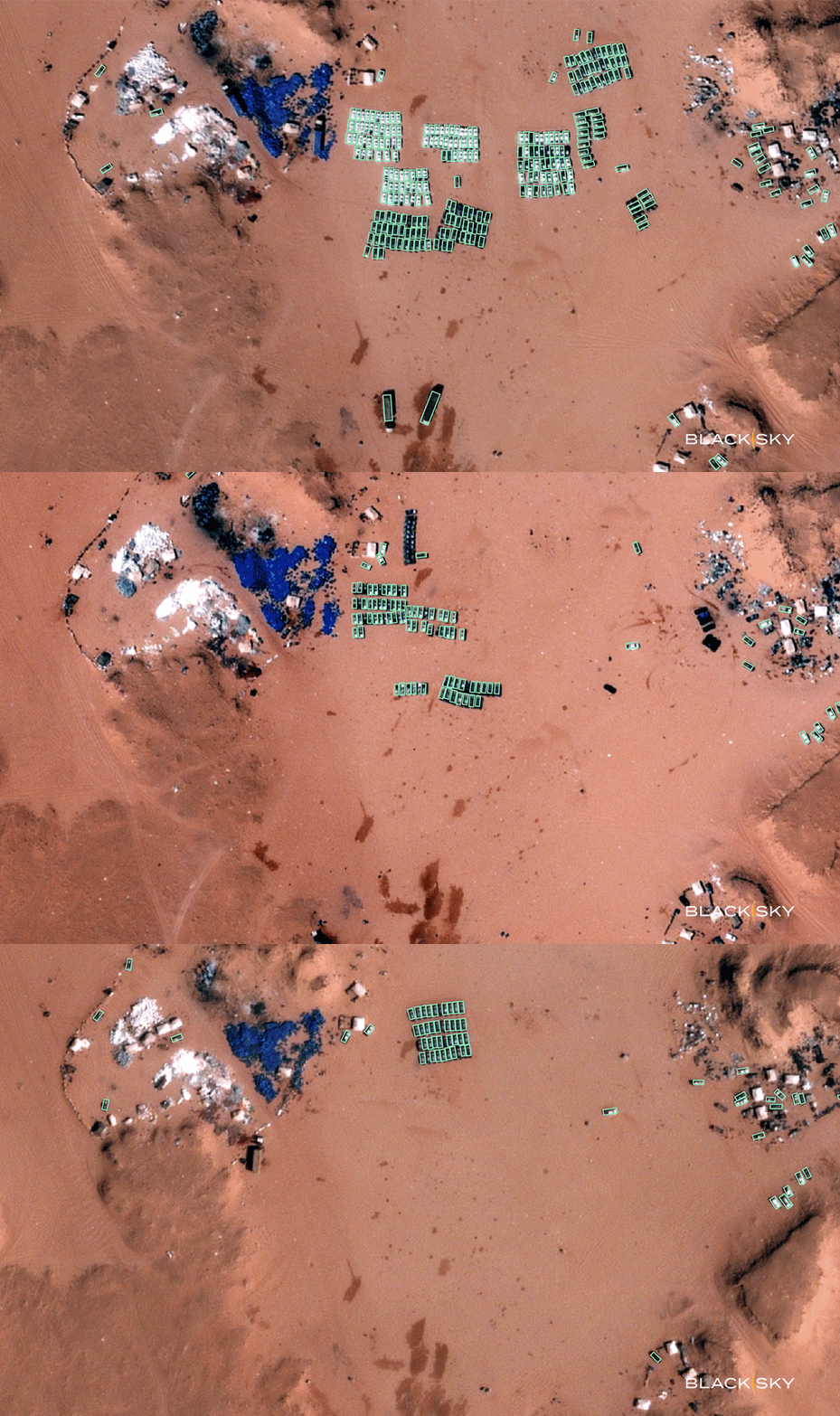
The important point is not just that a bombing occurred, but where it took place. Erdi Ma and the desert plateau of this tripartite area between Chad, Libya, and Sudan are spaces of movement, not empty margins. The targeted columns were coming from Libya, according to RFI, and were reportedly seeking to join Sudan to reinforce the Rapid Support Forces (RSF) of General Hemedti. Another source cited by RFI mentions a convoy of nearly 200 vehicles, of which about 70 were said to have been destroyed on the Sudanese side before the remnants of the column retreated to Chad. There lies the decisive military fact: Khartoum is no longer just striking RSF positions in Darfur, but their cross-border supply lines.
On the ground, this changes everything. An armed pickup can traverse hundreds of kilometers in this Saharan-Sahelian strip as long as it can find fuel, guides, relays, and fallback zones. Cutting logistics means depriving the RSF of their mobility advantage. From experience, this is often more decisive than taking one more village.
Chad Loses the Luxury of Ambiguity
Since the beginning of the Sudanese war, N'Djamena has tried to maintain a narrow line: welcoming refugees, avoiding border flare-ups, and regularly denying accusations of support for the RSF. This line is becoming much harder to hold. After the fighting in Tine over the weekend, which according to officials cited by Reuters resulted in five Chadian soldiers and three civilians killed, the Chadian government closed its border "until further notice." The wording matters less than its operational significance: the Chadian army now believes that the border is no longer a buffer, but a potential combat sector.
The problem for N'Djamena is geographical even before it is political. Populations, traffickers, fighters, and self-defense groups have been moving for years between Darfur, Ennedi, Tine, and the Libyan Cyrenaica. Chad can announce a closure, but it cannot physically seal this vast mineral expanse. It will therefore have to choose between two bad options: tolerate crossings and expose itself to Sudanese accusations, or further militarize the border strip and run the risk of a direct incident with Khartoum.
Khartoum Now Targets the Libyan Route
The signal sent by the Sudanese army is clear. By striking a convoy coming from Libya and then pursuing it into Chad, Khartoum indicates that the northwestern route to Darfur has become a priority target. This points to a reality often underestimated: the war in Sudan is not confined between Khartoum, El-Fasher, and Nyala. It also depends on flows from southern Libya, local armed networks, and violence entrepreneurs who rent out men and vehicles to the highest bidder.
If the information disseminated by RFI about the composition of the convoy is confirmed, we would see the emergence of a makeshift logistical coalition mixing Sudanese, Chadian, and Libyan fighters, with the gray areas of southern Libya in the background. This does not mean that Chad has chosen its side. It means something more dangerous: its territory is becoming the space through which other sides are trying to survive.
A Warning for the Entire Eastern Sahel
Marie Dubois first looks at the movement maps before the statements, and this one is bad for N'Djamena. When an army begins to treat a cross-border corridor as an extension of the battlefield, capitals quickly lose control of the tempo. Chad has raised its alert level to maximum and reserved the right to retaliate. But the real question is not about public retaliation. It is whether the Chadian army can sustainably monitor the Mourdi-Tine-Erdi Ma axes without depleting other already fragile sectors.
One must remain cautious about part of the intelligence: the exact identity of the passengers in the columns and the precise toll of the strikes are not fully confirmed independently. This uncertainty does not change the heavy trend. The Sudanese war is now pushing its shockwaves deeper into Chadian territory than in previous episodes. If Khartoum continues its strikes on the RSF's supply lines and if the latter continue to retreat towards the Chadian margins, the next vulnerability will not just be Tine. It will be the entire desert arc between the Libyan border and eastern Darfur, where a few tracks are enough to transform a proclaimed neutrality into an involuntary front.
Chad closed its eastern border with Sudan after Sudanese drones conducted airstrikes on supply columns near Mourdi. The strikes targeted a convoy of approximately 200 vehicles, with 70 reportedly destroyed. This escalation indicates that the border is now viewed as a potential combat zone by the Chadian military, significantly impacting logistics and supply routes in the region.
- Chad closed its eastern border with Sudan after airstrikes by Sudanese drones.
- Sudanese forces targeted supply columns coming from Libya.
- Approximately 200 vehicles were involved, with 70 destroyed.
- Chadian military considers the border a potential combat zone now.
- The conflict is affecting logistics and supply routes in the region.